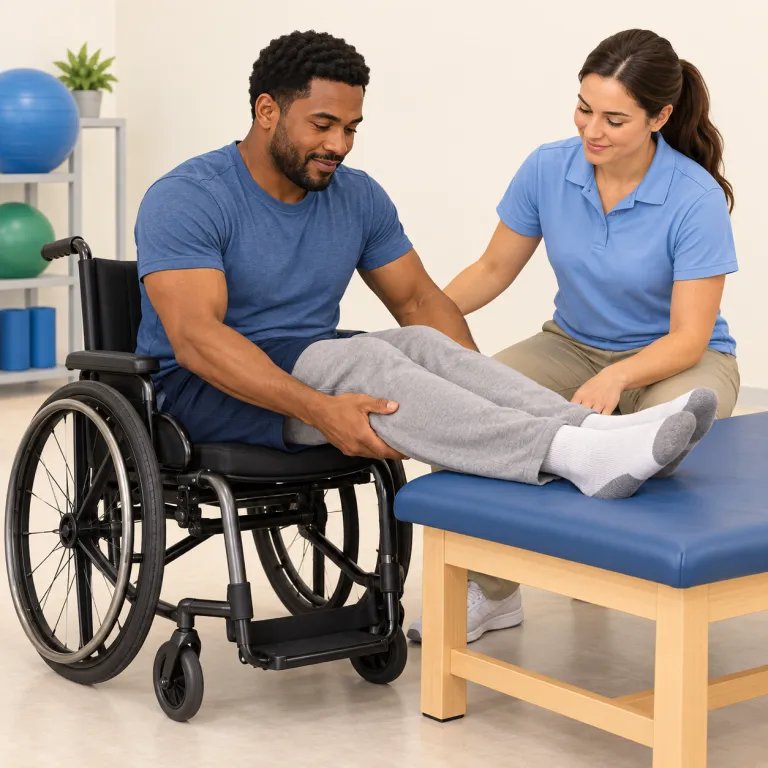
対麻痺の、下半身麻痺の
解説 Definition
脊髄の損傷などによって両脚や下半身が麻痺している状態を表す形容詞。人について用いれば「対麻痺の人」を意味し、医療・福祉・リハビリテーションの文脈で患者や競技者の状態説明として使われる。
Paraplegic describes a person who has lost the ability to move, and often feel, the lower part of the body, usually both legs. It is used in medical and everyday contexts when talking about paralysis caused by injury or illness. The word can also be used as a noun for a person with this condition.
覚え方のコツ Memory Tip
まず語尾の -plegic を「麻痺のある状態」を表す医学語の型として覚えると整理しやすいです。quadriplegic なら四肢麻痺、hemiplegic なら片麻痺、という仲間があり、paraplegic はその中で「下半身・両脚側の麻痺」と結びつけると定着します。車いす競技、リハビリ、脊髄損傷の説明で出やすく、a paraplegic athlete, paraplegic patient のように人の状態説明で見ることが多いです。
The helpful part is `-plegic`, which appears in medical words about paralysis. Compare the family: `quadriplegic`, `hemiplegic`, and `paraplegic`. Remember `paraplegic` as the one linked with paralysis of the lower body, often in contexts like rehabilitation, spinal injury, or wheelchair sports.
例文
After the accident, he became paraplegic and had to use a wheelchair.
事故の後、彼は下半身麻痺となり、車椅子を使わなければならなくなった。
The rehabilitation center provides specialized care for paraplegic patients.
そのリハビリテーションセンターは、対麻痺の患者に専門的なケアを提供している。
Many paraplegic athletes compete in the Paralympics with impressive athletic abilities.
多くの対麻痺の選手が、パラリンピックで優れた運動能力を発揮している。
paraplegic の類義語・関連語
派生語
paraplegic の語源・成り立ち Etymology
ギリシャ語 para-「そばに・異常に」+plēgē/plēssein「打撃・打つ」が元で、ラテン語経由で英語に入りました。文字通りには「打たれたように機能を失う感じ」で、下半身の麻痺を表します。関連語に paraplegia, quadriplegic があります。
Paraplegic comes through Latin from Greek elements: para-, meaning "beside" or sometimes "abnormal," and a root related to plessein, "to strike." The word originally suggested being struck or disabled in a particular way. Related medical words such as paraplegia and quadriplegic show how this root developed in descriptions of paralysis.
同じレベルの語彙をもっと
外部辞書で調べる
この英単語をクイズで覚えよう