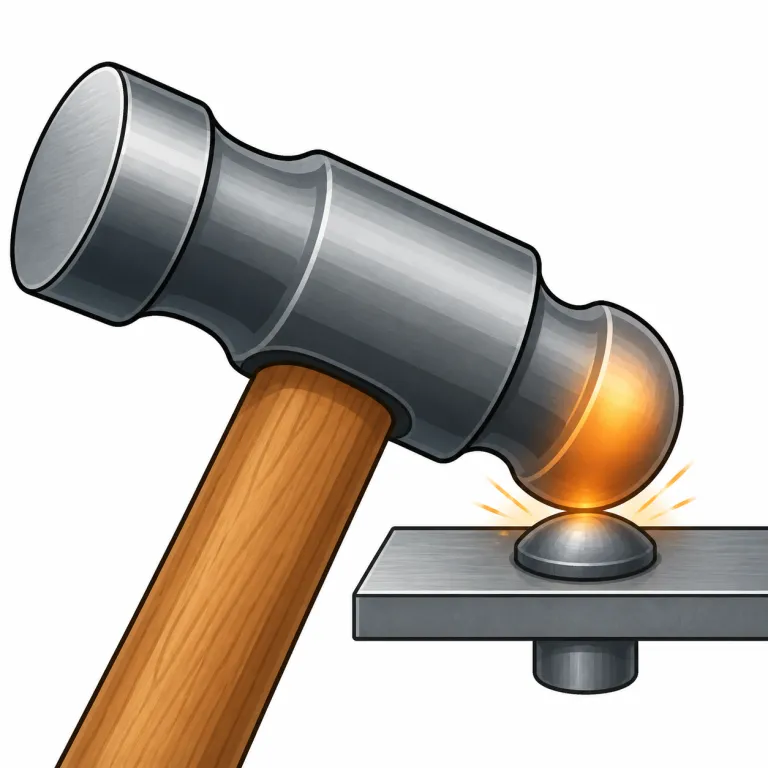
打って成形する
verb 動詞金属の表面やリベットの端をハンマーなどで繰り返し打ち、形状や性質を変えることを表します。peen a rivetやpeen the metalのように目的語を取り、金属加工の文脈で使われます。
ハンマーの頭で、平らな打撃面の反対側にある部分を指す名詞。くさび形や球形などがあり、金属を成形したり、リベットをつぶして固定したりする作業で使われる。ハンマー頭全体ではなく、背面の特定の部位を表す。
A peen is the end of a hammer head opposite the flat striking face. It is shaped for special kinds of hitting or metal work. This word is mainly used in tools, engineering, and craft work.
peen は単独で丸暗記するより、ハンマーの部位を対で覚えると残りやすいです。平らに打つ面が face、反対側で金属を成形したりリベット頭をつぶしたりする作業用の突起が peen。ball-peen, cross-peen, straight-peen のように、実務では「どんな形の peen か」で呼び分けるので、peen 自体は「平面ではない裏側の打撃部」と押さえると整理しやすいです。hammer head 全体の名称ではなく、特定の片側だけを指す点、また nail を抜く claw とは別物である点も一緒に区別すると忘れにくくなります。
Learn it as part of a hammer, not as a lonely word. The `face` is the flat striking side, and the `peen` is the other shaped side used for metalwork. That is why words like `ball-peen` and `cross-peen` are common.
The blacksmith used the peen of the hammer to shape the heated metal.
鍛冶屋はハンマーのペンを使って、熱した金属を成形した。
A ball-peen hammer is essential for metalworking and riveting tasks.
球状のペンが付いたハンマーは、金属加工やリベット打ちの作業に不可欠である。
He struck the rivet with the peen to flatten and secure it in place.
彼はリベットをペンで叩いて平らにし、所定の位置に固定した。
文脈によって、次の意味でも使われます。
金属の表面やリベットの端をハンマーなどで繰り返し打ち、形状や性質を変えることを表します。peen a rivetやpeen the metalのように目的語を取り、金属加工の文脈で使われます。
peen はハンマー頭の平らでない側を指す語で、英語ではまず「ハンマーで金属を薄く延ばす」という動詞として現れます。語源はおそらくスカンディナヴィア系で、ノルウェー方言 penn に通じるとされ、「打って延ばす部分」だからこの意味になったと考えると覚えやすいです。関連語は ball-peen, cross-peen。
Peen is a tool word that likely came from a Scandinavian source, related to Norwegian dialect penn. In English it first appeared as a verb meaning to beat or spread metal with a hammer. From that action, it came to name the hammer end used for the job, as in ball-peen and cross-peen.
この英単語をクイズで覚えよう