ピエロ
解説 Definition
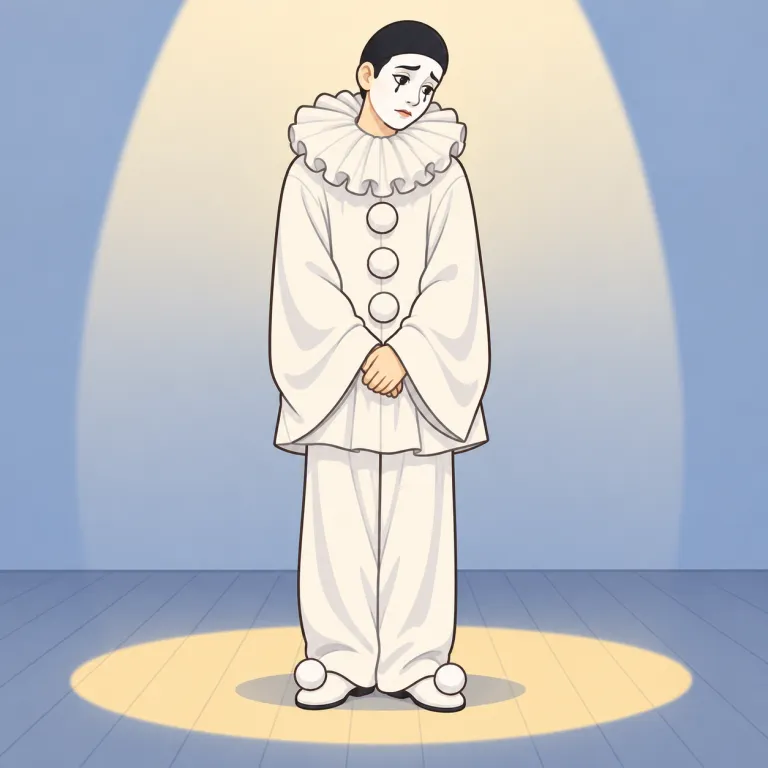
pierrot は白い衣装と化粧で知られる道化役、ピエロを指す名詞です。日本語の「ピエロ」は広く道化師一般を指すことがありますが、英語の pierrot は特にフランス由来の舞台上の人物像を指すことが多いです。
A pierrot is a traditional theatrical clown character, usually portrayed with a whitened face and a loose white costume and often associated with sadness or unrequited love. The word can also describe a performer or artistic representation modeled on this character.
覚え方のコツ Memory Tip
フランス舞台の白塗り・白衣装の物悲しい道化役を思い浮かべる。英語の clown が道化師一般を指すのに対し、pierrot は特定の伝統的人物像を表す。人名としては Pierrot と大文字にし、語末の t は通常発音しない点も一緒に覚える。
Picture a silent stage performer with a white face, a loose white costume, and a sad expression. That distinctive image separates a pierrot from a clown in general: clown is the broad everyday category, while pierrot refers to a traditional French theatrical character or someone represented in that style. In the character’s name, Pierrot is normally capitalized, though lowercase pierrot can describe the type. Also remember that the final t is generally silent in English pronunciation, reflecting the word’s French form.
例文
The actor played a sad pierrot in the silent performance.
その俳優は無言劇で悲しげなピエロを演じました。
A painting of a pierrot hung near the theater entrance.
劇場の入口近くにピエロの絵が掛かっていました。
The costume designer made a white jacket for the pierrot.
衣装デザイナーはそのピエロのために白い上着を作りました。
pierrot の類義語・関連語
pierrot の語源・成り立ち Etymology
フランス語の男性名 Pierre(ピエール)の指小辞形で、「小さなピエール」の意。イタリアの即興喜劇コメディア・デラルテの道化役 Pedrolino がフランスに渡り Pierrot となった。白塗りの顔に涙の道化師像は17世紀パリの芝居に由来し、関連語に Pierre(石、ラテン語 petra から)がある。
English borrowed Pierrot from French. The name is a diminutive of Pierre, the French equivalent of Peter, and originally suggested “little Pierre.” The theatrical figure developed from Pedrolino, a servant and comic character in Italian commedia dell’arte, and became established on the French stage in the seventeenth century. Pierre ultimately comes through Latin Petrus from Greek petros, meaning “stone.”
同じレベルの語彙をもっと
外部辞書で調べる
この英単語をクイズで覚えよう