
意味一覧 (3件)
段階
解説 Definition
物事の進行や発展の過程における一つの段階を表します。プロジェクトや製造、成長など、複数の段階から成り立つ事柄の各段階を指すときに使われます。
A stage is one step or period in a process, development, or series of events. It shows that something is moving forward from one part to the next. This meaning is common in education, business, medicine, and personal growth.
覚え方のコツ Memory Tip
stage はまず「ステージ・舞台」の基本像を土台にすると覚えやすいです。舞台では場面が切り替わりながら話が進むので、そこから「物事の進行の一段階」という意味に広がります。step が細かな一歩、phase がやや抽象的な局面なのに対し、stage は流れの中の見えやすい区切りを表しやすい語です。early stage, final stage, at this stage, stage of development, in stages をまとまりで覚えると定着します。state とつづりを混同しないよう注意。
Start from the basic image of a `stage` in a theater. A play moves from one part to another, so `stage` also means one clear part in a process. Remember phrases like `early stage`, `final stage`, and `in stages`, and do not confuse it with `state`.
例文
We are at stage one.
私たちは第一段階にいます。
This stage is very easy.
この段階はとても簡単です。
The next stage starts today.
次の段階は今日始まります。
舞台
(意味 2)
解説 Definition
演劇やコンサートなどで、俳優や演者が登場する高い台のことです。観客の前でパフォーマンスが行われる場所を表します。
A stage is the raised area in a theater, hall, or other public place where actors, musicians, or speakers perform. It is the main space that the audience looks at during a show or event. The word is commonly used when talking about performances and public appearances.
覚え方のコツ Memory Tip
まず on stage をひとかたまりで覚えると定着しやすい。俳優や歌手が観客の前に出て perform する「場所」が stage。scene が「場面」なら、stage はその場面を支える「舞台の台」。theater stage, concert stage, center stage, backstage などの形で一緒に覚えると、舞台に立つ・注目を集める場所という感覚が残りやすい。
Learn `on stage` as one chunk. A `stage` is the place where people perform in front of others, so it is strongly linked with shows, music, and theater. Related words like `backstage` and `center stage` help fix the image.
例文
The boy stands on stage.
その男の子は舞台に立つ。
We see a big stage.
私たちは大きな舞台を見る。
The stage is in the hall.
その舞台はホールにある。
上演する
(意味 3)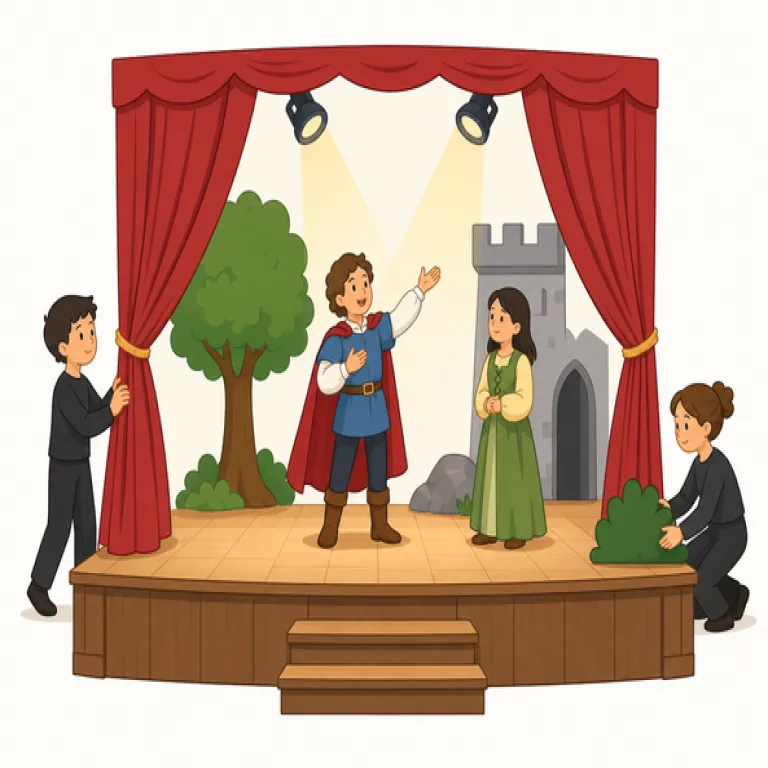
解説 Definition
「stage」は動詞として、演劇や公演などを「上演する・演出する」という意味で使われます。舞台で作品を組み立て、観客に見せるために実施することを指します。広義では、イベントやデモンストレーションを「計画・実施する」という意味でも使われます。
To stage means to organize and present something, especially a play, show, event, or public action. It is often used for performances, exhibitions, protests, or carefully planned activities. The word suggests that the event is prepared and arranged in a deliberate way.
覚え方のコツ Memory Tip
まず名詞の stage=「舞台」を思い出すと、動詞は「舞台に載せる」→「上演する」と自然につながります。stage a play / stage a musical の形で覚えると定着しやすいです。perform が「演じる側の動作」なのに対し、stage は「作品や催しを企画し、舞台にかける側」の感覚。さらに stage an event, stage a protest のように「実施する・仕掛ける」にも広がるので、単なる do より“人前に出すために演出して行う”語だと押さえると混同しにくいです。
As a verb, `stage` means to bring something out in a prepared, public way. Think of `stage a play`, `stage a show`, or even `stage a protest` as actions that are planned and presented. It is more than just `do` or `start` because it has a feeling of organizing something for people to see.
例文
The drama club staged Hamlet last weekend.
演劇クラブは先週末、ハムレットを上演しました。
The theater company plans to stage three new productions this season.
その劇団は今シーズン、3つの新しい作品を上演する計画を立てています。
The workers staged a protest outside the company headquarters.
労働者たちは会社の本社前で抗議行動を行いました。
えいたんごクイズでの正答率
この語をはじめて出題された 34人 のうち 32人 が正解しました(94%)。
えいたんごクイズの回答から集計した独自データです。1人につき最初に出題されたときの1回だけを数えており、復習や2回目以降の回答、「わからない」と時間切れは含みません。 集計時点は 2026年9月19日 です。
stage の類義語・関連語
stage の語源・成り立ち Etymology
stage はラテン語 stare「立つ」に由来し、古くは建物の「階」や「立ち位置」を指しました。一段ずつ立つ場所が変わる感覚から「段階」の意が生まれ、state や station にも同じ st-「立つ」が見えます。
Stage comes from Latin stare, meaning "to stand," through Old French estage. Early on, it could mean a floor, level, or standing place in a building. From the idea of moving from one standing place to another, it developed the meaning of a step or period in a process, and it is related to state and station.
同じレベルの語彙をもっと
外部辞書で調べる
この英単語をクイズで覚えよう