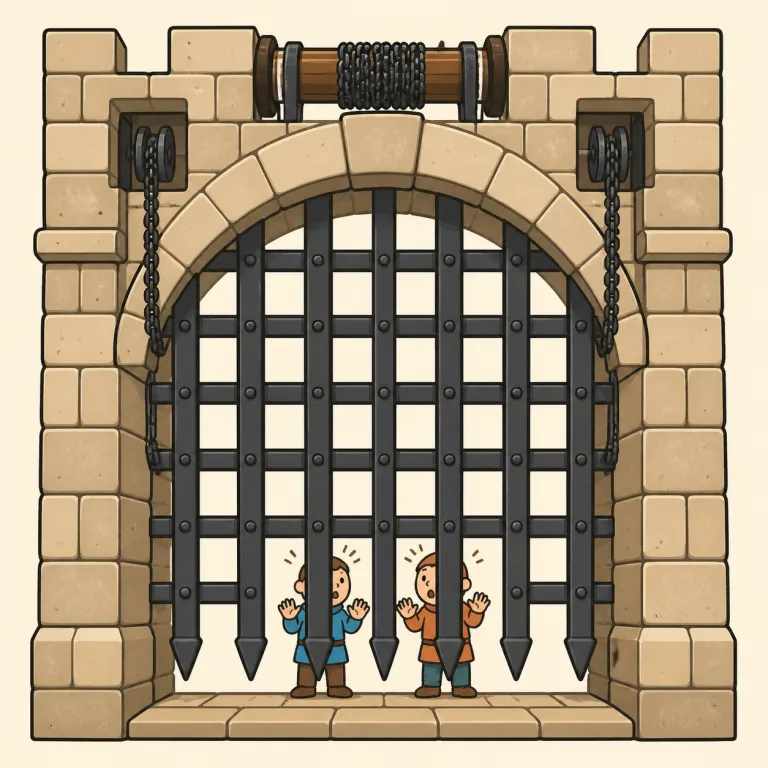
落とし格子
解説 Definition
城門の上に備え付けられた格子状のドア。敵の侵入を防ぐために降ろされる。中世の城塞防御システムの一部。
A portcullis is a heavy gate made of metal or wood that moves up and down at the entrance of a castle or fortified building. It was used for defense, especially to block enemies quickly.
覚え方のコツ Memory Tip
城の防御場面を映像で固定すると覚えやすい語です。portal(門)を連想しつつ、「城門の前で、上から重い鉄の格子がガシャンと落ちて通路を完全に塞ぐ」場面を思い浮かべてください。door や gate の普通の扉ではなく、敵の侵入を止めるための“格子の門”が核心です。drawbridge(跳ね橋)と中世の城で並んで出やすいですが、橋ではなく上下に上げ下げする格子なのが portcullis。ファンタジー小説や城塞描写の語として覚えると定着します。
Fix this word in a castle scene. Imagine a heavy iron gate with bars dropping down at the entrance to stop enemies. That helps you separate it from a normal `gate` or from a `drawbridge`: a portcullis is the barred gate that moves up and down.
例文
The portcullis could be quickly lowered to seal the castle gate against invaders.
落とし格子は、侵入者を防ぐために城門を素早く封鎖できた。
Medieval fortifications relied on the portcullis as a critical defensive mechanism.
中世の要塞は、重要な防御装置として落とし格子に頼っていた。
The heavy portcullis required significant force and mechanical systems to operate effectively.
重い落とし格子を効果的に動かすには、大きな力と機械仕掛けが必要だった。
portcullis の類義語・関連語
portcullis の語源・成り立ち Etymology
portcullis は古フランス語 porte coleice「滑る門」に由来し、ラテン語 porta「門」につながります。前半は port-「門」、後半は“滑る”を表す要素で、文字どおり「上下に滑り落ちる門」。城の落とし格子という意味がそのまま見える語です。関連語は portal、porch。
Portcullis came from Old French porte coleice, meaning a sliding gate, and its first part goes back to Latin porta, meaning gate. The second part refers to sliding or moving. So the original idea was a gate that drops or slides into place. Related English words from the same gate root include portal.
同じレベルの語彙をもっと
外部辞書で調べる
この英単語をクイズで覚えよう