陽電子
解説 Definition
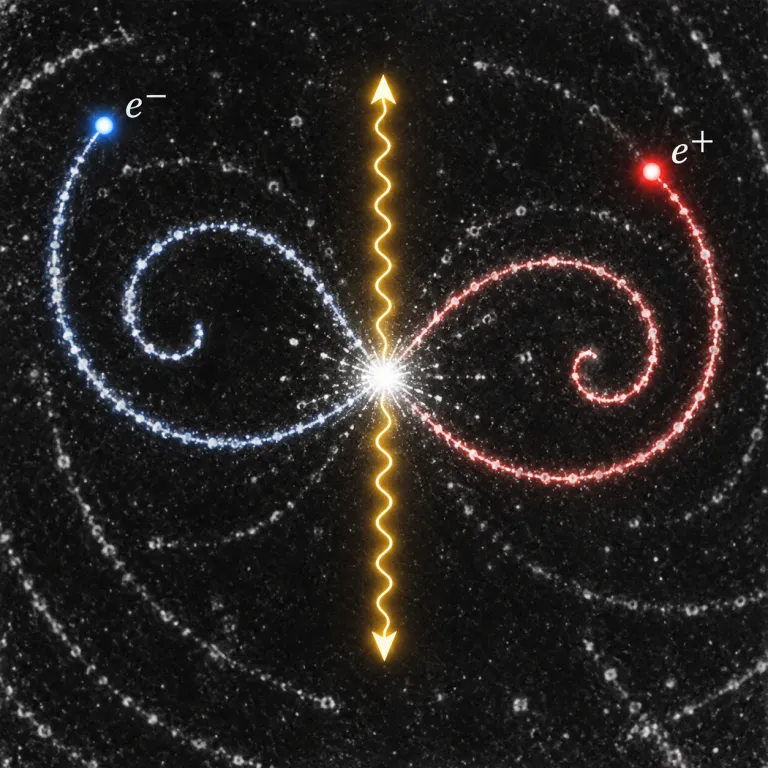
電子と同じ質量を持つが正の電荷を持つ素粒子。電子の反粒子である。
A positron is a very small particle with the same mass as an electron but a positive electric charge. It is used in physics and in some medical technology, such as brain and body scanning. This is a technical scientific term.
覚え方のコツ Memory Tip
positron は positive と electron をセットで覚えるのが最短です。electron を知っていれば、posit- が付いた時点で「マイナスではなくプラス側の、電子に対応する粒子」と連想しやすくなります。物理では electron と対で現れ、反粒子・対消滅・pair production の文脈で見かけやすい語です。proton と語感が少し似ていますが、proton は原子核の陽子で別物。『電子とほぼ同じだが電荷だけ逆』という対比を軸にすると定着します。
This is easiest if you already know `electron`. The first part looks like `positive`, so `positron` can be remembered as the positive partner of the electron. Keep it separate from `proton`, which is a different particle in the nucleus.
例文
A positron is the antimatter counterpart of an electron.
陽電子は電子の反粒子である。
When a positron meets an electron, they annihilate each other.
陽電子が電子と出会うと、互いに消滅する。
Positrons are used in PET imaging.
陽電子はPET画像診断で使われている。
positron の類義語・関連語
対義語
positron の語源・成り立ち Etymology
positronは英語positiveとelectronを組み合わせた科学語で、positiveはラテン語ponere「置く」に由来します。posi-「正の」+ -tron「粒子名」と見ると、電子の反対の電荷をもつ粒子だと分かります。関連語はpositive、electron。
Positron is a modern scientific word made from positive and electron. Positive ultimately comes from Latin ponere, "to place," though in this word the important part is its sense of a positive electric charge. The term was created for a particle like an electron but with the opposite charge. Related English words include positive and electron.
同じレベルの語彙をもっと
外部辞書で調べる
この英単語をクイズで覚えよう