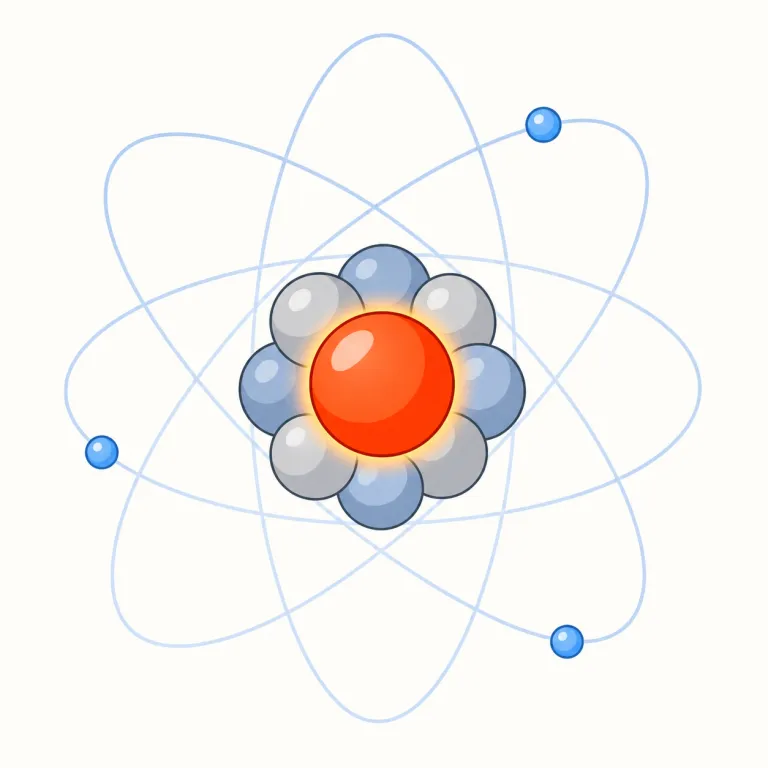
proton
proton はTOEFL 80・IELTS 6.5レベルの英単語で、「陽子」という意味があります。発音記号は /ˈproʊtɑːn/ です。
陽子
解説 Definition
proton(陽子)とは、原子核を構成する亜原子粒子の一つで、正の電荷を持つ粒子を指す名詞です。水素原子の原子核は通常1個の陽子のみからなります。元素の原子番号は原子核内の陽子の数によって決まります。
A proton is a very small particle inside the center of an atom. It has a positive electric charge and helps determine what chemical element the atom is. The word is mainly used in physics and chemistry.
覚え方のコツ Memory Tip
proton はまず electron, neutron とセットで覚えると定着しやすいです。3語のうち、proton は原子核の中にある「+」の粒子、neutron は同じく原子核だが電荷なし、electron は外側を動く「−」の粒子、という配置で整理します。さらに chemistry では proton number が原子番号に直結するので、「元素を決める核側の主役」と押さえると混同しにくいです。proton transfer, proton pump などの形でもよく出るので、理科系英文では『+の水素イメージ』と結びつけると強い記憶フックになります。
Memorize it as part of the science trio: `proton`, `neutron`, `electron`. The three are easier to keep straight when learned together, and `proton` is the one linked with the positive side. It also helps to remember that the number of protons decides which element something is.
例文
A hydrogen atom consists of one proton and one electron.
水素原子は1個の陽子と1個の電子から構成されている。
The number of protons in an atom's nucleus determines its atomic number.
原子核内の陽子の数がその原子の原子番号を決定する。
Scientists use particle accelerators to study the properties of protons.
科学者たちは粒子加速器を使って陽子の性質を研究している。
proton の類義語・関連語
proton の語源・成り立ち Etymology
proton はギリシャ語 proton「第一のもの」に由来し、protos「最初の」が語源です。物質をつくる基本粒子として電子より重く、原子核の中心を担うため、「まず重要な粒子」という感覚から「陽子」と名づけられました。関連語は prototype, protocol。
Proton comes from Greek proton, meaning "the first thing," from protos, meaning "first." Scientists chose the name in the early modern period for a basic particle seen as fundamental in the structure of matter. The word keeps that sense of primacy or first importance. Related words include prototype and protocol.
同じレベルの英単語をもっと
TOEFL 80の一覧へ →外部辞書で調べる
この単語を英単語クイズで覚えよう