neutron
neutron は英検準1級・TOEFL 80・IELTS 6.5レベルの英単語で、「中性子」という意味があります。発音記号は /ˈnuːˌtrɑːn/ です。
中性子
解説 Definition
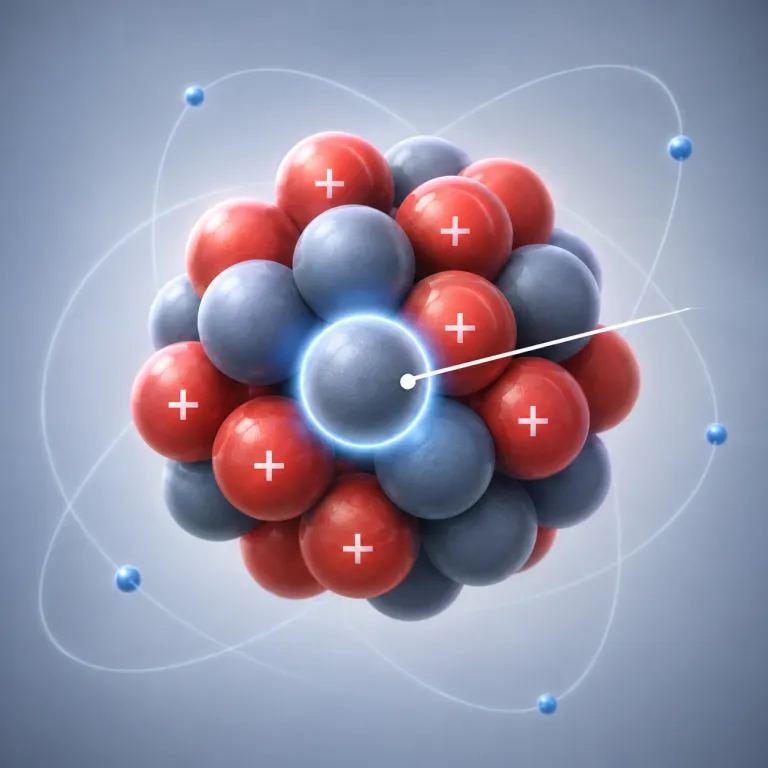
「neutron」は、原子核を構成する粒子の一つで、電荷を持たない中性の粒子を指す名詞です。陽子とともに原子核の中に存在し、原子の質量に大きく貢献します。核分裂や核融合などの核反応において重要な役割を果たし、中性子爆弾や中性子星という言葉でも知られています。
A neutron is a very small particle inside the center of an atom. Unlike a proton, it has no electric charge. The word is mainly used in physics and chemistry.
覚え方のコツ Memory Tip
`neutral` を知っていると覚えやすい語。`neutron` は「正でも負でもない=中性」の粒子で、`electron` や `proton` と並ぶ“原子の基本メンバー”としてセットで覚えると定着しやすいです。語尾の `-on` は粒子名でよく見かける形なので、まず `electron / proton / neutron` の3語を並べて整理すると混同しにくくなります。特に `electron` は外側を動く負の粒子、`proton` は正、`neutron` は原子核の中で電荷なし、という対比で押さえるのがコツです。
Use `neutral` as your memory hook: `neutron` is the particle that is not positive or negative. Learn it as a set with `electron` and `proton`, since the three are often studied together. The contrast helps: electron negative, proton positive, neutron neutral.
例文
A neutron has no electric charge.
中性子は電荷を持たない。
An atom can contain several neutrons.
原子には複数の中性子が含まれることがある。
Scientists use neutron beams to study the structure of materials.
科学者たちは材料の構造を調べるために中性子ビームを使用する。
neutron の類義語・関連語
対義語
neutron の語源・成り立ち Etymology
英語 neutron は neutral「中立の・どちらでもない」に粒子名の接尾辞 -on が付いた語で、neutral はラテン語 neutralis、さらに neuter「どちらでもない」にさかのぼります。関連語に neutral、neutralize があり、「電荷が正でも負でもない粒子」だから中性子という意味になります。
Neutron was formed in English from neutral plus the particle ending -on. Neutral comes from Latin neutralis, from neuter, meaning "neither of two." The name was chosen because the particle was understood as neither positively nor negatively charged; related words include neutral and neutralize.
同じレベルの語彙をもっと
英検準1級の一覧へ →外部辞書で調べる
この英単語をクイズで覚えよう