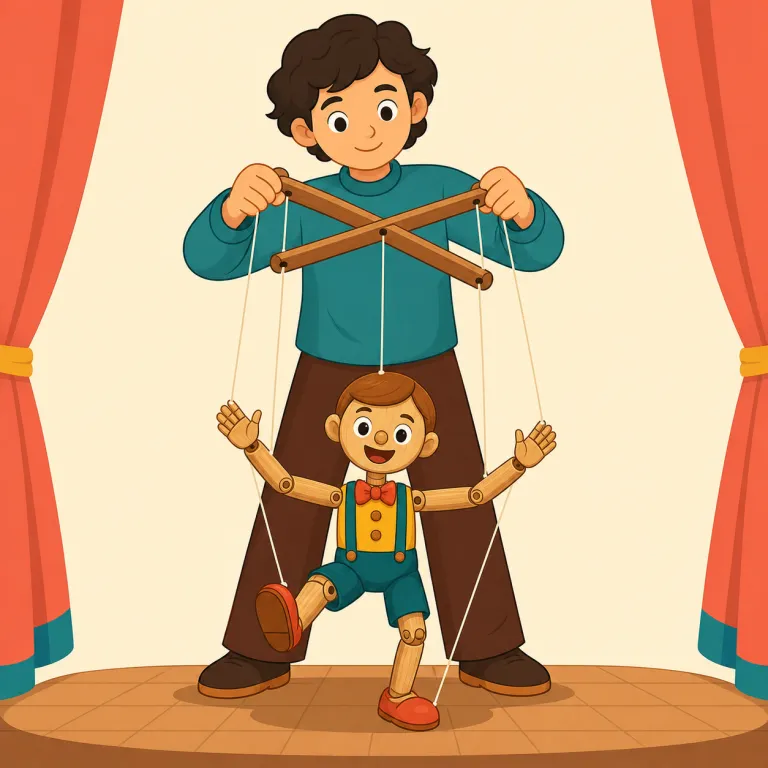
人形遣い
解説 Definition
人形劇や操り人形を操作・制御する人。舞台上で人形に命を吹き込み、人形の動きと表現をコントロールする職人です。
A puppeteer is a person who controls puppets in a performance. The word can also be used figuratively for someone who secretly controls other people or events from behind the scenes. The literal meaning is more basic, while the figurative use is more advanced.
覚え方のコツ Memory Tip
まず puppet を確実に押さえると覚えやすいです。puppeteer は『puppet を扱う人』と見れば意味がほぼ取れます。-eer は engineer のように『その仕事をする人』に出る形なので、人を表す語だと判断しやすいです。puppet が人形そのもの、puppeteer がそれを操る側。stage puppeteer, master puppeteer のように使われ、比喩では behind-the-scenes puppeteer で『裏で糸を引く人物』も表せます。controller より、糸で細かく動かす感じが強い語です。
First remember `puppet`, the doll or figure. Then add `-eer`, a suffix often used for a person connected with a job or activity, and you get the person who controls the puppet. It also has a strong image in metaphor: someone secretly pulling the strings.
例文
The puppeteer skillfully controlled the wooden marionettes on stage.
人形遣いは舞台上の木製マリオネットを巧みに操作した。
She became a professional puppeteer after studying traditional puppet theater.
彼女は伝統的な人形劇を学んだ後、プロの人形遣いになった。
The puppeteer's hands moved gracefully to make the puppet dance.
人形遣いの手が優雅に動いて、人形を踊らせた。
puppeteer の類義語・関連語
派生語
puppeteer の語源・成り立ち Etymology
puppeteer は puppet+-eer「…をする人」。puppet は古フランス語 popette「小さな人形」、さらにラテン語 pupa「少女・人形」にさかのぼるため、語全体で「人形を操る人」という成り立ち。意味がそのまま見える語で、関連語は puppetry, poppet。
Puppeteer is made from puppet and the ending -eer, meaning a person involved in an activity. Puppet came from Old French popette, "little doll," and goes back to Latin pupa, meaning "girl" or "doll." So the word originally meant simply a person who works with puppets. Related words include puppetry and poppet.
同じレベルの英単語をもっと
外部辞書で調べる
この単語を英単語クイズで覚えよう