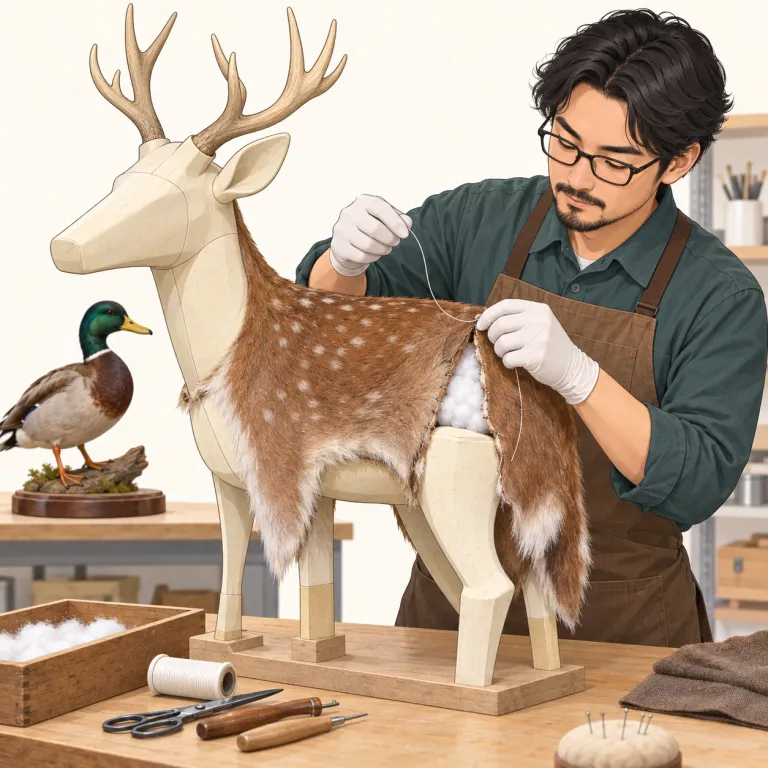
剥製術
解説 Definition
動物の剥製を作成する技術または職業。動物の皮を剥ぎ、詰め物をして標本にする技法。
Taxidermy is the art or process of preserving the bodies of dead animals and preparing them for display so they look lifelike. It is often seen in museums, hunting collections, and educational displays. The word usually refers to the skill or practice, not the finished object.
覚え方のコツ Memory Tip
覚えるときは、まず後半の dermy に注目して skin を連想すると定着しやすいです。医学語の dermatology などで derm- を見たことがあれば、「皮に関係する専門語だな」とつながります。さらに taxidermy は museum, specimen, preserved animal などと一緒に出やすく、「動物の体を保存して展示できる形にする技術」と場面ごと覚えると強いです。toy の stuffed animal とは別物で、こちらは本物の動物標本の文脈です。
Focus on "derm," the same root you see in "dermatology," which is about skin. That gives you a strong memory link to animal skin and preservation. It often appears with words like "museum," "specimen," and "preserved animal."
例文
He learned taxidermy to preserve animal specimens for the museum.
彼は博物館用の動物標本を保存するために剥製術を学んだ。
The museum displayed taxidermy specimens from the 19th century.
博物館は19世紀の剥製標本を展示していた。
Taxidermy requires both artistic skill and scientific knowledge.
剥製術は芸術的スキルと科学知識の両方が必要である。
taxidermy の類義語・関連語
taxidermy の語源・成り立ち Etymology
taxidermyはギリシャ語 taxis「配置」と derma「皮膚」からできた学術語で、フランス語形を経て英語に入りました。つまり「皮を整えて配置すること」で剥製術の核心を表し、dermatology や epidermis に derma の仲間が見えます。
Taxidermy was formed from Greek roots: taxis, meaning arrangement, and derma, meaning skin, and it entered English through French. The original idea was arranging or preparing skin in an ordered way. That sense narrowed to the practice of preserving animal skins and shaping them for display. Related words with the same skin root include dermatology and epidermis.
同じレベルの語彙をもっと
外部辞書で調べる
この英単語をクイズで覚えよう