公的活動を控える期間
noun 名詞主に英国英語で、人物や組織が一時的に表立った活動や情報発信を控える状態を指す。特に選挙前に政府が政策発表などを制限する期間についてin purdahの形で使われる、宗教的慣習から派生した比喩的用法である。
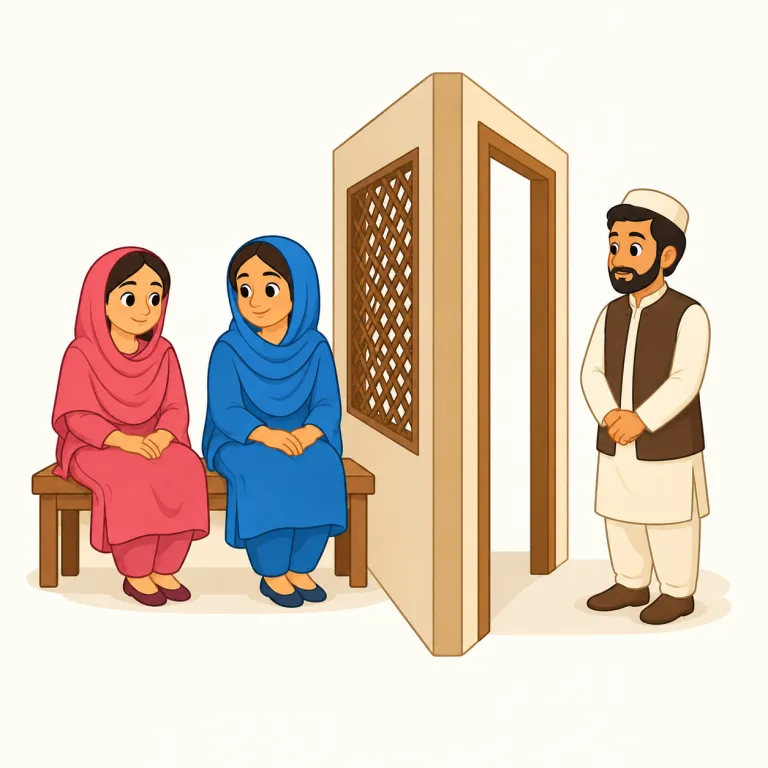
イスラム教やヒンドゥー教の一部の文化圏で、女性を公開の場や外部の人間の視線から隔離・保護する社会慣行。衣服や建築による隔離を含む。
Purdah is a social or religious custom in which women are kept separate from men outside their family or are expected to stay out of public view. The word is used mainly when talking about certain traditional societies and cultural practices. It is a sensitive term and is often used in historical, cultural, or academic discussion.
purdah は単に「ベール」ではなく、女性を public view から遠ざける social practice 全体を指す語として覚えると定着しやすいです。英語では observe purdah, live in purdah, strict purdah の形で出やすく、「衣服1枚」より「隔てて見せない仕組み」を思い浮かべるのがコツ。veil や curtain は道具、purdah は慣習・制度寄り、という違いを押さえると混同しにくくなります。
Remember this as more than just a piece of clothing like a `veil`. In English, it often appears in phrases such as `observe purdah` or `live in purdah`, which show it is a social custom or system. That contrast helps separate it from simple object words like `curtain` or `veil`.
Under purdah, women are secluded from men outside their immediate family.
プルダの慣習では、女性は近親者以外の男性から隔離されます。
Historically, purdah was observed by women of higher social classes in South Asian societies.
歴史的に、プルダは南アジア社会の上位階級の女性によって守られていました。
Some communities now interpret purdah as requiring modest dress rather than complete seclusion.
一部の共同体では現在、プルダを完全な隔離ではなく、肌の露出を抑えた服装を求める慣習と解釈しています。
文脈によって、次の意味でも使われます。
主に英国英語で、人物や組織が一時的に表立った活動や情報発信を控える状態を指す。特に選挙前に政府が政策発表などを制限する期間についてin purdahの形で使われる、宗教的慣習から派生した比喩的用法である。
purdah はウルドゥー語 pardah、さらにペルシア語 pardeh「幕・カーテン」に由来します。もともと「幕で隔てる」が核心で、同根の parda や pardeh を見ると、この語が単なる衣服名でなく「視線や空間を遮る仕組み」全体を指すと分かります。
Purdah comes into English from Urdu pardah, which comes from Persian pardeh, meaning "curtain" or "veil." The original idea is something that screens off or hides from view. From that, the word developed to refer not only to a covering but also to the broader practice of separation from sight. Related forms include parda and pardeh.
この英単語をクイズで覚えよう