再結合、再構成
noun 名詞いったん分かれた要素や既存の材料を再び組み合わせ、新しいまとまりを作ることを指します。芸術、文化、情報技術などで要素の組み直しや再編を述べる際にも使われ、遺伝子の組み換えに限定されません。
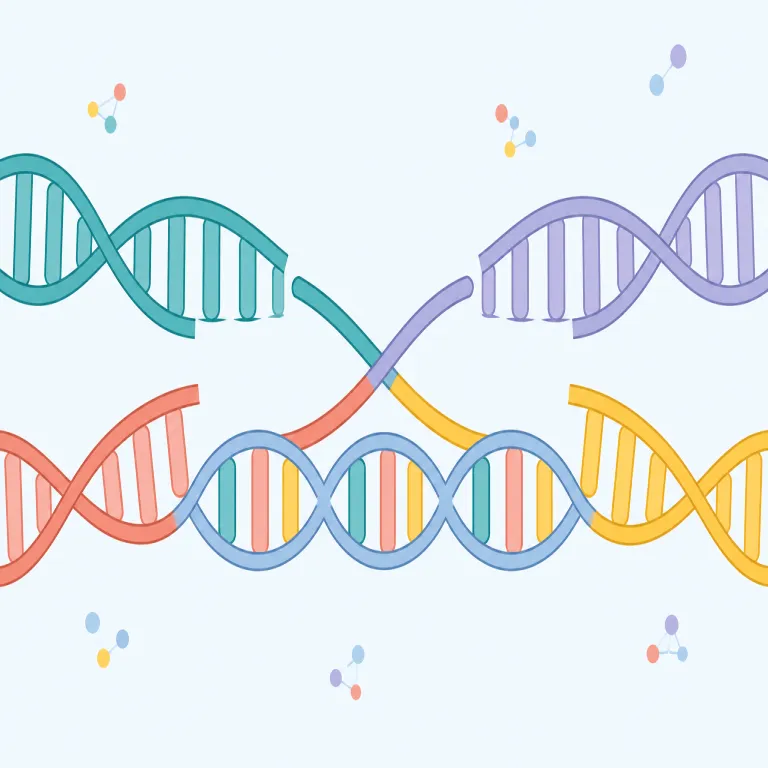
recombination はTOEFL 100・IELTS 7.5レベルの英単語で、「組み換え」という意味があります。発音記号は /ˌriːkɑːmbəˈneɪʃən/ です。
生物学では、異なるDNA配列が減数分裂などで交差しながら組み替わることで新しい遺伝子の組み合わせが生じる現象を指します。こうした組み換えにより生じた変化は子孫に多様な形質を伝え、遺伝子のプールに新しいバリエーションを加えます。遺伝的多様性を生み出す力として生態系の適応や育種の基盤にもなります。
Recombination means the process of combining parts again in a new arrangement. It is often used in biology and genetics, where genes or DNA are mixed in new ways. In a broader sense, it can also refer to reorganizing elements to create something different.
recombination は、まず combination を「組み合わせ」として押さえ、そこに re- が付いて「もう一度組み合わせ直す」と考えると記憶しやすいです。生物では DNA や遺伝子そのものが新規に作られるというより、親由来の部分どうしが入れ替わって新しい並びになる場面で出ます。genetic recombination, recombination rate などの形で見たら、mutation のような一点の変化ではなく、材料の組み合わせが再編成される現象だと区別すると定着しやすいです。
Start from `combination`, then add `re-` for `again` or `in a new way`. `Recombination` is about parts being rearranged into a new mix, not completely new material being created. That helps you separate it from `mutation`, which is a change in one part.
Genetic recombination creates genetic diversity.
遺伝的組み換えは遺伝的多様性を生み出します。
Recombination occurs during sexual reproduction.
組み換えは有性生殖の過程で起こります。
Scientists study recombination to understand inheritance.
科学者は遺伝を理解するために組み換えを研究しています。
文脈によって、次の意味でも使われます。
いったん分かれた要素や既存の材料を再び組み合わせ、新しいまとまりを作ることを指します。芸術、文化、情報技術などで要素の組み直しや再編を述べる際にも使われ、遺伝子の組み換えに限定されません。
recombination は re-(再び)+ combine(結び合わせる)+ -tion(こと)で成る語です。combine はラテン語 combinare に由来し、com-(共に)+ bini(二つずつ)が核なので、「別れたものをもう一度いっしょに組む」ことから「組み換え」の意味になります。関連語は combine, combination。
"Recombination" is formed from "re-" meaning "again," "combine," and the noun ending "-tion." "Combine" comes from Latin "combinare," built from "com-" meaning "together" and a root linked to "two by two." The word first suggests joining things together again, and from that it developed the sense of rearranging parts into a new combination; related words are "combine" and "combination."
この英単語をクイズで覚えよう