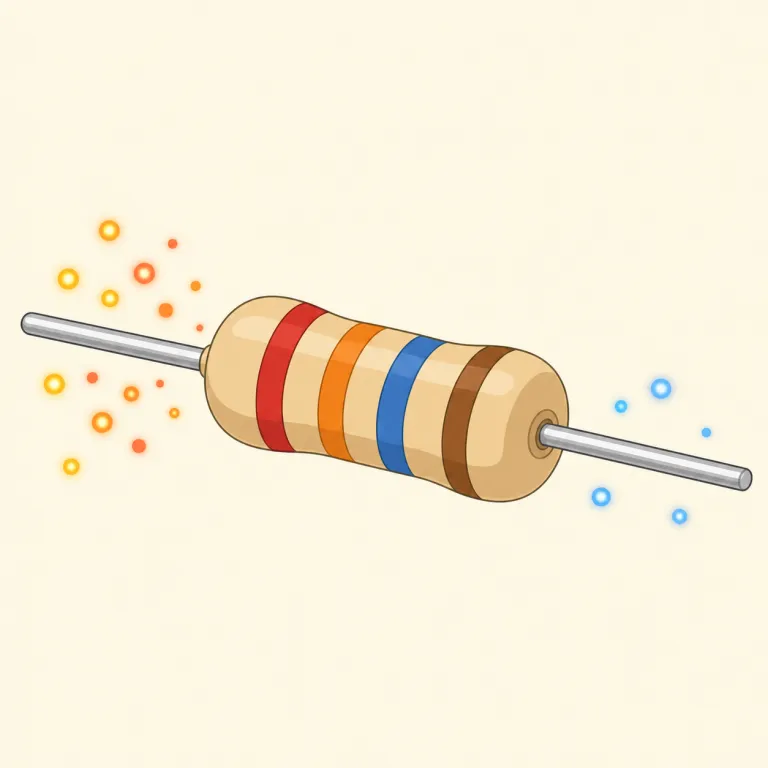
resistor
抵抗器
解説 Definition
電気回路内で電流の流れを制限する電子部品です。電気抵抗を利用して回路の動作を制御したり、電圧や電流の値を調整したりします。熱の発生や消費電力にも気を配って回路設計に組み込みます。
A resistor is a small electrical part that limits the flow of electric current in a circuit. It helps control voltage and protect other parts from too much electricity. The word is mainly used in electronics and engineering.
覚え方のコツ Memory Tip
resist「抵抗する」を知っていれば入りやすい語です。-or は actor や projector と同じく「するもの・装置」を作る形なので、resistor は「抵抗する役目の部品」と捉えると覚えやすいです。電気では current flows に対して流れをそのまま通すのでなく、少しブレーキをかける部品だとイメージすると定着します。resistance は性質や値、resistor は実物の部品、という区別もセットで押さえると混同しにくいです。
Start from `resist`, then notice `-or`, like in `actor` or `projector`, for a thing that does a job. A `resistor` is the part that resists. In electricity, imagine it as a small brake that slows the flow.
例文
The resistor reduces the current flowing through the circuit.
その抵抗器は回路を流れる電流を減少させます。
We need to install a 1000-ohm resistor in this position.
この位置に1000オームの抵抗器を取り付ける必要があります。
The color bands on the resistor indicate its resistance value.
抵抗器の色帯は、その抵抗値を示します。
resistor の類義語・関連語
resistor の語源・成り立ち Etymology
resistor は resist「逆らう・抵抗する」に、行為者や道具を表す接尾辞 -or が付いた語です。resist はラテン語 resistere(re-「逆に」+ sistere「立たせる」)にさかのぼり、「流れに立ちはだかる物」だから抵抗器という意味になります。関連語は resistance, insist です。
"Resistor" comes from "resist" plus the suffix "-or," which often names a person or thing that does something. "Resist" goes back to Latin "resistere," from "re-" meaning "against" and "sistere" meaning "cause to stand." The basic image is of something standing against a force, which later gave the technical sense of a device that opposes electric flow. Related words include "resistance" and "insist."
同じレベルの語彙をもっと
外部辞書で調べる
この英単語をクイズで覚えよう