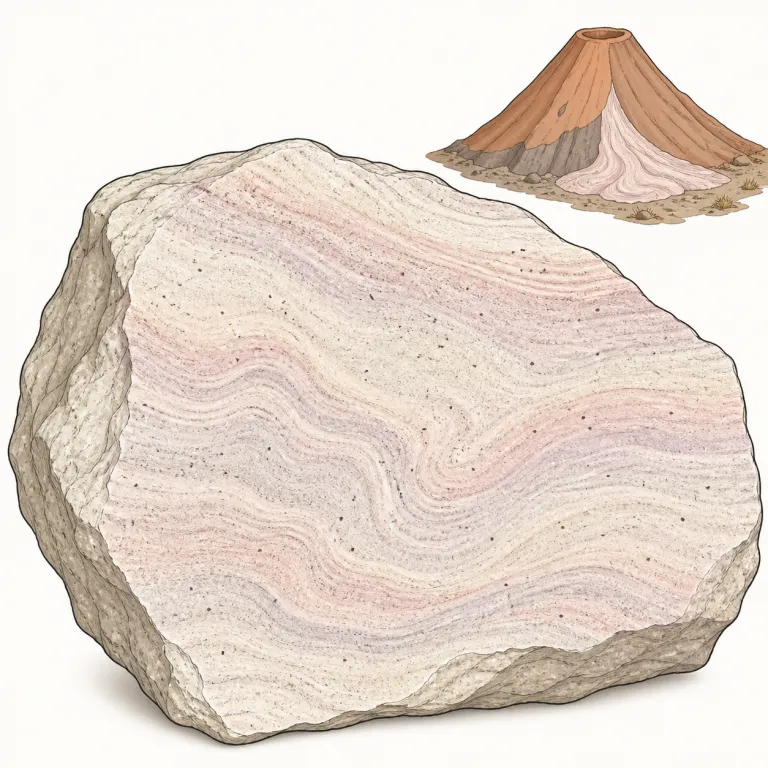
流紋岩
解説 Definition
火山性の酸性火成岩。花崗岩と同じ化学成分を持ちながら、溶岩の急速冷却により細粒結晶構造を示します。
Rhyolite is a type of volcanic rock that forms from lava with a lot of silica. It is usually light in color and is studied in geology and earth science. The word is mainly used in scientific or natural history contexts.
覚え方のコツ Memory Tip
地学の語彙では語尾の -ite が「鉱物・岩石名」の目印になりやすく、rhyolite もまず岩石名だと固定すると覚えやすいです。意味は単独で丸暗記するより、basalt(玄武岩)→ andesite(安山岩)→ rhyolite(流紋岩)と、火山岩を並べた中で「珪酸分が高く、比較的明るい色の側」に置くと整理しやすいです。さらに granite の“火山岩版”として対で覚えると定着します。文脈では volcanic rock, lava, dome, fine-grained などと一緒に出やすく、黒っぽい basalt と対比すると印象に残ります。
Notice the ending `-ite`. In geology, `-ite` often signals a mineral or rock name, so that gives you the category first. To fix it in memory, place it with volcanic rocks like `basalt`, `andesite`, and `rhyolite`, with `rhyolite` on the more silica-rich, lighter-colored side.
例文
Rhyolite forms when lava cools rapidly on the Earth's surface.
流紋岩は溶岩が地表で急速に冷却されるときに形成されます。
Geologists use rhyolite samples to study volcanic activity.
地質学者は火山活動を研究するために流紋岩のサンプルを使用します。
The volcanic plateau contains extensive deposits of rhyolite.
その火山台地には流紋岩が広範囲に堆積しています。
rhyolite の類義語・関連語
紛らわしい語
rhyolite の語源・成り立ち Etymology
rhyolite はギリシャ語 rhyo-『流れる』と lithos『石』から成り、『流れた石』が原義です。lithograph や monolith と同じ lith- をもち、溶岩が流れて固まった岩石だと語源からその成り立ちまで見えてきます。
Rhyolite comes from Greek rhyo-, meaning "to flow," and lithos, meaning "stone." Its original sense is "flow-stone" or "flowing stone." The name reflects rock formed from flowing lava, and it shares the lith- root with words like lithograph and monolith.
同じレベルの語彙をもっと
外部辞書で調べる
この英単語をクイズで覚えよう