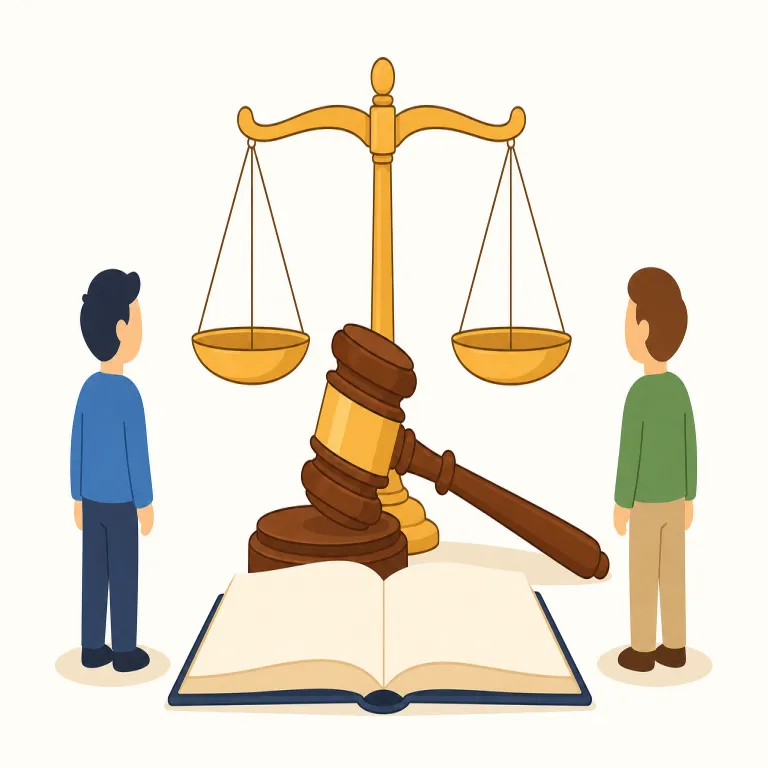
ruling
ruling は英検2級レベルの英単語で、「裁定、与党の、支配的な」という意味があります。発音記号は /ˈruːlɪŋ/ です。
意味一覧 (2件)
裁定
解説 Definition
裁判所や権威ある人が公式に下した決定や判定を意味します。何かについての最終的な決め手となる意見や指示を指します。
A ruling is an official decision made by a judge, court, or other authority. It is commonly used in law, government, and formal decision-making. The word often refers to the final answer about what is allowed, required, or true in a case.
覚え方のコツ Memory Tip
まず rule「規則・支配する」が見えていれば覚えやすい語です。ruling はその rule から出た「その場を決める判断・公式決定」という感覚でつかむと定着します。judge’s ruling, court ruling の形でよく出て、法律・裁判の記事では「判決そのもの」より広く、裁判官や裁判所の個別の判断を指すことが多いです。rule は一般的な規則、ruling は権威ある側が下した今回の決定、という差を意識すると混同しにくくなります。
Start from `rule`. A `ruling` is a decision that comes from someone with authority, such as a judge or court. Remember common pairs like `court ruling` and `judge's ruling`, and contrast it with `rule`, which is more general.
例文
The ruling is fair.
その裁定は公平です。
The judge gives a ruling.
裁判官が裁定を出します。
We follow the teacher's ruling.
私たちは先生の裁定に従います。
与党の、支配的な
(意味 2)解説 Definition
政治や組織で実際に権力を握り、物事を決める立場にあることを表す形容詞です。ruling party や ruling class のように、統治している側・支配している側を述べるときに使われます。
覚え方のコツ Memory Tip
まず rule「支配する・統治する」が見えていれば覚えやすい語です。ruling はその rule から出た「いま実際に支配している側の」という感覚でつかむと定着します。ruling party, ruling class の形でよく出て、政治・社会の記事では「決定」そのものではなく、権力を握って物事を動かす側を表します。court ruling の名詞「裁定」とは切り分けて、形容詞では「統治している・支配的な」と意識すると混同しにくくなります。
例文
The ruling party won the election again.
与党は再び選挙に勝った。
The ruling class tried to keep its power.
支配階級は権力を維持しようとした。
The ruling party chose a new leader.
与党は新しい党首を選んだ。
ruling の類義語・関連語
ruling の語源・成り立ち Etymology
ruling は rule の動名詞・派生名詞で、古フランス語 riuler、さらにラテン語 regula「まっすぐな棒・規則」に由来します。regula は「線をまっすぐ導く」が原義なので、そこから「判断の基準」ひいては法廷での「裁定」の意味が生まれました。関連語に regular、regulate があります。
Ruling comes from the verb rule plus the ending -ing. Rule came into English through Old French from Latin regula, meaning "straight stick" or "guide," which later came to mean a standard or law. From the idea of following a standard, ruling developed the sense of an official decision or judgment. Related English words include regular and regulate.
同じレベルの英単語をもっと
英検2級の一覧へ →外部辞書で調べる
この単語を英単語クイズで覚えよう