位置していた、置かれていた
verb 動詞建物や物がある場所に位置していた、または置かれたままだったことを表します。The house sat on a hill や The box sat unopened のように使い、人が腰を下ろしたのではなく、所在や持続する状態を描写します。
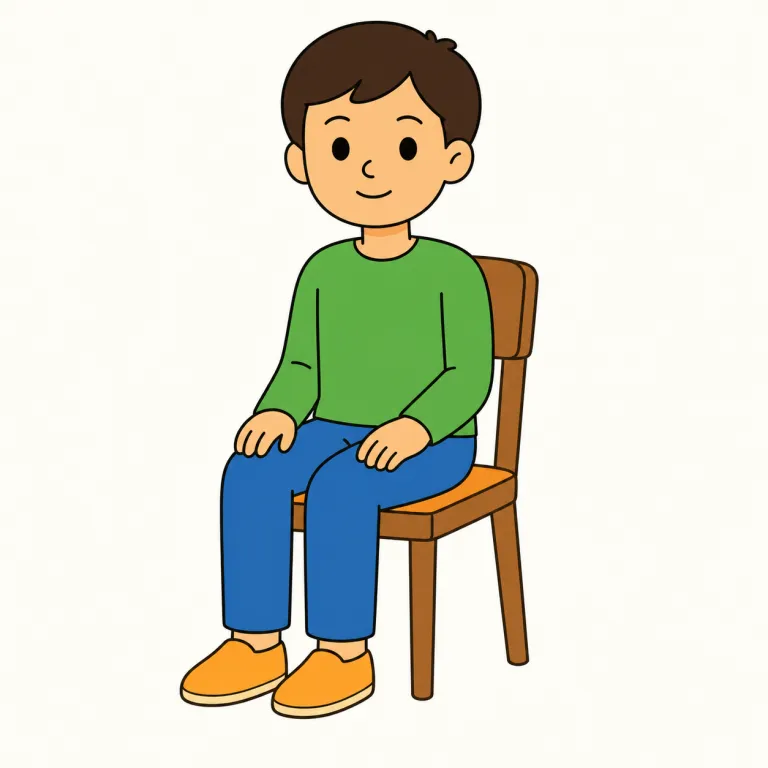
「座った」は、腰を下ろして身体を支える姿勢を取り、過去にその行動をしたことを示します。椅子や床などに足を折り曲げて身体を安定させた状態を表します。会話でその行為をした状況やタイミングを伝える際によく使われます。
Sat is the past tense of sit. It means that someone was in a seated position or moved into one in the past. Because it is an irregular verb form, it does not follow the usual -ed pattern.
sat は sit の過去形として、まず sit-sat-sat でまとめて覚えるのが最短です。現在の sit「座る」に対して、sat は「実際に腰を下ろしたあと」の場面を表します。sat on a chair, sat by the window, sat there quietly のように、場所や様子を添えて出ることが多いです。be seated よりずっと日常的で、会話では単純に sat を使うことが多いと押さえると定着しやすいです。set と綴りが近いので混同しないよう注意。
Memorize it as part of the pattern `sit-sat-sat`. `Sat` is the past form, so picture the action already completed: someone was in a seated position. It is common in simple phrases like `sat on a chair`, `sat by the window`, and `sat there quietly`.
I sat on the chair.
私はいすに座りました。
He sat by the window.
彼は窓のそばに座りました。
They sat under a tree.
彼らは木の下に座りました。
文脈によって、次の意味でも使われます。
建物や物がある場所に位置していた、または置かれたままだったことを表します。The house sat on a hill や The box sat unopened のように使い、人が腰を下ろしたのではなく、所在や持続する状態を描写します。
委員会・議会・陪審などの構成員として参加し、審議や職務に当たったことを表します。sat on a committee や sat on a jury の形が典型で、単に椅子に腰掛けたという意味ではありません。
主にイギリス英語で、試験を受けたことを表す sit an exam の過去形です。sat an exam のように試験を直接目的語に取り、物理的に座ったことではなく、受験したという行為全体を指します。
古英語 sittan(座る)の過去形 sæt が語源で、ゲルマン祖語 *sitjaną に遡る。印欧祖語 *sed-(座る)が根源で、ラテン語 sedere も同根。seat(座席)やsediment(堆積物)も同じ語根を持ち、「落ち着く・定着する」という核心的意味がある。
Sat is the past form of sit, from Old English sæt, linked to sittan and older Germanic forms. It goes back to the Indo-European root sed-, meaning "to sit." This root also appears in Latin sedere and in English words like seat and sediment. The core idea is staying settled or resting in one place.
この英単語をクイズで覚えよう