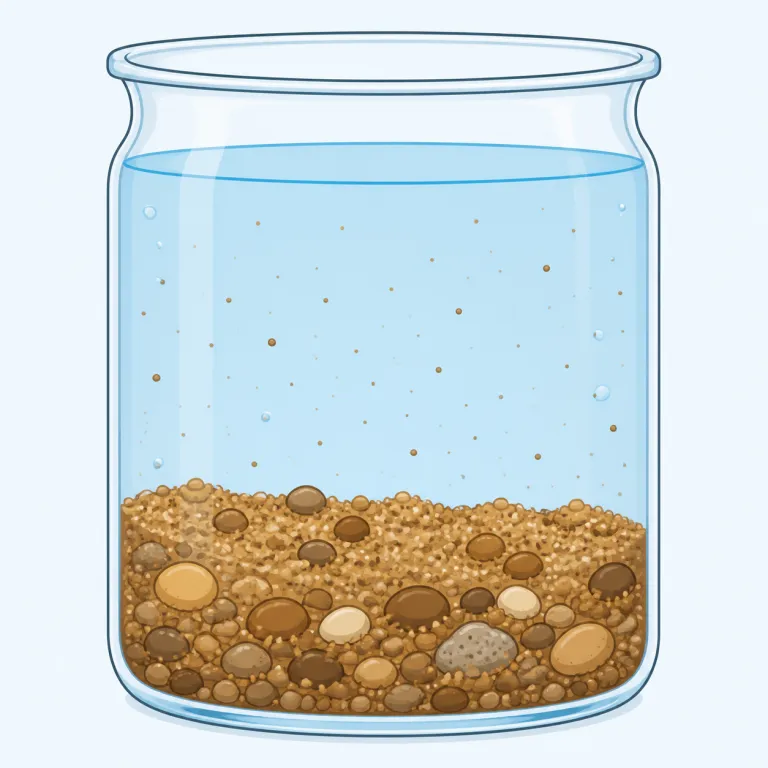
sediment
sediment は英検1級・TOEFL 60・IELTS 5.5レベルの英単語で、「沈殿物、堆積物、泥」という意味があります。発音記号は /ˈsɛdɪmənt/ です。
意味一覧 (3件)
沈殿物
解説 Definition
「sediment」とは、水や空気中に漂っていた粒子が底に沈んで積もったものを指す名詞です。川底や湖底に溜まる泥や砂、地質学的な堆積物など自然環境での沈殿物を指すことが多いです。ワインや液体薬品の容器の底に溜まる澱(おり)を指すこともあります。
Sediment is solid material that settles at the bottom of a liquid or is carried and left by water, wind, or ice. It is often used in geology, rivers, lakes, and chemistry. The word usually refers to small natural particles such as sand, mud, or mineral matter.
覚え方のコツ Memory Tip
sediment は、水や液体の中に漂っていた細かな粒子が settle to the bottom「底に沈む」ことで残った物です。ワインの澱、水や薬品の容器の底にたまる細かい物質、川底や湖底に沈んだ泥や砂を思い浮かべるとよいでしょう。river sediment, sediment at the bottom のように、上澄みではなく下に沈んで見える残留物・沈殿物として覚えます。
Picture tiny bits in water or another liquid that slowly settle to the bottom. Sediment is the material left there after that settling happens. Word pairs like river sediment and sediment at the bottom help fix the image.
例文
Sediment from the river gradually builds up to form new land over centuries.
川からの堆積物が何世紀もかけて徐々に積み重なり、新たな土地を形成します。
The scientist collected sediment samples from the lake bed for analysis.
科学者は分析のために湖底から堆積物のサンプルを採取しました。
There was a layer of sediment at the bottom of the old wine bottle.
古いワインボトルの底に澱の層が溜まっていました。
堆積物
(意味 2)解説 Definition
川・海・湖・風・氷などによって運ばれ、地表や水底に積もった砂・泥・小石などを指します。地質、環境、河川の話で、長い時間をかけて層や地形を作る物質として使われます。
Sediment is sand, mud, small stones, and other material that is carried by water, wind, or ice and then left on the ground or at the bottom of water. It is often used in geology, environmental science, and river studies. Over a long time, sediment can build layers and help form landforms. The word can also mean material that settles at the bottom of a liquid, but here it mainly refers to natural deposits in the environment.
覚え方のコツ Memory Tip
sediment は easy な settle「落ち着く・沈む」と同じ発想で覚えると安定します。水や風に運ばれた sand, mud, rock particles がどこかに settle して積もったものが sediment。river sediment, marine sediment, sediment layer のように自然環境や地質の文脈でよく出ます。液体の底にできる「沈殿物」の意味もありますが、ここでは川や海などが作る広い「堆積物」のイメージを中心に押さえましょう。
Think of sediment through the idea of settle. Sand, mud, and tiny pieces of rock are carried by water, wind, or ice, and then they settle somewhere and build up. That is why sediment often appears in phrases like river sediment, marine sediment, and sediment layer. It can also mean material at the bottom of a liquid, but the main image here is natural material piling up in the environment.
例文
The river left a thick layer of sediment after the flood.
洪水のあと、その川は厚い堆積物の層を残した。
Scientists studied the sediment at the bottom of the lake to learn about past climate changes.
科学者たちは過去の気候変化を調べるために、湖底の堆積物を研究した。
Waves and currents move sediment along the coast and slowly change the shape of the beach.
波や海流は海岸に沿って堆積物を運び、浜の形を少しずつ変えていく。
泥
(意味 3)解説 Definition
水中に浮遊する固体粒子が沈降して水底に堆積した物質である。砂や泥、鉱物などから構成され、河川の流量や土壌侵食によって形成される。港湾や貯水池では定期的な除去が必要な場合がある。
例文
The river sediment carried nutrients to the floodplain.
川の泥は氾濫原に栄養素を運んだ。
Heavy sediment accumulation required dredging the harbor.
港に蓄積した重い泥は浚渫が必要だった。
The sediment from the construction site polluted the water.
建設現場からの泥は水を汚染した。
sediment の語源・成り立ち Etymology
sediment はラテン語 sedimentum 由来で、sed-「座る」+ -mentum「もの」。sedentary や reside も同じ sed 系で、「座って下に落ち着く」イメージがそのまま沈殿物の意味になり、ただの汚れでなく落ち着いた結果だと見えてきます。
"Sediment" comes from Latin sedimentum, based on a root meaning "to sit." Related English words include "sedentary" and "reside," which share the same old idea of sitting or settling. The meaning developed from something that sits down or settles at the bottom to the modern sense of material left after settling.
外部辞書で調べる
この単語を英単語クイズで覚えよう