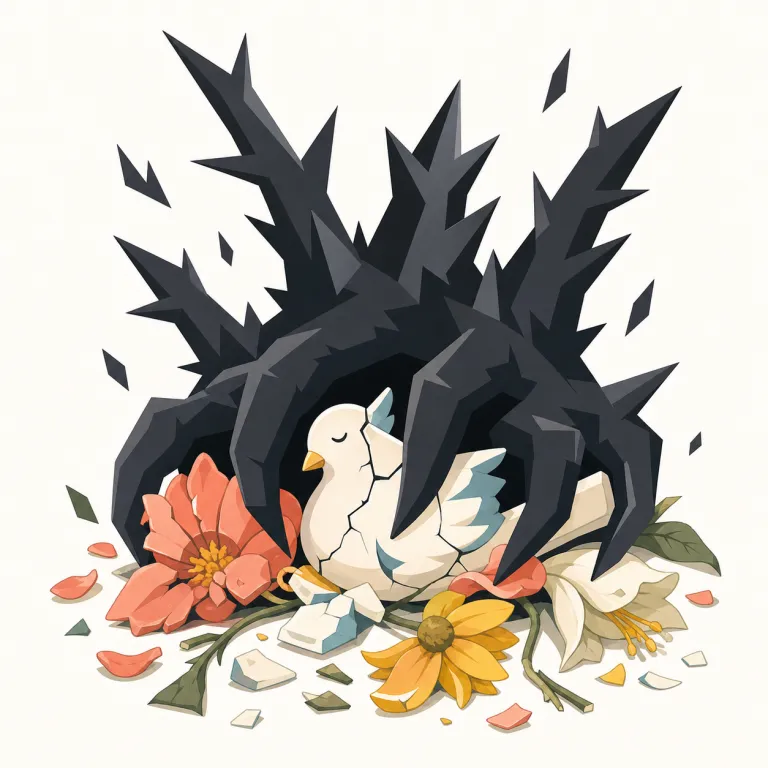
残虐さ
解説 Definition
残虐さは、他者に対して異常な残酷さや暴力性を示す行動や性質です。人道的な感情を欠き、他人の苦痛を平然と与える傾向を指します。
Savagery means extreme violence, cruelty, or a complete lack of civilized behavior. It is often used when describing brutal actions in war, crime, or human behavior. The word has a strong negative meaning and sounds formal or serious.
覚え方のコツ Memory Tip
まず savage を「野蛮な・残忍な」で固める。savagery はそこに -ery が付いて、「そういう性質・あり方」へ名詞化した形だと見ると覚えやすい。つまり『savage さ』= 残虐さ。単なる roughness や violence より、人間らしさを欠く、ぞっとするむごさに寄りやすい語。savage は形容詞でも名詞でも見かけるが、savagery は抽象名詞。act of savagery, the savagery of war のように、戦争・虐待・襲撃などショッキングな文脈で出ることが多い。
Start with `savage`, a stronger word than just `rough` or `violent`. The ending `-ery` turns it into a quality or condition, so `savagery` means "the savage quality." It often appears in serious phrases like `the savagery of war` or `an act of savagery`.
例文
The warrior's savagery in battle was legendary.
その戦士の戦闘での残虐さは伝説的でした。
The historical accounts described the savagery of the ancient conquests.
史料には、古代の征服に伴う残虐行為が記されていました。
His actions shocked everyone with their sheer savagery.
彼の行動は、そのあまりの残虐さで皆に衝撃を与えた。
savagery の類義語・関連語
savagery の語源・成り立ち Etymology
savage に性質・状態を表す -ery が付いた語で、savage は古フランス語 sauvage、さらにラテン語 silvaticus「森の」にさかのぼります。『森に住む者』という感覚から「野蛮な」が生まれ、そこから「残虐さ」の意となり、関連語に savage、sylvan があります。
Savagery comes from savage with the suffix -ery, which forms nouns for a quality or condition. Savage came through Old French sauvage from Latin silvaticus, meaning "of the woods" or "wild." The idea moved from "living in the forest" to "uncivilized" and then to "cruel or violent behavior." A related English word is sylvan, which also comes from the idea of the forest.
同じレベルの英単語をもっと
外部辞書で調べる
この単語を英単語クイズで覚えよう