荒々しさ、乱暴さ
noun 名詞人の態度、言葉遣い、扱い方、競技などが穏やかでなく、乱暴または手荒である性質を指す。表面の物理的な粗さではなく、行為や振る舞いに感じられる激しさを表す。
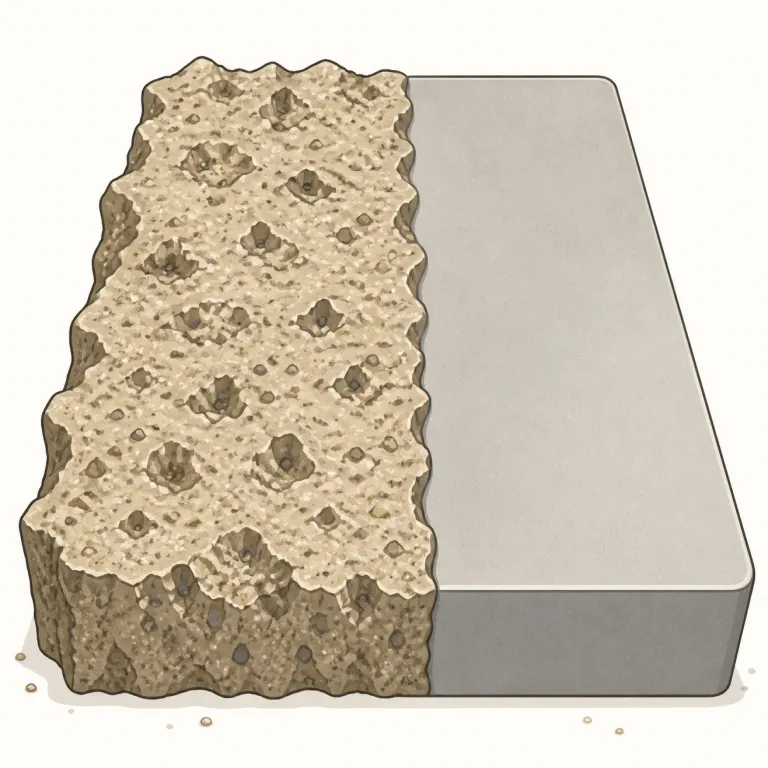
物の表面のザラザラした状態や滑らかさがないことを指します。触ったときに均一でない感触があり、摩擦が高い質感を表す語です。
Roughness is the quality of having an uneven, not smooth surface. It can also describe a harsh or not gentle quality in sound, behavior, or treatment. The word is used both for physical texture and for figurative meanings.
rough を知っていれば、その性質を名詞にした形が roughness。まず smooth / smoothness と対で覚えると定着しやすいです。触ったときに引っかかる、均一でない、ザラつく感触が rough で、その“粗い感じそのもの”が roughness。surface roughness, skin roughness, road roughness のように表面の状態を述べる場面で出やすく、見た目よりも手触りや摩擦の高さを連想すると覚えやすいです。rough には「大まかな」の意味もありますが、roughness は基本的に物理的な粗さを指す、と切り分けると混同しません。
Learn it as the noun form of `rough`, and pair it with `smoothness`. That contrast makes it easy to remember. It often appears in technical phrases like `surface roughness`, so think of texture, friction, and an uneven feel.
The roughness of the sandpaper makes it ideal for woodworking.
その紙やすりは表面が粗いため、木工に適しています。
We need to reduce the roughness of the material to improve quality.
品質を改善するために材料の粗さを減らす必要があります。
The roughness of the stone surface made it hard to clean.
石の表面が粗いため、きれいにするのが大変でした。
文脈によって、次の意味でも使われます。
人の態度、言葉遣い、扱い方、競技などが穏やかでなく、乱暴または手荒である性質を指す。表面の物理的な粗さではなく、行為や振る舞いに感じられる激しさを表す。
roughness は Old English ruh「ざらついた・毛羽立った」由来の rough に、性質を表す -ness が付いた語です。roughen や roughly と同根で、もとは「滑らかでない手触り」から、物理的な粗さにも態度の荒さにも広がりました。
Roughness comes from rough plus the noun suffix -ness. Rough goes back to Old English ruh, meaning "hairy," "shaggy," or "not smooth." From the physical sense of an uneven surface, the idea later also spread to less literal kinds of harshness.
この英単語をクイズで覚えよう