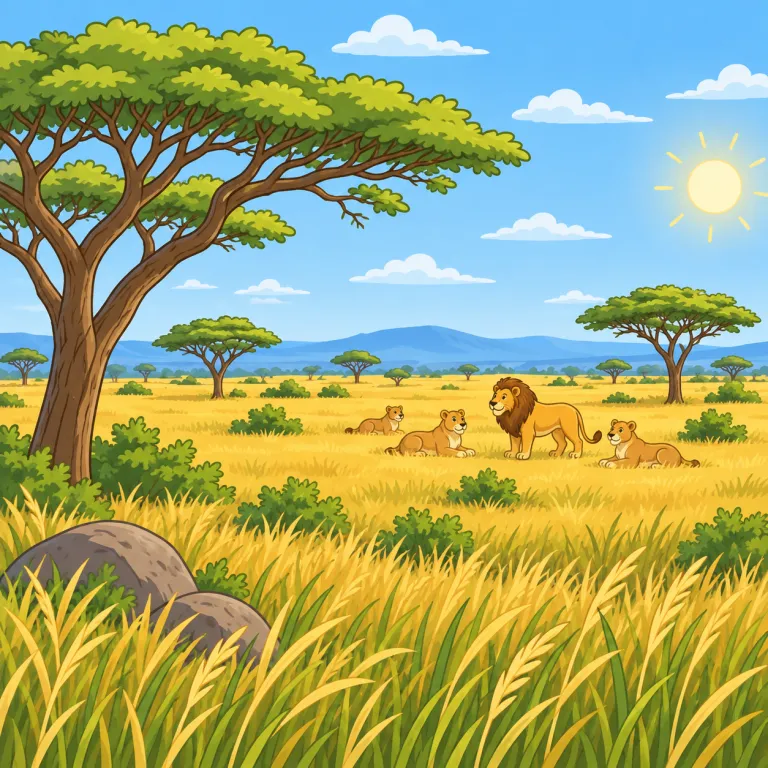
サバンナ
解説 Definition
savanna は、木がまばらに生えた熱帯・亜熱帯の草原地帯「サバンナ」を指します。日本語の「サバンナ」とほぼ同じ意味で、動物の生息地や気候帯の説明でよく使われます。
A savanna is a tropical or subtropical grassland with widely scattered trees and a climate that commonly has distinct wet and dry seasons. Such regions support grazing animals, predators, and other wildlife adapted to open habitats.
覚え方のコツ Memory Tip
タイノ語で木の少ない平原を表した語が、スペイン語 sabana を経て英語の savanna になりました。「熱帯の広い草原に木がまばら」という景観を核にし、African savanna、rainy season、grass、wildlife と結び付けます。savannah は同じ語の綴り違いです。
Picture a broad tropical grassland where grasses dominate and trees stand far apart. That landscape is a savanna. Connect the word with common phrases such as the African savanna, savanna wildlife, the rainy season, and the dry season. The spelling reflects a word that traveled from a Caribbean Indigenous language through Spanish, so it does not divide neatly into familiar English roots. Also remember that savannah, with a final h, is simply an alternative spelling, not a different type of habitat.
例文
Lions live in parts of the African savanna.
ライオンはアフリカのサバンナの一部に生息しています。
The savanna becomes greener after the rainy season begins.
雨季が始まると、サバンナはより緑になります。
Researchers measured how much grass grew on the savanna.
研究者たちは、サバンナでどれだけ草が育ったかを測定しました。
savanna の類義語・関連語
savanna の語源・成り立ち Etymology
savanna はスペイン語 sabana を経て、タイノ語 zabana「木の少ない平原」にさかのぼります。土地の景色を表す語がそのまま英語に入ったので、『広く開けた草地』という意味が自然に見え、関連語に綴り違いの savannah があります。
English savanna came through Spanish sabana from a Taíno word commonly recorded as zabana, referring to an open, relatively treeless plain. European writers adopted the term when describing Caribbean landscapes, and English later applied it more broadly to tropical and subtropical grasslands with scattered trees. The alternative spelling savannah developed in English and has the same geographical meaning.
同じレベルの語彙をもっと
外部辞書で調べる
この英単語をクイズで覚えよう