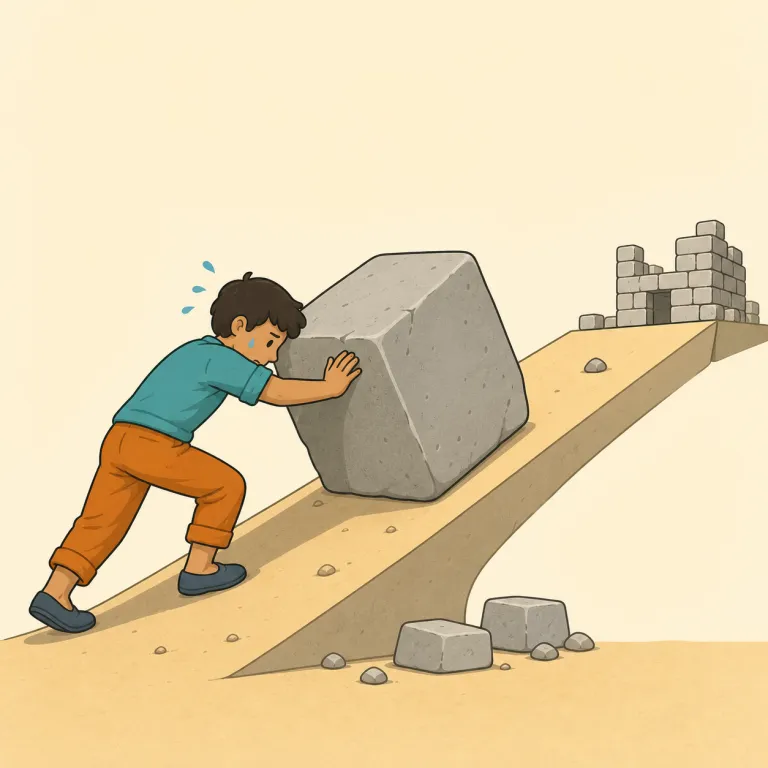
重い足取りで進む
verb 動詞ぬかるみや長い道などを、疲れながら苦労して進むことを表します。slog through、slog across、slog up などの形が多く、普通に歩く場合より身体的な負担の大きさを強調します。
長時間にわたって努力と忍耐を要する、つらく単調な仕事や作業。
A long, difficult, and often monotonous piece of work that requires sustained effort and patience. It can also mean the exhausting process of completing such work.
a long/hard slog(長くつらい骨折り仕事)が定番。泥の中を一歩ずつ重く進むように、成果まで時間がかかる作業を思い浮かべる。hard work よりも「長く、うんざりするほど骨が折れる」という感覚が強く、It was a slog の形でもよく使われる。
Picture yourself moving slowly through deep mud, taking one heavy step at a time. A slog is more tiring and drawn out than ordinary hard work. Remember the common phrases “a long slog” and “a hard slog.”
Finishing the report was a long slog.
その報告書を仕上げるのは、長く骨の折れる作業だった。
Cleaning the entire building was a hard slog.
建物全体の掃除は大変な骨折り仕事だった。
The final part of the project became a real slog.
その計画の最終段階は本当に骨折り仕事になった。
文脈によって、次の意味でも使われます。
ぬかるみや長い道などを、疲れながら苦労して進むことを表します。slog through、slog across、slog up などの形が多く、普通に歩く場合より身体的な負担の大きさを強調します。
slog は主にスコットランド系英語の slog「強く打つ・骨の折れる働きをする」から来た語で、北欧系語源と考えられます。もとは一撃一撃を重く加える感じで、そこから「長くきつい奮闘」「骨折り仕事」という名詞になり、slogger も同系です。
The noun comes from a chiefly Scottish English verb meaning to hit hard or work laboriously. Its ultimate origin is uncertain, though a connection with slug has been proposed. The sense developed from repeated heavy effort to a long and difficult task.
この英単語をクイズで覚えよう