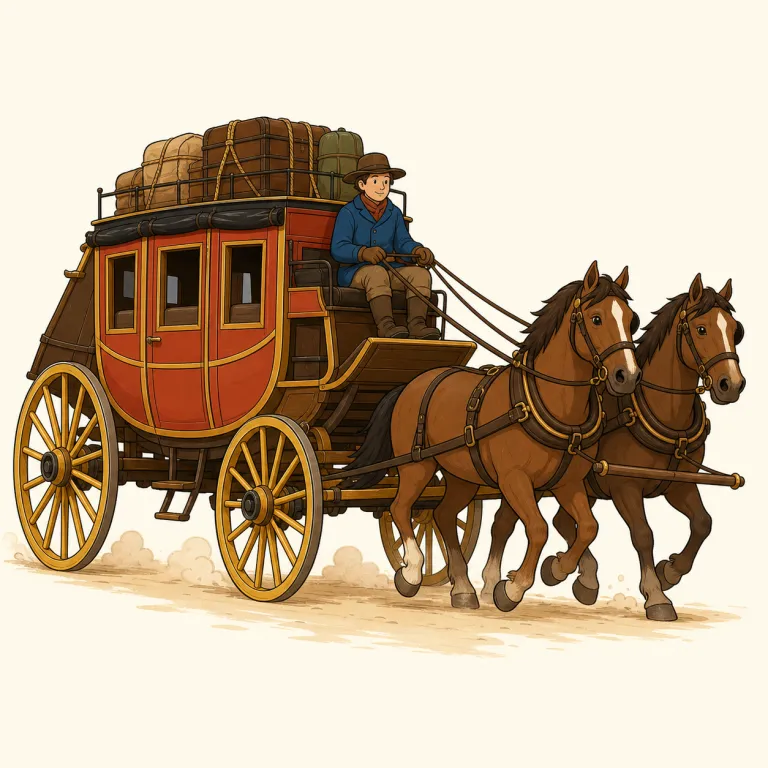
駅馬車
解説 Definition
乗客を運ぶために馬に引かれた大型の公開乗合馬車。18世紀から19世紀に主要な交通手段だった。
A stagecoach is a large horse-drawn carriage that carried passengers and mail over long distances in the past. It was commonly used before railways and cars became common. The word is mainly used in historical contexts.
覚え方のコツ Memory Tip
stage と coach に分けて覚えると定着しやすい。coach は現代でも long-distance coach で「長距離バス」の語感があり、stagecoach はその昔版だと考えるとよい。stage は舞台ではなく「旅の一区間」を意識すると、宿場から宿場へ区切って進む乗り合い馬車のイメージが固まる。train や wagon よりも、決まった区間を人を乗せて走る公共交通に近い語感。西部劇で人や郵便を運ぶ、揺れる大型馬車の場面と結びつけると忘れにくい。
Split it into `stage` + `coach`. Here, `coach` is like a long-distance coach bus, and `stage` means one part of a journey, not a theater stage. Picture an old public coach moving from stop to stop across the Wild West.
例文
The stagecoach traveled the dusty road carrying passengers and mail.
駅馬車は乗客と郵便を運びながら埃っぽい道を進んだ。
In the old western films, bandits often robbed stagecoaches.
古い西部劇では、盗賊がしばしば駅馬車を襲った。
The stagecoach was the primary means of long-distance travel in colonial America.
駅馬車は植民地時代のアメリカでの長距離旅行の主要な手段だった。
stagecoach の類義語・関連語
類義語
紛らわしい語
stagecoach の語源・成り立ち Etymology
stagecoach は stage と coach の複合語で、stage は「区切られた行程」、coach はハンガリー語 kocsi 由来です。つまり「宿場ごとに進む馬車」という原義で、staging や coachman を見ると、旅の区切りと乗り物がそのまま一語になったとわかります。
"Stagecoach" is a compound of "stage" and "coach." Here, "stage" originally meant a part of a journey between stopping places, while "coach" came into English through European languages from Hungarian "kocsi," meaning a carriage from the town of Kocs. The word first meant a coach that traveled in stages from one stop to the next.
同じレベルの語彙をもっと
外部辞書で調べる
この英単語をクイズで覚えよう