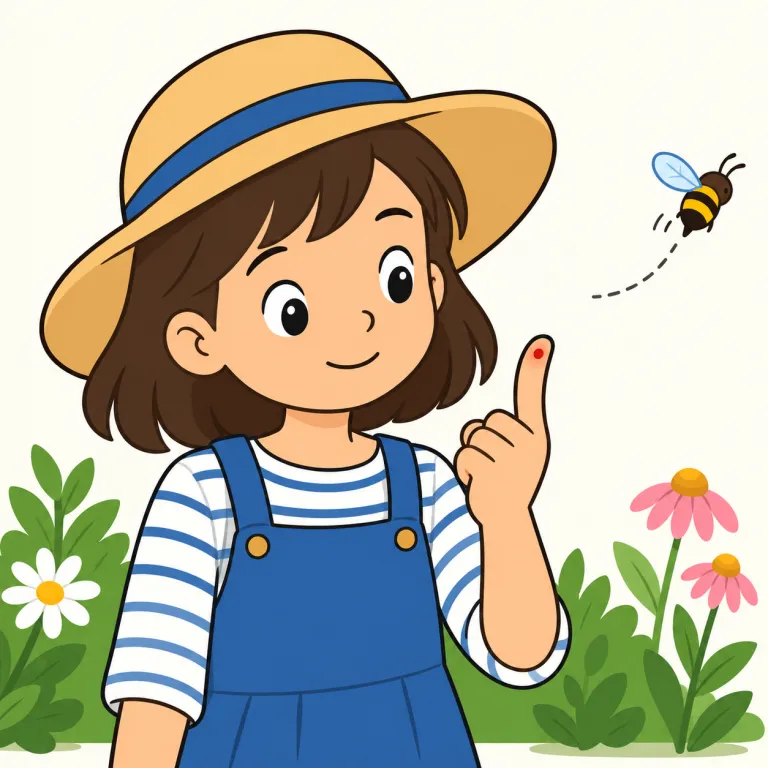
刺された
解説 Definition
stung は sting(刺す、ちくりと痛ませる)の過去形・過去分詞です。虫などに刺されたことや、刺すような痛みを受けたことを表します。
Stung is the past-tense and past-participle form of sting. It describes being pierced by an insect or similar creature, or experiencing a sharp, burning pain; in other contexts, it can describe emotional hurt caused by words or actions.
覚え方のコツ Memory Tip
sting「刺す・ひりひり痛ませる」の不規則な過去形・過去分詞で、母音が i から u に変わる sting–stung–stung を一組で覚えます。発音は /stʌŋ/。was stung by a bee/got stung は「刺された」、my hand stung は「手がひりひりした」で、受け身と自動詞的用法の両方を押さえましょう。
Learn the irregular pattern sting–stung–stung, with the vowel changing from /ɪ/ to /ʌ/ and no -ed ending. The pronunciation of stung is /stʌŋ/. Use a bee as the central image: I was stung by a bee and I got stung both describe receiving the sting. In Her hand stung, the verb describes the sharp or burning sensation itself. The same pain image can extend figuratively to emotional hurt, although the examples here focus on insects and physical discomfort.
例文
I was stung by a bee in the garden.
私は庭で蜂に刺されました。
Her hand stung after she touched the plant.
その植物に触ったあと、彼女の手はひりひりしました。
He got stung while cleaning the old shed.
彼は古い小屋を掃除しているときに刺されました。
stung の類義語・関連語
stung の語源・成り立ち Etymology
古英語 stingan(突き刺す)の過去分詞形。ゲルマン祖語 *stinganą に由来し、鋭いもので突く動作を表す。関連語:sting(刺す)、stinger(針)。蜂や蠍が針で「突き刺す」イメージがそのまま現代の意味に残っている。
Stung is the irregular past-tense and past-participle form of sting. Sting comes from Old English stingan, “to pierce or stab,” and is related to Germanic forms reconstructed from Proto-Germanic *stinganą. The strong-verb vowel change, rather than an -ed ending, produces stung. The original image of piercing with a sharp point remains clear in references to bees, wasps, and similar creatures.
同じレベルの語彙をもっと
外部辞書で調べる
この英単語をクイズで覚えよう