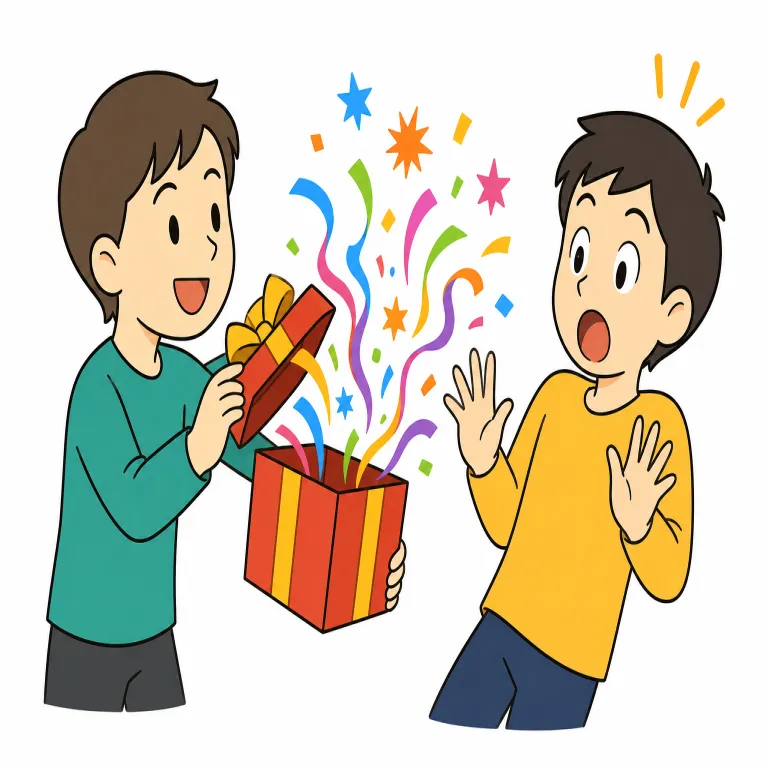
surprise
意味一覧 (2件)
驚き
解説 Definition
名詞では、予定や予測から外れた出来事に出会った瞬間の「驚き」、または相手を驚かせる出来事そのものを指します。贈り物・結果発表・思わぬ来客など、喜びにも困惑にも使われ、a surprise や to my surprise で定着しています。
As a noun, surprise means the feeling you have when something happens that you did not expect. It can also mean the unexpected event or thing itself, such as a gift, an announcement, or a visitor. A surprise can be pleasant, confusing, or sometimes unwelcome, and common phrases include a surprise and to my surprise.
覚え方のコツ Memory Tip
surprise を名詞で見るときは、「心の中に起きた反応」と「その反応を起こした出来事」の二面を押さえると整理できます。a nice surprise なら出来事、in surprise なら表情や反応、to my surprise なら文全体への前置きです。shock ほど悪い衝撃に限定されず、誕生日の演出から意外な試験結果まで幅広く使えます。動詞の「驚かせる」は、この名詞的な驚きが相手に生じるよう働きかける形です。
When you see surprise as a noun, think of two sides: the feeling in someone’s mind and the event that causes that feeling. In a nice surprise, it means the unexpected event; in in surprise, it describes a reaction; and in to my surprise, it introduces something unexpected in the whole sentence. It is wider than shock because it is not limited to bad or painful events.
例文
The birthday party was a complete surprise.
その誕生日会はまったく予想外の驚きだった。
To my surprise, the test was much easier than I expected.
驚いたことに、その試験は思ったよりずっと簡単だった。
She looked at him in surprise when he suddenly appeared at the door.
彼が突然ドアのところに現れたので、彼女は驚いて彼を見た。
驚かせる
(意味 2)解説 Definition
動詞では、相手の予想を外す行動・知らせ・結果が人を「驚かせる」ことを表します。主語は人だけでなく announcement や result のような出来事にもなり、喜ばせる意外性にも、困惑させる急展開にも使えます。
To surprise means to make someone feel unexpected pleasure, shock, or confusion because something happens that they did not expect. It is used for both good and bad situations. The word focuses on the unexpected nature of the event.
覚え方のコツ Memory Tip
surprise 人、という形をまず固定して、「人の頭の中にあった予想をひっくり返す」と覚えると使いやすいです。She surprised me. なら彼女の行動が私を驚かせた、The news surprised everyone. なら知らせそのものが原因です。startle は急な音などでびくっとさせる感じ、amaze は感心やすごさの驚きが強めです。be surprised は結果として「驚いている」状態を表す頻出形なので、能動形と受け身形を対で覚えましょう。
Start with "fade" as something becoming weaker little by little, not disappearing suddenly. Then "away" adds the feeling of going farther from sight, sound, or memory. Compare it with "fade out," which is often used for a staged or technical ending.
例文
Her friends planned a party to surprise her on her birthday.
友人たちは誕生日に彼女を驚かせようとパーティーを計画した。
The sudden announcement surprised everyone in the company.
突然の発表は会社の全員を驚かせた。
He surprised his mother by visiting her without any warning.
彼は何の前触れもなく訪ねることで母を驚かせた。
surprise の語源・成り立ち Etymology
フランス語 surprise を経て、ラテン語 super-「上から」+ prehendere「つかむ」に由来します。不意につかむ感覚から、予期しない出来事やそれによる驚きを表すようになりました。
Surprise came into English through French surprise. It goes back to Latin super-, meaning “over” or “from above,” and prehendere, meaning “to seize” or “to take.” The idea developed from being taken suddenly to an unexpected event or the feeling it causes.
外部辞書で調べる
この単語を英単語クイズで覚えよう