気取って歩き回る
verb 動詞主に英国のくだけた表現で、目的もなく、または周囲を気にせず気取った様子で移動することを表します。swan around、swan off、swan into a place などの形でよく使われます。
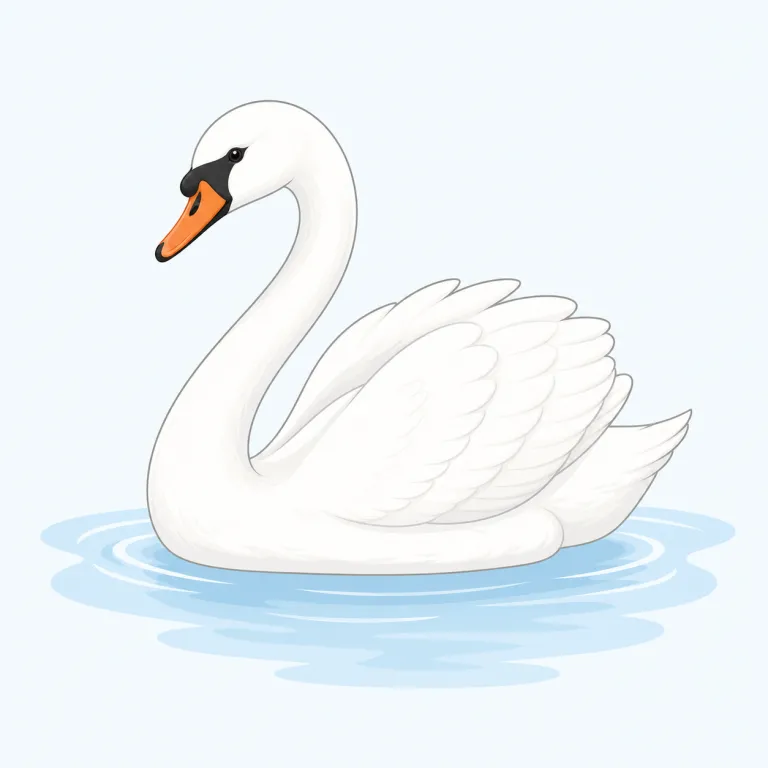
白鳥(はくちょう)は、水辺にすむ大型の鳥で、長い首が特徴です。白い羽の種がよく知られていますが、黒い羽の白鳥もいます。優雅な外見で知られており、湖や川に生息しています。
A swan is a large water bird with a long neck and usually white feathers. It lives on lakes, rivers, and other wet places. People often use this word when talking about graceful or beautiful birds.
bird名は場面で覚えると残りやすい。swan は「湖で首を長くS字に曲げ、静かに滑る大きな白い鳥」という1枚の映像で固定するとよい。duck は小さめで丸い、goose はガチョウで群れや家畜の印象、swan はそれより優雅で首が圧倒的に長い。the swan on the lake, a pair of swans のように風景とセットで出やすく、black swan や Swan Lake でも見かけるので、「特別感のある鳥名」としてまとめて覚えると混同しにくい。
Remember `swan` as a bird word you usually see in a picture: a long neck, a lake, and smooth movement on the water. It is more elegant than a `duck` or `goose`, so connect it with scenes like `a pair of swans` or `the swan on the lake`. You may also know `Swan Lake` or `black swan`, which makes the word easier to fix in memory.
A white swan swam across the lake.
一羽の白い白鳥が湖を泳いで渡った。
The swan has beautiful white feathers.
その白鳥には美しい白い羽がある。
The young swans swam behind their mother on the lake.
若い白鳥たちは湖で母鳥の後ろを泳いだ。
この語をはじめて出題された 31人 のうち 29人 が正解しました(94%)。
えいたんごクイズの回答から集計した独自データです。1人につき最初に出題されたときの1回だけを数えており、復習や2回目以降の回答、「わからない」と時間切れは含みません。 集計時点は 2026年9月19日 です。
文脈によって、次の意味でも使われます。
主に英国のくだけた表現で、目的もなく、または周囲を気にせず気取った様子で移動することを表します。swan around、swan off、swan into a place などの形でよく使われます。
swan は古英語 swan、さらにゲルマン祖語 *swanaz にさかのぼる古い鳥名で、接頭辞や接尾辞には分かれません。白く静かに水面を進む代表的な鳥として基本語になったため意味がぶれにくく、ドイツ語 Schwan やオランダ語 zwaan が同根です。
Swan comes from Old English swan, from Proto-Germanic *swanaz, and it is a very old native bird name. Because it referred to a familiar and important bird from early times, its meaning stayed very stable. Related words appear in other Germanic languages, such as German Schwan and Dutch zwaan.
この英単語をクイズで覚えよう