おばかさん、間抜け
noun 名詞愚かなことや不注意なことをした人を指す、くだけた表現です。特にsilly gooseの形では、本気の侮辱ではなく、親しい相手を軽くからかったり親しみを込めて呼んだりします。
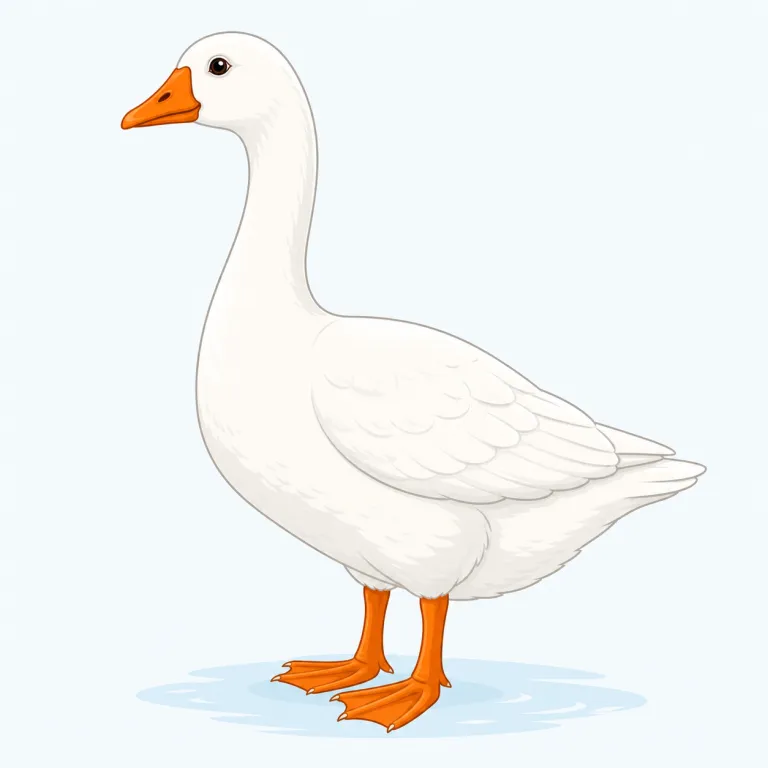
ガチョウとは、水かきのある足を持つ水鳥の一種です。大きな体と長い首を持ち、水の中や陸地で生活します。
A goose is a large water bird with a long neck and webbed feet. It usually lives near lakes, rivers, or farms. The plural form is "geese," which is irregular.
duck(アヒル)や swan(白鳥)と並べて覚えると残りやすい語です。goose は duck より大きく、首が長い、水辺にいる典型的な「ガチョウ」。意味はシンプルですが、複数形が geese になる不規則変化を必ずセットで覚えるのがコツです。singular=goose、plural=geese まで一息で言えるようにすると定着します。Mother Goose、wild goose など表現にも出るので、「水辺の大きな鳥」という中心イメージを持っておくと、duck や swan と混同しにくくなります。
Learn `goose` together with its irregular plural `geese`. That singular-plural pair is the best memory hook. You can also place it next to `duck` and `swan` in your mind: a bigger water bird with a longer neck.
The goose swam across the pond.
ガチョウは池を横切って泳ぎました。
A flock of geese flew overhead.
ガチョウの群れが頭上を飛びました。
The goose laid eggs by the water.
ガチョウは水辺のそばに卵を産みました。
文脈によって、次の意味でも使われます。
愚かなことや不注意なことをした人を指す、くだけた表現です。特にsilly gooseの形では、本気の侮辱ではなく、親しい相手を軽くからかったり親しみを込めて呼んだりします。
売上、景気、活動などを刺激して勢いを付けたり、数値を押し上げたりすることを表す口語的な動詞です。goose salesやgoose the economyのように、増加させる対象を目的語に取ります。
古英語 gos にさかのぼり、さらにゲルマン祖語 *gans-、印欧祖語 *ghans- に由来します。大きな水鳥を指す古い語がそのまま残った形で、gosling「ガチョウのひな」やドイツ語 Gans が近い仲間です。
Goose comes from Old English gos. It goes back further to Proto-Germanic *gans- and an even older Indo-European root *ghans-. It has kept its basic meaning for a very long time, and related forms appear in words like gosling and in German Gans.
この英単語をクイズで覚えよう