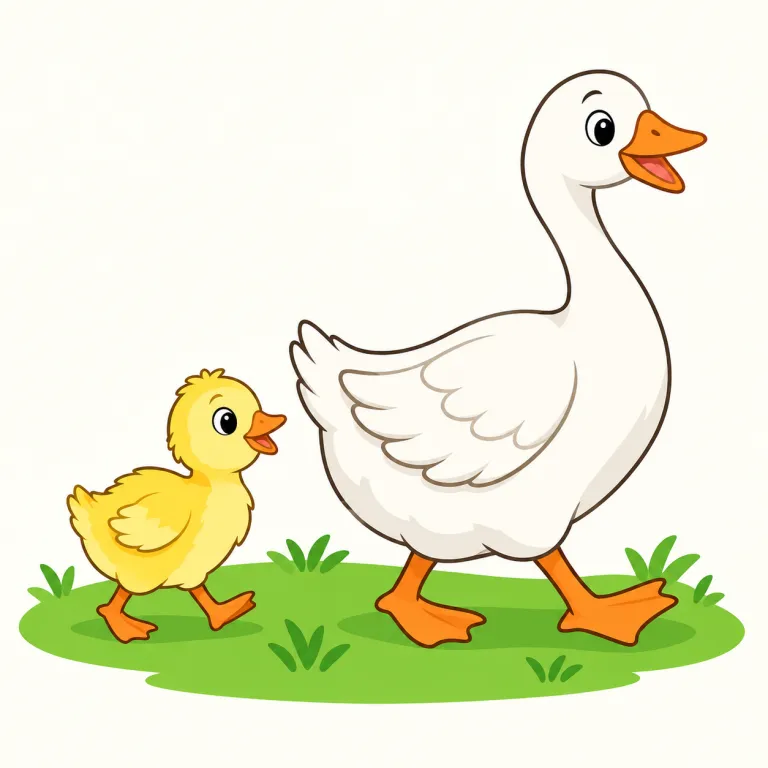
ガチョウの雛
解説 Definition
gosling は「ガチョウの雛」を意味する普通名詞で、通常は小文字で書きます。一方、Gosling と大文字で書かれた形は英語圏の姓として使われることがあります。ここでは若いガチョウを指す普通名詞として扱います。
A gosling is a young goose, especially one that has only recently hatched and is still being cared for by its parent birds. The word is a common noun, although Gosling can also occur as a surname.
覚え方のコツ Memory Tip
gosling は goose「ガチョウ」に、幼いものを表す -ling が付いた語で、「ガチョウの雛」です。goose の複数形 geese と混同せず、duckling「アヒルの雛」と同じ作りだと捉えましょう。a gosling follows its mother のような親鳥について歩く場面が記憶に残ります。
Break gosling into its historical parts: gos, an older form connected with goose, and -ling, a suffix often used for a young or small creature. This is the same helpful pattern seen in duckling. Picture a small yellow or gray bird following an adult goose across grass or staying close to a pond. Keep gosling separate from geese: geese is the irregular plural of goose, while a gosling is specifically a young goose. Its regular plural is goslings.
例文
A small gosling followed its mother across the grass.
小さなガチョウの雛が草地を横切る母鳥の後をついていきました。
The farmer kept the gosling warm on a cold night.
農家の人は寒い夜にそのガチョウの雛を暖かくしておきました。
The gosling stayed close to the pond while the older geese fed nearby.
年上のガチョウたちが近くで餌を食べている間、そのガチョウの雛は池のそばにいました。
gosling の類義語・関連語
gosling の語源・成り立ち Etymology
古英語の「gōs(ガチョウ)」に、小動物を示す接尾辞「-ling」が結合した単語です。「duckling(アヒルの雛)」と同様に接尾辞が「幼い・小さな」意味を添え、「小さなガチョウ」という語構成がそのまま現在の意味に直結しています。
Gosling comes from Old English gōs, meaning “goose,” combined historically with a diminutive element represented in modern English by -ling. The formation therefore referred to a small or young goose. The suffix appears in several words for young creatures, including duckling. Gosling remains an ordinary common noun, while the capitalized form Gosling is also found as an English-language surname.
同じレベルの語彙をもっと
外部辞書で調べる
この英単語をクイズで覚えよう