ovulation
排卵
解説 Definition
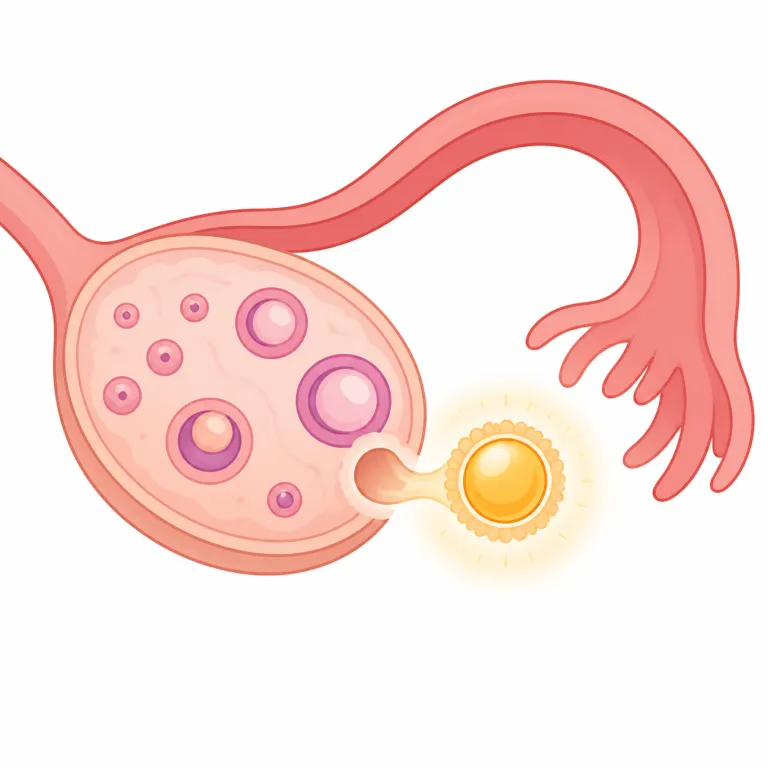
排卵(はいらん)とは、女性の月経周期において、卵巣から成熟した卵子が放出される生物学的プロセスを指します。これは受精の可能性がある時期であり、月経周期の中盤に通常起こります。
Ovulation is the process in which an ovary releases an egg. It is a normal part of the female reproductive cycle and is often discussed in health, biology, and pregnancy-related topics. The term is mainly used in medical or scientific contexts.
覚え方のコツ Memory Tip
ovulation は ovary(卵巣)や ovum(卵)とまとめて覚えると定着しやすい語です。ovu-/ova- を見たら「卵に関係する語」と反応できるようにし、語尾の -tion で「現象名・プロセス名」だと押さえると意味が崩れません。実際には track ovulation, ovulation cycle, ovulation test のような形でよく出ます。menstruation(月経)や fertilization(受精)とは別で、「卵巣から卵子が放出されること」を指す語だと区別すると混同しにくいです。
Link `ovulation` with `ovary` and `ovum` so `ovu-` gives you an "egg" signal right away. The ending `-tion` tells you it is a process or event, not a thing. It is often seen in chunks like `track ovulation` or `ovulation test`.
例文
Ovulation typically occurs about 14 days before the next menstrual period.
排卵は通常、次の月経の約14日前に起こります。
Tracking ovulation can help with family planning.
排卵日を把握することは家族計画に役立ちます。
Hormonal changes trigger ovulation in the female reproductive cycle.
女性の生殖周期では、ホルモンの変化によって排卵が起こります。
ovulation の類義語・関連語
ovulation の語源・成り立ち Etymology
ovulation は近代ラテン語 ovulum「小さな卵」由来の ovule に -ation が付いた語。語根はラテン語 ovum「卵」で、ovary や ovum と同系。『卵が作られ放たれること』と考えると、排卵の意味がつかみやすい。
Ovulation comes from ovule plus the ending -ation. Ovule comes from modern Latin ovulum, meaning "small egg," from Latin ovum, "egg," which is also seen in ovary and ovum. The word developed around the idea of an egg being produced and released.
同じレベルの語彙をもっと
外部辞書で調べる
この英単語をクイズで覚えよう