タラ
解説 Definition
インド古典音楽において、一定数の拍と固有の区分・アクセントから成る反復的なリズム周期(ターラ)。
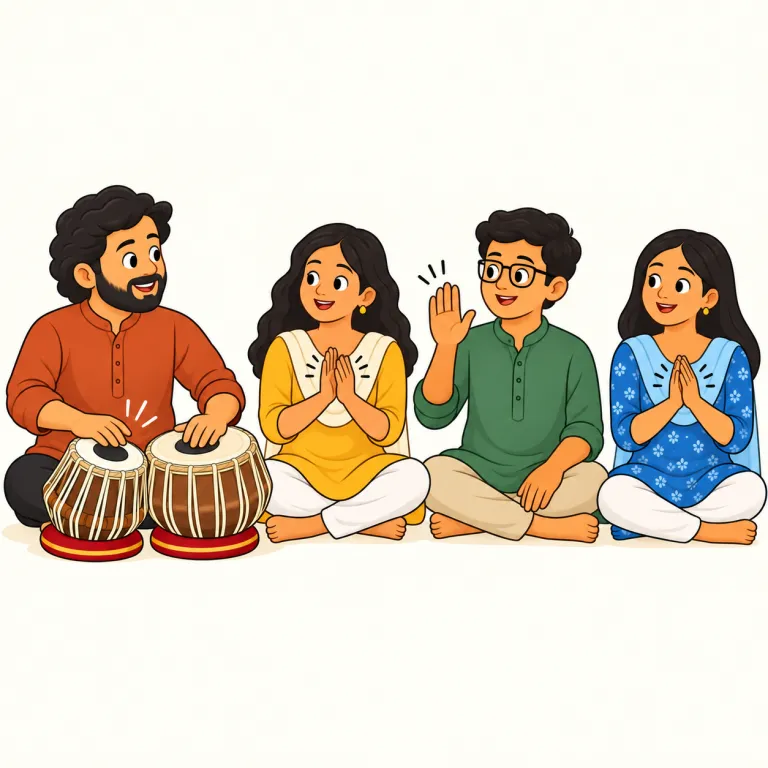
In Indian classical music, a tala is an organized, repeating rhythmic cycle made up of a set number of beats with characteristic divisions and accents. Performers may mark the cycle with claps, waves, finger counts, or percussion patterns.
覚え方のコツ Memory Tip
インド古典音楽で旋律の枠組みを示す raga と対にし、tala は時間・リズムを組織する周期だと覚えます。単なる一定の beat ではなく、手拍子や指の動きで区切られる拍の循環です。tabla はそのリズムを演奏する代表的な太鼓で、tala は楽器名ではない点も押さえましょう。
Pair tala with raga when learning Indian classical music: a raga organizes melodic possibilities, while a tala organizes musical time. A tala is more than a steady beat; it is a repeating cycle whose beats have recognized divisions, accents, and functions. Musicians may keep track of it with claps, waves, or finger counts, and a percussionist may express it on instruments such as the tabla. The similarity between tala and tabla can help your memory, but keep the categories separate: tala is the rhythmic framework, whereas tabla is a pair of drums often used to perform rhythmic patterns.
例文
The tabla player maintained the tala throughout the performance.
タブラ奏者は演奏中ずっとターラを保ちました。
The students marked the tala with claps and waves.
生徒たちは手拍子と手を振る動作でターラの周期を示しました。
tala の類義語・関連語
tala の語源・成り立ち Etymology
サンスクリット語 tāla(手拍子・リズム)に由来し、インド古典音楽のリズム体系を指す。語根 tāl-は「打つ・叩く」の意で、手拍子でリズムを刻むことから拍子の単位となった。関連語: tabla(タブラ太鼓)、tāla cycle。音楽用語として東南アジアにも広まり、リズムの基本概念を表す。
Tala is borrowed from Sanskrit tāla, a word used for rhythm, measure, or the marking of musical time, especially through actions such as clapping. The term became central to the theory and practice of Indian classical music and also spread through related musical traditions in South and Southeast Asia. In English-language music writing, it is commonly spelled tala, while academic transliteration may preserve the long vowels as tāla. Its modern meaning refers to a structured rhythmic cycle rather than merely any beat.
同じレベルの語彙をもっと
外部辞書で調べる
この英単語をクイズで覚えよう