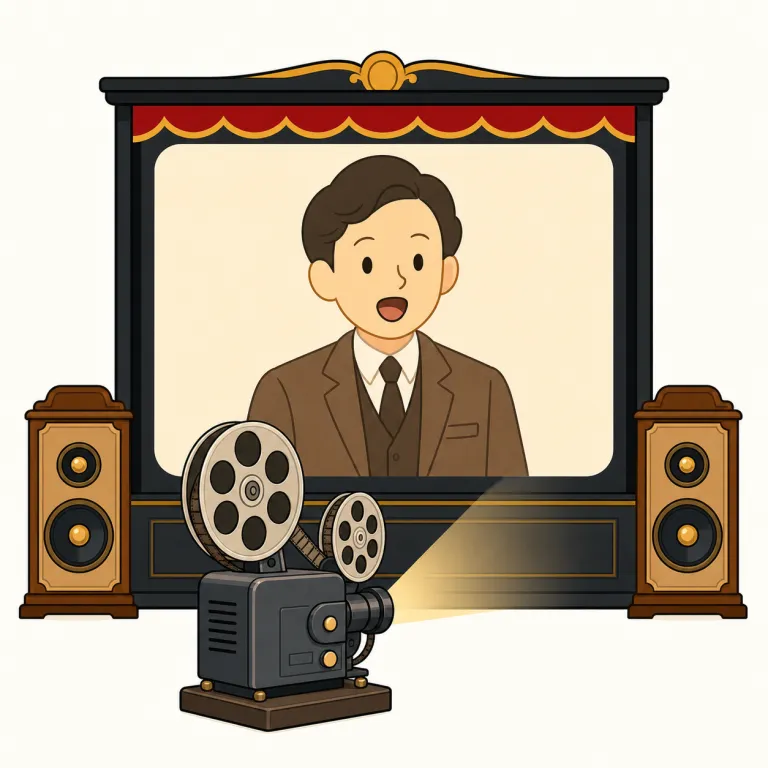
トーキー
解説 Definition
トーキーとは映像と音声が同期した映画形式で、発声を伴う作品を指す。初期の技術として登場し、俳優のセリフや効果音をそのまま記録するようになった。サイレント映画とは異なり、観客が音声付きで物語を楽しめるようになった。
A talkie is an early movie that includes recorded spoken dialogue. The word is mainly used in film history to compare these movies with silent films. It can sound a little old-fashioned today.
覚え方のコツ Memory Tip
まず talk が見えれば「話す・声が出る」が核だとつかめます。そこに親しみのある -ie が付いた形なので、talkie は「おしゃべりする映画」→ 音声つき映画と覚えると残りやすいです。silent movie(無声映画)と対比で覚えるのが特に有効で、映画史では silent から talkie へ移った流れで定着します。日常会話の talkative や talk show と同じ talk 系なので、音やセリフが前面に出る場面を思い浮かべると忘れにくい語です。
Start with `talk`, so the core idea is sound or speaking. The ending `-ie` makes it sound like a familiar label, so `talkie` is easy to connect with a movie that can talk. Remember it by pairing it with `silent movie`: silent before, talkie after.
例文
The first talkie was released in 1927 and revolutionized the film industry.
最初のトーキー映画は1927年に公開され、映画産業に革命をもたらした。
Before talkies, silent films relied on title cards and gestures.
トーキー以前は、サイレント映画がタイトルカードとジェスチャーに頼っていた。
The transition from silent films to talkies changed acting techniques dramatically.
サイレント映画からトーキー映画への移行は演技技法を大きく変えた。
talkie の類義語・関連語
派生語
紛らわしい語
talkie の語源・成り立ち Etymology
現代英語で talk「話す」に、親しみや小ささを帯びる接尾辞 -ie を付けた語です。talk は中英語を経てゲルマン系の古い語にさかのぼり、talkie はもともと「しゃべる映画」、つまり音の出る映画を指しました。関連語に talkative, talker があります。
Talkie was formed in modern English from talk plus the suffix -ie, which often adds a familiar or informal feeling. Talk goes back through Middle English to an old Germanic word. Talkie first meant a movie that could speak, that is, a film with sound, especially after the silent-film era. Related words include talker and talkative.
同じレベルの語彙をもっと
外部辞書で調べる
この英単語をクイズで覚えよう