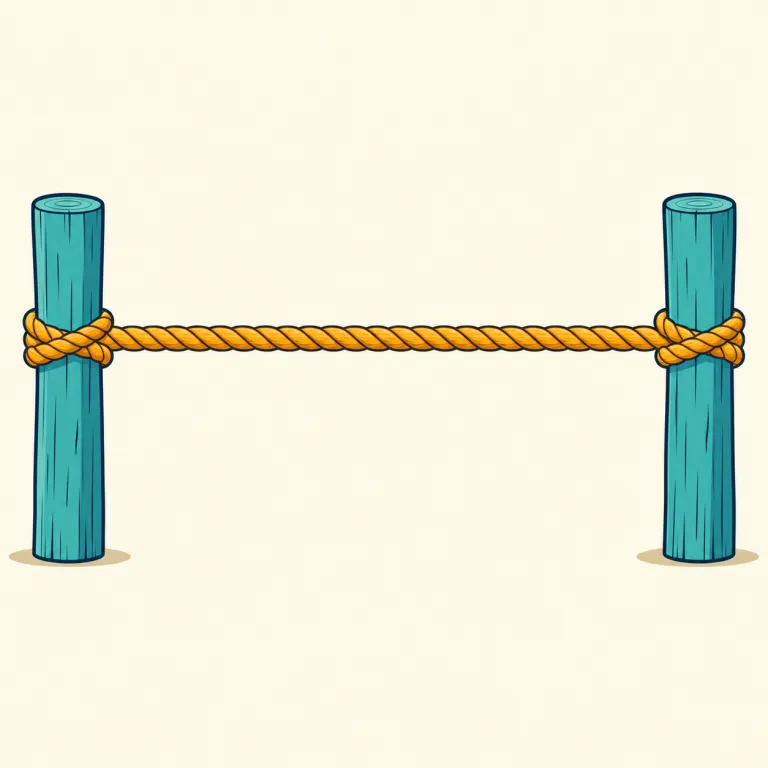
緊迫した、張り詰めた
adjective 形容詞人の神経、声、雰囲気などが不安や対立のために強く緊張している状態を表す。物理的に引っ張られた物ではなく、感情が抑えられ、いつ問題が起きてもおかしくない張り詰めた様子に使う。
ロープや布などが、たるみなく強く引っ張られている状態を表す。筋肉や表情にも使われる。
Pulled or stretched firmly so that there is no looseness or slack. It can describe things such as ropes and fabric, as well as tense muscles or facial expressions.
taut は rope, wire, sail, skin など、引っ張ると張り詰める物とよく結び付く。pull a rope taut(ロープをピンと張る)の形も頻出。tight よりも「両側から引かれて、たるみがない」という視覚的な状態を意識すると定着しやすい。
Picture a rope being pulled firmly from both ends until it no longer hangs loose. The pattern “pull a rope taut” emphasizes this stretched, slack-free condition more clearly than the general word “tight.”
Keep the rope taut while I tie the knot.
私が結び目を作る間、ロープをピンと張っておいて。
The tent fabric must remain taut in strong winds.
強風の中ではテントの布をピンと張った状態に保つ必要がある。
She pulled the sheet taut across the bed.
彼女はベッドの上でシーツをピンと張った。
文脈によって、次の意味でも使われます。
人の神経、声、雰囲気などが不安や対立のために強く緊張している状態を表す。物理的に引っ張られた物ではなく、感情が抑えられ、いつ問題が起きてもおかしくない張り詰めた様子に使う。
文章、映画の筋、演技などが簡潔に制御され、余分な部分がないことを肯定的に表す。単に短いという意味ではなく、構成が緊密で、注意や勢いを最後まで保っていることを含意する。
中英語 tohte にさかのぼり、古英語 teon「引く・引っぱる」と結びつくと考えられる語です。『強く引かれてたるみがない』像がそのまま『ピンと張った』につながり、関連語に tie, tow があります。
The word is thought to go back through Middle English to an Old English verb meaning “to pull.” Its history reflects the image of something pulled until it has no slack.
この英単語をクイズで覚えよう