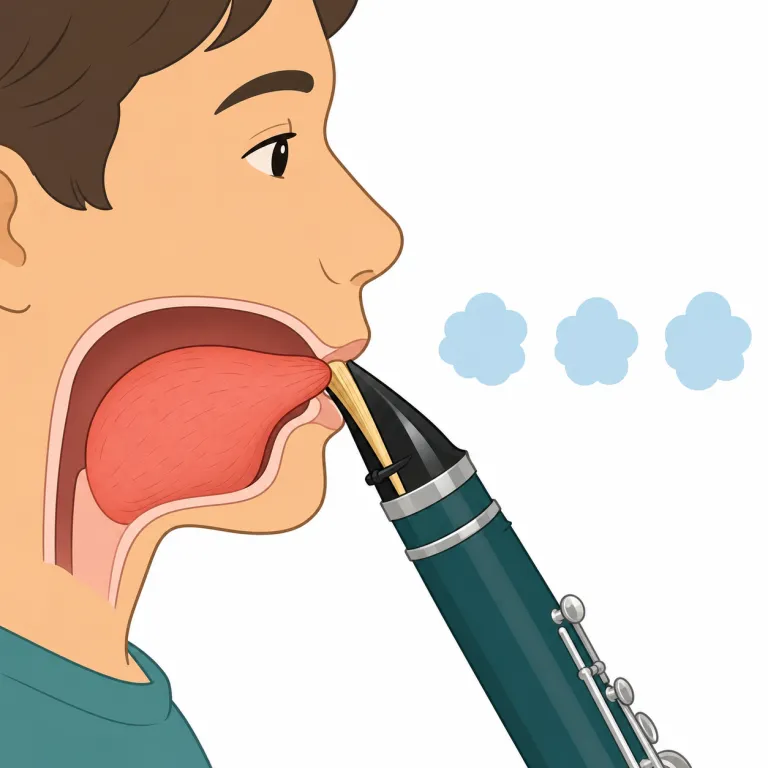
タンギング
解説 Definition
タンギングは、フルートやクラリネット、トランペットなどの管楽器で、舌を使って息の流れを区切り、音の出だしを明確にする奏法です。音を一つずつはっきり発音したり、速いパッセージを整えて吹いたりするために欠かせない基本技術として使われます。
Tonguing is a technique used when playing wind or brass instruments to start, separate, or shape notes with the tongue. It helps control rhythm and clarity in music. This word is mainly used in music education and performance.
覚え方のコツ Memory Tip
「tongue(舌)」がそのまま入っているので、まず“舌を使う動作”と結びつけると覚えやすいです。-ing が付いているので「舌で区切ること・その動き」という感覚。管楽器では息をただ流し続けるのでなく、舌で音の頭を作って一音ずつ立ち上げる場面で使います。double-tonguing が出たら「舌使いを速く二連化する発展形」。slur のように音をなめらかにつなぐ奏法とは対照で、「発音をはっきりさせる技法」と整理すると残ります。
This comes from `tongue`, so connect it to using the tongue in music. In wind instruments, remember common pairs like `single tonguing` and `double tonguing`. It helps mark the start of notes clearly, unlike smoother playing such as a slur.
例文
Tonguing is an essential technique for flute and clarinet players.
タンギングは、フルートやクラリネットの奏者にとって重要な技法だ。
Single tonguing and double tonguing are two basic forms of this articulation method.
シングルタンギングとダブルタンギングは、このアーティキュレーションの基本的な二つの形だ。
The musician practiced different tonguing patterns to improve clarity.
その音楽家は、発音の明瞭さを高めるためにさまざまなタンギングの型を練習した。
tonguing の類義語・関連語
tonguing の語源・成り立ち Etymology
tonguing は tongue「舌」+ -ing で、古英語 tunge にさかのぼるゲルマン系の語です。管楽器で息を舌で小刻みに区切る動作をそのまま名詞化したので、tongue や double-tonguing を知ると、「音を舌で切って立ち上げる技法」だと意味がそのまま見えます。
"Tonguing" comes from the verb "tongue" plus the noun ending "-ing." "Tongue" goes back to Old English "tunge," from an old Germanic root. The musical sense grew from the literal action of using the tongue to separate sounds; related forms include "tongue" and "double-tonguing."
同じレベルの語彙をもっと
外部辞書で調べる
この英単語をクイズで覚えよう