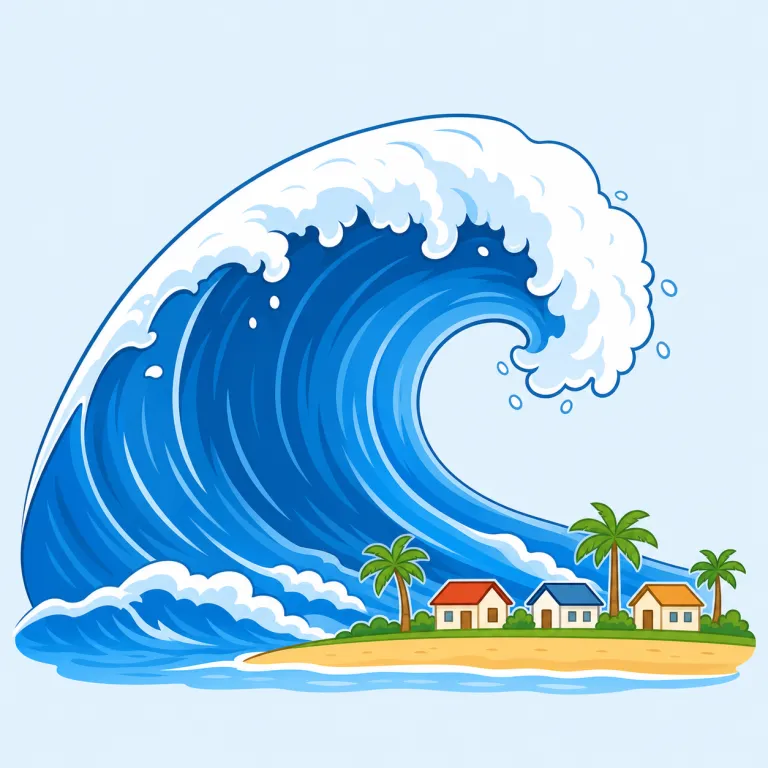
殺到、大波
noun 名詞比喩的に、人や情報、注文、感情などが短時間に大量に押し寄せることをいう。「a tsunami of+複数名詞・不可算名詞」の形が典型で、単なる増加よりも圧倒的で対処しにくい勢いを強調する。
津波とは、海底地震や火山噴火などによって引き起こされる、非常に大きな波の連続のことです。沿岸に到達すると壊滅的な被害をもたらすことがあり、日本語がそのまま国際語として使われています。2004年のインド洋津波や2011年の東日本大震災の津波が世界的に知られています。
A tsunami is a very large sea wave caused by an underwater earthquake, volcanic eruption, or similar event. It can move quickly and cause severe damage when it reaches land. The word is mainly used in discussions of natural disasters and safety.
日本語話者は意味そのものより、「英語でもそのまま tsunami を使う」と固定するのがコツ。大波一般なら wave だが、tsunami は地震・噴火などに由来する災害級の波で、日常語よりニュース語彙として覚えると残りやすい。tsunami warning, trigger a tsunami, survive the tsunami などの形で見かけます。比喩で a tsunami of criticism のように「押し寄せる大量のもの」にも使われる一方、古い tidal wave は不正確になりやすいので区別しておくと混乱しません。
Fix this as a news word, not just a general word for a big wave. A tsunami is linked with disasters, so remember common phrases like tsunami warning and trigger a tsunami. It is also useful to contrast it with wave or the older tidal wave, which is less accurate.
A tsunami hit the town after a strong earthquake.
大きな地震の後、津波がその町を襲いました。
People moved to high ground after the tsunami warning.
人々は津波警報の後、高台へ移動しました。
A big earthquake under the sea can cause a tsunami.
海底の大きな地震は津波を引き起こすことがあります。
文脈によって、次の意味でも使われます。
比喩的に、人や情報、注文、感情などが短時間に大量に押し寄せることをいう。「a tsunami of+複数名詞・不可算名詞」の形が典型で、単なる増加よりも圧倒的で対処しにくい勢いを強調する。
tsunami は日本語の「津波」がそのまま英語に入った借用語で、津「港・船着き場」+波「波」から成ります。港で波の高さが際立つ現象を表す語が国際語化したもので、形よりも被害の出方を言い当てた名前だとわかると意味が腑に落ちます。
Tsunami is a loanword from Japanese 津波, made from tsu "harbor" and nami "wave." The name reflects how this kind of wave is especially noticeable and destructive at ports and coasts. English borrowed the Japanese word directly as the term became international.
この英単語をクイズで覚えよう