意味一覧 (2件)
港
解説 Definition
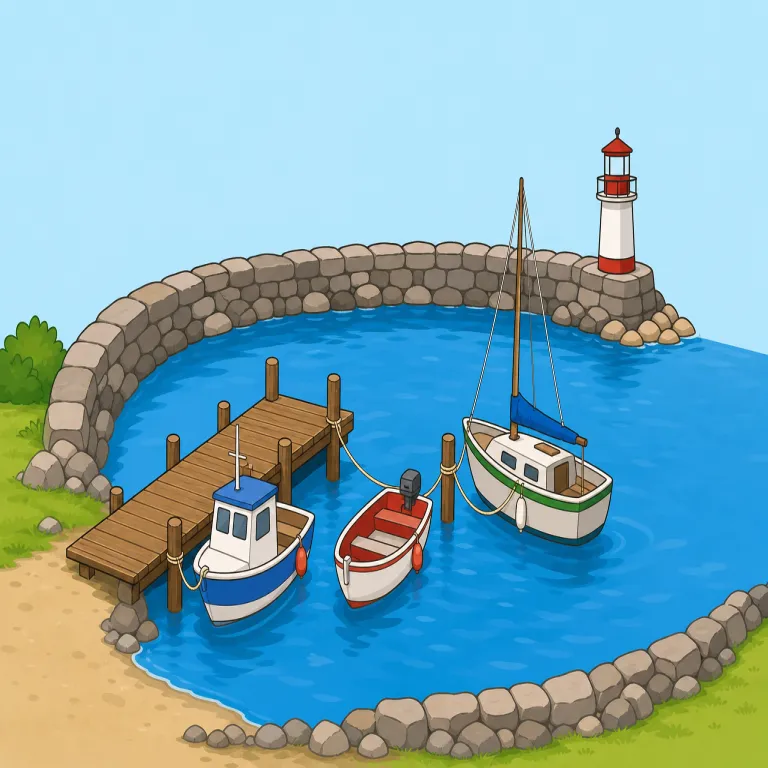
船が安全に入ったり、停まったりできる海辺の場所を表します。荷物を積み下ろししたり、人が船に乗り降りしたりする場所として使われます。
A harbor is a place by the sea where ships and boats can enter and stay safely. It is often used for loading, unloading, and boarding.
覚え方のコツ Memory Tip
harbor は、海岸の内側で船が強い波や風を避け、安全に停まっている景色と結びつけると覚えやすい語です。boats in the harbor「港内の小舟」、ships enter the harbor「船が港に入る」のように使います。port も「港」ですが、port は貿易や荷物の積み下ろしを行う都市・施設としての面が強く、harbor は船を守る水域や停泊場所に目が向く語です。「町の近くの静かな水面に船が休む」という一枚の場面で固定すると定着します。
Picture boats resting safely in a protected place by the sea. That image points to a harbor.
例文
Boats rest in the harbor.
ボートが港で休んでいます。
The harbor is near the town.
その港は町の近くにあります。
Ships come to this harbor.
船がこの港に来ます。
抱く、かくまう
(意味 2)解説 Definition
自分の心に何かの気持ちや考えを持つこと。また人を匿う、つまり隠れ場所を提供することを意味する。
To harbor something means to keep a feeling, thought, hope, or secret in your mind for some time. It is often used for emotions or attitudes that are not expressed openly, such as anger, doubt, or love. The word can suggest that the feeling continues quietly in the background.
覚え方のコツ Memory Tip
harbor は名詞で「港」を知っていると動詞も覚えやすいです。港は船を中に入れて保護する場所なので、動詞でも「心の中に感情や考えを抱え込む」「人をかくまう」という感覚でつながります。harbor doubts, harbor resentment, harbor hopes のように感情・疑念と結びつきやすく、harbor a criminal なら「逃亡者を匿う」。単なる have より、外に出さず内に持ち続ける感じが強い語です。
Think of a harbor as a place where ships stay inside and are kept there. The verb keeps that same image: you harbor doubts, resentment, or hopes by keeping them inside. It also often appears in phrases like harbor a fugitive, which gives the feeling of hiding and keeping someone in a place.
例文
She harbors deep feelings of gratitude for his kindness.
彼女は彼の親切に対して深い感謝の気持ちを抱いている。
He still harbors doubts about the company's plan.
彼は今もその会社の計画について疑念を抱いている。
The country refused to harbor any fugitives.
その国はいかなる逃亡者も匿うことを拒否した。
harbor の類義語・関連語
harbor の語源・成り立ち Etymology
古い英語の、身を守る場所を表す語に由来します。そこから、船が風や波を避けて安全に停まれる場所を表す語として使われるようになりました。
Harbor comes from an Old English word connected with shelter or protection. Its basic noun meaning developed into a protected place where ships can stay safely.
同じレベルの英単語をもっと
外部辞書で調べる
この単語を英単語クイズで覚えよう