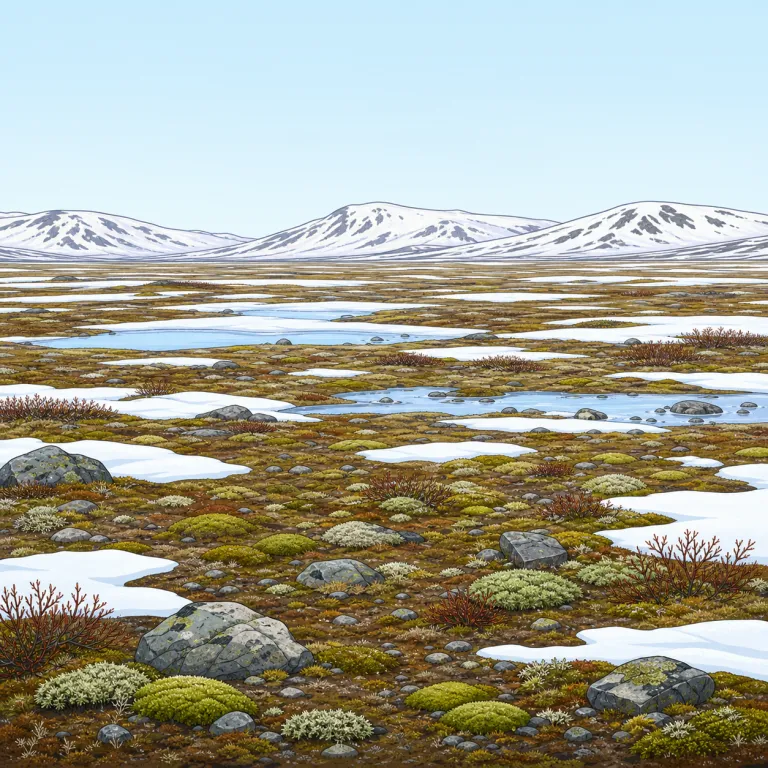
ツンドラ
解説 Definition
北極圏や高山地帯に広がる、寒冷で樹木がほとんど育たない地域を指します。コケや地衣類、低い草木などが主に生育し、北極圏では永久凍土を伴うことが多い環境です。
Tundra is a very cold, flat region where trees do not usually grow because the ground and climate are too harsh. It is common in Arctic areas and is known for frozen soil, moss, grass, and short summers.
覚え方のコツ Memory Tip
覚えるときは、まず定番の組み合わせ `arctic tundra` をひとかたまりで入れると定着しやすいです。頭の中では「寒くて、木が育ちにくい開けた土地」と映像化してください。似た寒帯語の `taiga` は針葉樹林があるのに対し、`tundra` は“木が育たない”のが決定的な違いです。地面は frozen ground、植生は moss や lichen という周辺語も一緒に置くと、ただの「寒い土地」ではなく、ツンドラの環境として思い出せます。
Learn it with the common pair `arctic tundra`. To remember it clearly, picture a very cold, open land where trees cannot grow. That helps separate it from `taiga`, which does have forests.
例文
The hikers crossed the tundra before the snowstorm arrived.
雪嵐が来る前に登山者たちはツンドラを横断した。
In the tundra, only hardy mosses and lichens can grow.
ツンドラでは、丈夫なコケや地衣類だけが育つ。
Scientists study how climate change affects the tundra's frozen soil.
科学者たちは気候変動がツンドラの凍った土壌にどう影響するかを研究している。
tundra の類義語・関連語
対義語
紛らわしい語
tundra の語源・成り立ち Etymology
tundraはロシア語тундраを経て、さらにサーミ語系のtunturi「木のない高地・山地」にさかのぼる。フィンランド語tunturiも同根で、「森の生えない裸の土地」という原義が、寒帯の樹木のない平原をそのまま表している。
Tundra entered English through Russian tundra. It ultimately goes back to a Sami word, also seen in Finnish tunturi, meaning a treeless upland or bare mountain land. That original image of open land without trees fits the later use for the cold, treeless plains of the far north. The meaning stayed close to the landscape named by the source word.
同じレベルの語彙をもっと
外部辞書で調べる
この英単語をクイズで覚えよう