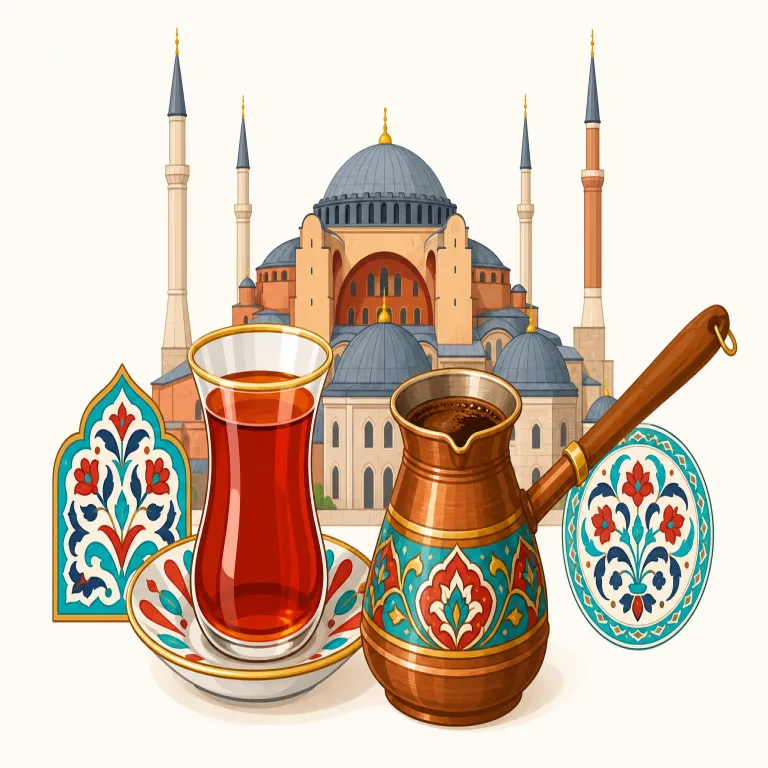
トルコの、トルコ語の
/ noun 名詞 トルコ語
解説 Definition
トルコという国、その文化、言語、料理、工芸品などに関係することを表す形容詞。人や物の国籍・出自を示すほか、コーヒーやじゅうたんのように、トルコ風のものやトルコ由来のものを説明するときにも使う。
Turkish means relating to Turkey, its people, its culture, or its language. It is written with a capital T because it comes from the name of a country.
覚え方のコツ Memory Tip
Turkey が国名だと分かれば、Turk-ish で「トルコに関する」とまとめて取れる。-ish は English, Irish, Polish などにも見える「国・民族・言語っぽい形容詞」を作る形なので、語尾ごと覚えると定着しやすい。Turkish coffee, Turkish rug, Turkish cuisine のように文化や名物につきやすく、人にも a Turkish merchant のように使える。さらに speak Turkish なら言語名。turkey 小文字は鳥なので、国名 Turkey と区別して大文字 T を意識すると混ざりにくい。
Think of the country name `Turkey`, then add the common adjective ending `-ish`, like in `English` or `Irish`. That makes `Turkish` easy to connect with country, people, culture, and language. Also remember the capital `T` for the country, so you do not confuse it with `turkey`, the bird.
例文
This is Turkish tea.
これはトルコのお茶です。
I like Turkish food.
私はトルコ料理が好きです。
He reads a Turkish book.
彼はトルコ語の本を読みます。
turkish の類義語・関連語
派生語
紛らわしい語
turkish の語源・成り立ち Etymology
国名 Turkey(トルコ)に接尾辞 -ish を付けた形。Turkey は中世ラテン語 Turchia から来ており、テュルク系民族の自称 Türk(強い者・勇者)に由来する。遊牧民の勇猛さを表す名がそのまま国名と言語名になった。関連語: Turkic(テュルク系の)、Ottoman(オスマンの)。
This word comes from Turkey with the adjective ending -ish. Turkey comes through Medieval Latin and related forms from the name used for Turkic peoples, based on Türk, a self-name of those groups. The word first pointed to the people or land, and then became the adjective for the country, language, and culture. Related words include Turk and Turkic.
同じレベルの語彙をもっと
外部辞書で調べる
この英単語をクイズで覚えよう