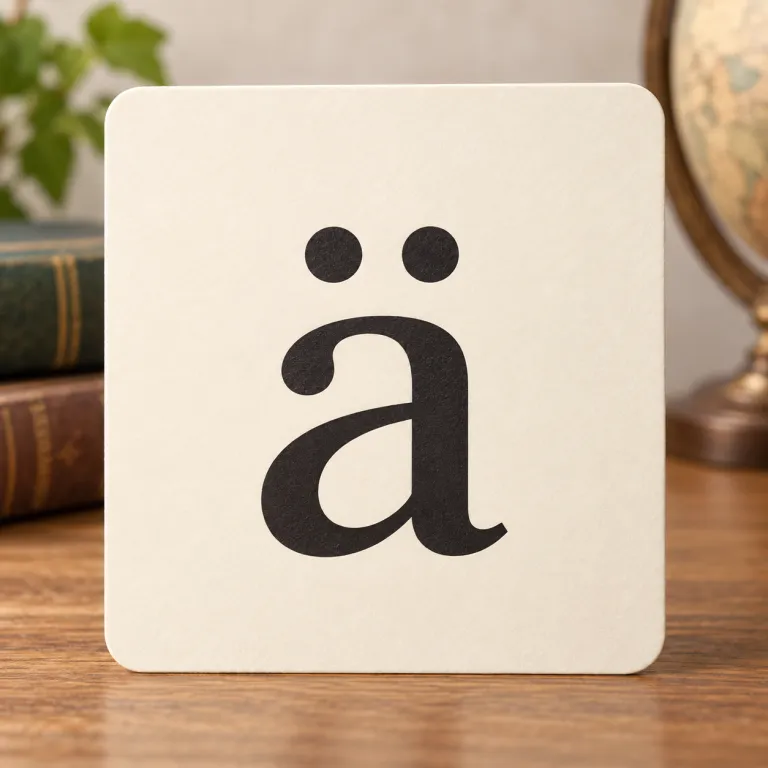
母音変異、ウムラウト現象
noun 名詞言語学では、後続音の影響によって前の母音の発音が変化する音韻現象を指す。母音の上に付ける二点記号そのものではなく、特にゲルマン諸語で歴史的に生じた母音の前舌化などの変化をいう。
ドイツ語やその他の言語で使用される、母音の上に置かれた二点記号。母音の音を変える役割を持つ。
An umlaut is the two-dot mark written over a vowel in some languages, as in a, o, or u with dots above them. It usually shows that the vowel sound is pronounced in a different way. The word may also refer to the sound change itself in language study.
ドイツ語の ä, ö, ü をひとかたまりで思い出すと定着しやすい語。覚え方は「母音の上の二点=見た目を少し変えて、音も変えるサイン」。この行では音変化そのものより、その変化を示す二点記号を中心に押さえる。とくに a/o/u に付く場面を連想すると、普通の母音から少しずれた別音になる印だと整理できる。英語の accent mark のような強勢記号ではなく、diaeresis と見た目は似ても、ドイツ語では音価の違いに直結しやすい点に注意。
Remember `umlaut` by picturing German vowels with two dots: `a, o, u` becoming `ä, ö, ü`. The two dots are not decoration; they signal a change in sound. That makes it easier to keep separate from a general accent mark.
The umlaut changes vowel pronunciation.
ウムラウトは母音の発音を変える。
German words often use umlauts.
ドイツ語の単語にはしばしばウムラウトが使われる。
Typing umlauts requires special key combinations.
ウムラウトを入力するには特殊なキー操作が必要である。
文脈によって、次の意味でも使われます。
言語学では、後続音の影響によって前の母音の発音が変化する音韻現象を指す。母音の上に付ける二点記号そのものではなく、特にゲルマン諸語で歴史的に生じた母音の前舌化などの変化をいう。
umlaut はドイツ語で、um-「回りで・変化して」と Laut「音」から成る。もとは「周囲の音の影響で母音が変わること」を指した語で、その母音変化を文字上で示す二点記号の名にもなった。ablaut と同じ Laut を含むため、記号名として覚えるときも「音を変える印」という語感で結びつけやすい。
This word comes from German Umlaut, made from um- meaning "around" or "changed" and Laut meaning "sound." It originally referred to a change in a vowel caused by a nearby sound, not just the written mark. In English, the term later also became the name of the two-dot sign used in German spelling. It is related to ablaut, which shares the same German word Laut.
この英単語をクイズで覚えよう