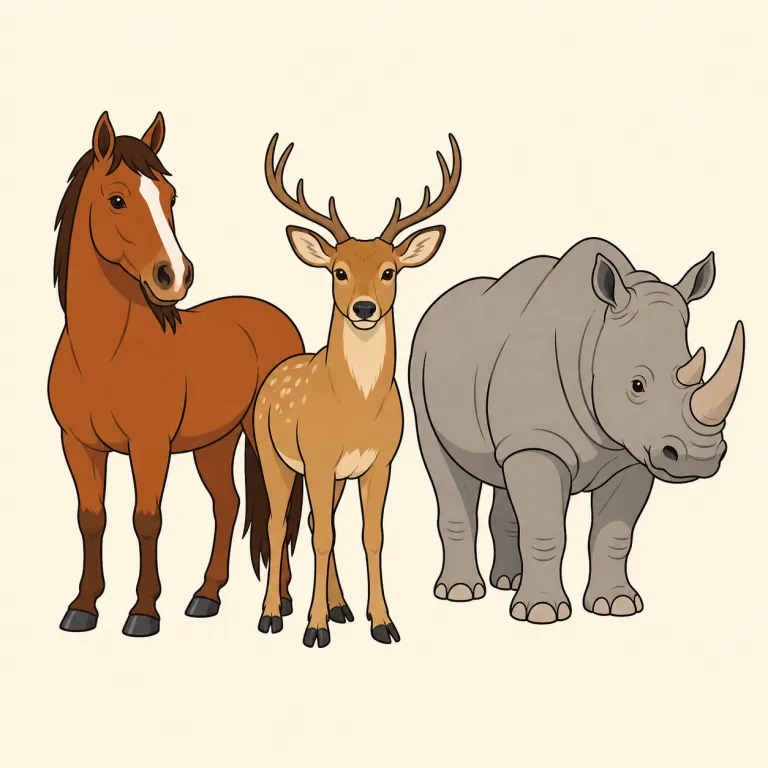
有蹄類
解説 Definition
足に蹄(ひづめ)を持つ哺乳動物の総称。ウシ、シカ、ウマ、ブタなど多くの大型哺乳動物が含まれる。
Ungulates are animals with hooves, such as horses, deer, and cows. The term is used mainly in biology and zoology. It refers to a group of mammals known for walking on hoofed toes.
覚え方のコツ Memory Tip
zooや動物ドキュメンタリーで、シカ・ウマ・ウシ・ブタのような「ひづめのある草食寄りの大型動物」を一群で思い浮かべると定着しやすい語です。細かな分類名として丸暗記するより、hoofed mammals というやさしい言い換えと結び付けるのが有効です。ungulates は複数形で、単数は ungulate。monkeys や lions ではなく、群れで草原や牧場を歩く動物群を指す場面が多い、と使用場面ごと覚えると混同しにくくなります。
Do not try to memorize it as a dry science label first. Picture animals with hooves such as horses, deer, cows, and pigs, and connect `ungulates` with the easier phrase `hoofed mammals`. The word is usually plural, while `ungulate` is singular. It often appears when talking about herds, grasslands, or zoo and wildlife topics.
例文
African ungulates such as zebras and antelopes migrate across the savanna.
シマウマやレイヨウなどのアフリカの有蹄動物はサバンナ全体を移動する。
Ungulates, including horses and deer, have hooves rather than claws.
ウマやシカなどの有蹄類には、爪ではなくひづめがある。
The park is home to many ungulates including deer and elk.
その公園はシカやエルクを含む多くの有蹄動物の生息地である。
ungulates の語源・成り立ち Etymology
ungulates はラテン語 ungula「ひづめ・つめ」からできた ungulate の複数形で、ungul- が意味の核です。ungual や unguiculate も同根で、動物を「ひづめを備えたもの」と足先の形でひとまとめにする発想が、そのまま分類名になっています。
Ungulates is the plural of ungulate, from Latin ungula, meaning "hoof" or "claw." The root ungul- appears in related forms like ungual. The name was formed by grouping animals according to the shape of their feet, especially those with hooves.
同じレベルの語彙をもっと
外部辞書で調べる
この英単語をクイズで覚えよう