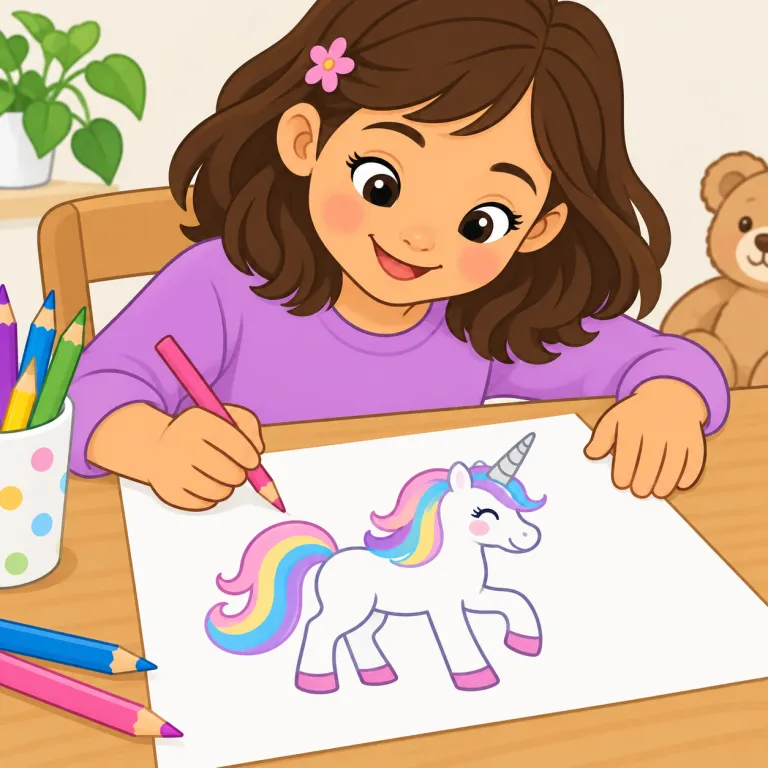
ユニコーン
解説 Definition
unicorn は、額に一本の角を持つ伝説上の動物、ユニコーンという意味です。日本語のカタカナ語とほぼ同じですが、英語では非常に珍しいものや高価値の新興企業を指すこともあります。
A legendary animal usually imagined as a horse-like creature with a single horn growing from its forehead. Unicorns appear in traditional stories, modern fantasy, pictures, and toys, and are often associated with magic or rarity.
覚え方のコツ Memory Tip
uni-「一つ」と、ラテン語 cornu「角」に由来する要素を結び付け、「一本の角を持つもの」と分解すると覚えやすい語です。a unicorn with a silver horn や toy unicorn のように伝説上の動物を指します。企業を指す比喩用法もありますが、ここでは物語や絵に登場する一角獣の語義に集中しましょう。
Break unicorn into uni-, meaning “one,” and the element connected with Latin cornu, meaning “horn.” The structure therefore points directly to a creature with one horn. Picture a horse-like animal with a silver horn on its forehead, as in a child’s drawing, an old story, or a toy on a shelf. English also uses unicorn figuratively for something exceptionally rare, including a highly valued start-up, but the examples here use the legendary-animal sense. The transparent “one horn” structure is the most reliable memory anchor.
例文
The child drew a unicorn with a silver horn.
その子どもは銀色の角を持つユニコーンを描きました。
A unicorn appears in many old stories.
ユニコーンは多くの古い物語に登場します。
The toy unicorn stood on the shelf.
おもちゃのユニコーンが棚の上に置いてありました。
unicorn の類義語・関連語
unicorn の語源・成り立ち Etymology
unicornはラテン語 unicornis にさかのぼり、uni-「一つ」+ cornu「角」から成ります。古フランス語を経て英語に入り、「一本角の生き物」という像がそのまま語義になりました。関連語に uniform、cornucopia があります。
Unicorn came into English through Old French from Latin unicornis, meaning “one-horned.” The Latin word combines unus, “one,” with cornu, “horn.” Its structure directly describes the creature’s defining feature: a single horn projecting from its forehead. Accounts of one-horned animals circulated in ancient and medieval writing, and the unicorn became established as a legendary, often horse-like creature in European tradition. The modern English spelling preserves the recognizable prefix uni-, also found in words expressing oneness.
同じレベルの語彙をもっと
外部辞書で調べる
この英単語をクイズで覚えよう