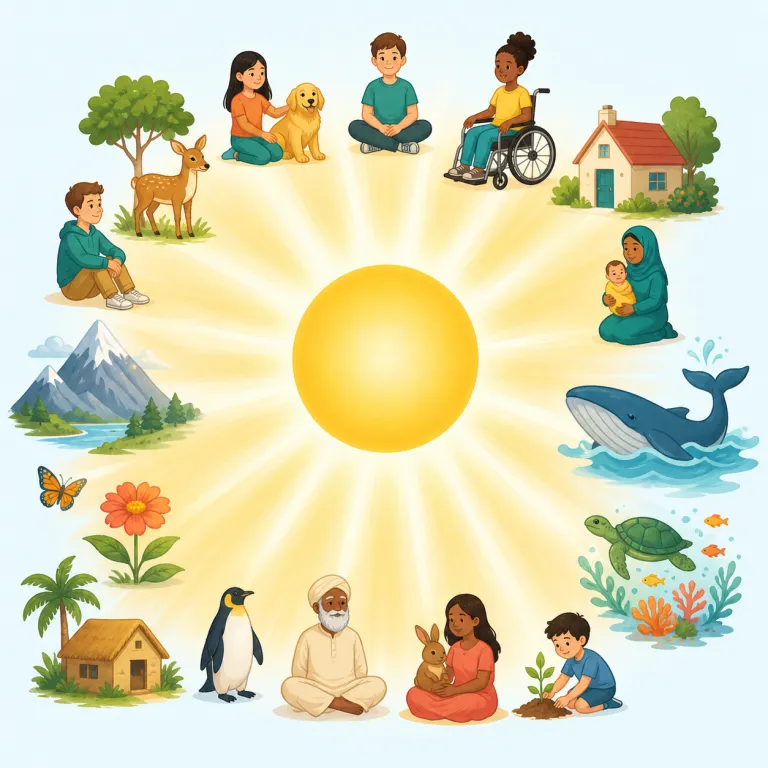
普遍性
解説 Definition
すべての人や物、状況に共通して存在する特性や性質。普遍的であり、例外がない状態。
Universality is the quality of being true, relevant, or shared by everyone or in every situation. It is often used when talking about ideas, values, emotions, or principles that seem common to all people.
覚え方のコツ Memory Tip
universal を知っていれば覚えやすい語。まず universal は「誰にでも・どこでも当てはまる」。そこに語尾 -ity が付くと、ability や equality と同じく「その性質」になり、universality は「普遍的であること」。individuality が「個性」なら、その反対側で「個別差をこえて共通する性質」と捉えると残りやすい。the universality of human rights や universality across cultures のように、抽象的な議論でよく出る。universe と形は近いが、「宇宙」ではなく「広く通用する性質」に意識を置く。
If you know `universal`, this word is much easier. The ending `-ity` often means “the quality of,” like in `ability` or `equality`, so `universality` is the quality of being universal. Keep it in mind with phrases like `the universality of human rights` or `across cultures`.
例文
The universality of human emotions transcends cultural boundaries.
人間の感情の普遍性は文化的境界を超えている。
Philosophy seeks to understand the universality of ethical principles.
哲学は倫理原則の普遍性を理解しようとしている。
The universality of scientific laws can be seen across the entire universe.
科学法則の普遍性は宇宙全体に見られる。
universality の類義語・関連語
派生語
紛らわしい語
universality の語源・成り立ち Etymology
universality はラテン語 universalis にさかのぼり、uni-「一つ」と vers「向く」が合わさって「全体が一つに向く」感覚を持つ。-al が形容詞、-ity が性質を作り、universal や universe と同根なので「多様なものを一つに束ねる普遍性」と見える。
Universality comes from universal, which goes back to Latin universalis. It is linked to unus, meaning "one," and versus, from a verb meaning "turned," giving the sense of things "turned into one" or forming a whole. The noun ending -ity adds the idea of a quality, so universality means the quality of applying to all; related words are universe and universal.
同じレベルの語彙をもっと
外部辞書で調べる
この英単語をクイズで覚えよう