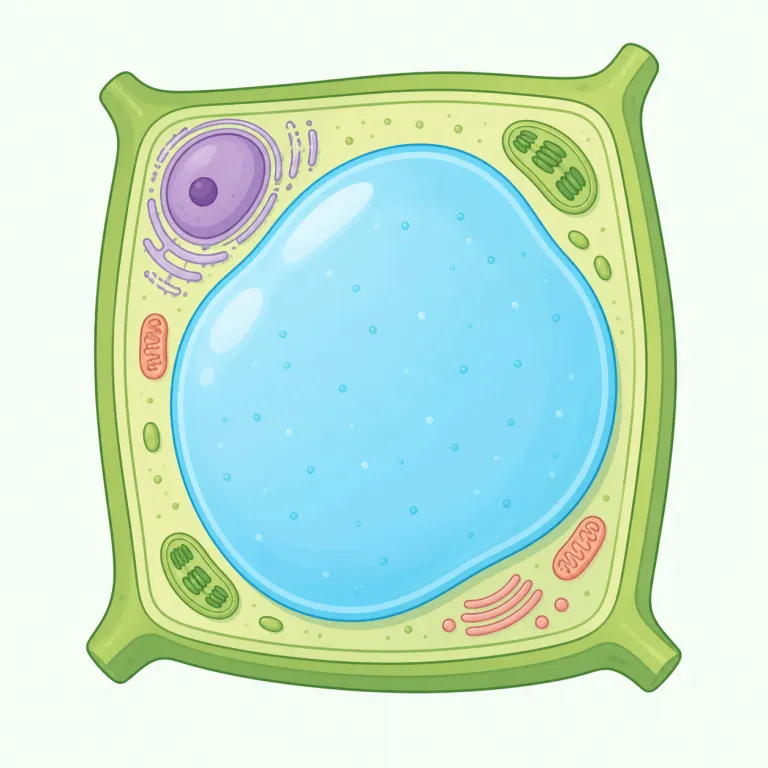
液胞
解説 Definition
植物細胞や原生動物に見られる、液体で満たされた膜に囲まれた小室。水分や栄養素、または老廃物を貯蔵・調節する機能を持つ。
A vacuole is a space inside a cell that stores water, food, waste, or other materials. The term is mainly used in biology, especially when talking about plant cells, where vacuoles are often large and important.
覚え方のコツ Memory Tip
vacuum を知っていれば覚えやすい語です。vacuole は『細胞内にある、液体をためる小さな区画』として押さえると定着します。つまり液体そのものではなく、液体が入っている袋・部屋のイメージ。生物では large central vacuole の形で植物細胞とセットでよく出るので、『植物細胞の中の大きな貯蔵スペース』まで一緒に覚えると強いです。volume や vessel のような一般語と違い、細胞小器官名だと意識すると混同しにくくなります。
This word is easier if you connect it to `vacuum`, which gives the idea of an empty space or cavity. A `vacuole` is like a small storage space inside a cell. Many learners remember it best through the phrase `large central vacuole` in plant cells.
例文
Plant cells contain large vacuoles that store water and nutrients.
植物細胞は水と栄養を貯蔵する大きな液胞を含んでいます。
The vacuole can occupy up to 90% of a plant cell's volume.
液胞は植物細胞の容積の最大90%を占めることができます。
Contractile vacuoles in protozoans help regulate water balance.
原生動物の収縮液胞は水分バランスの調節を助けます。
vacuole の類義語・関連語
紛らわしい語
vacuole の語源・成り立ち Etymology
vacuole はフランス語経由で、ラテン語 vacuus「空の」からできた語で、vacu-「空」+ -ole「小さいもの」と考えられます。つまり「小さな空所」という原義で、細胞内の液胞の形をそのまま表しています。関連語は vacuum, vacate。
"Vacuole" came into English through French from Latin vacuus, meaning "empty." The form suggests a small empty space, which matches the original image behind the word. It was later used in science for a small cavity or sac inside a cell. Related words include vacuum and vacate.
同じレベルの語彙をもっと
外部辞書で調べる
この英単語をクイズで覚えよう