換気装置、換気口
noun 名詞建物や部屋の空気を入れ替えるための装置、送風機、または開口部を指します。医療用の人工呼吸器とは異なり、室内の熱気・湿気・においなどを外へ排出する目的で使われます。
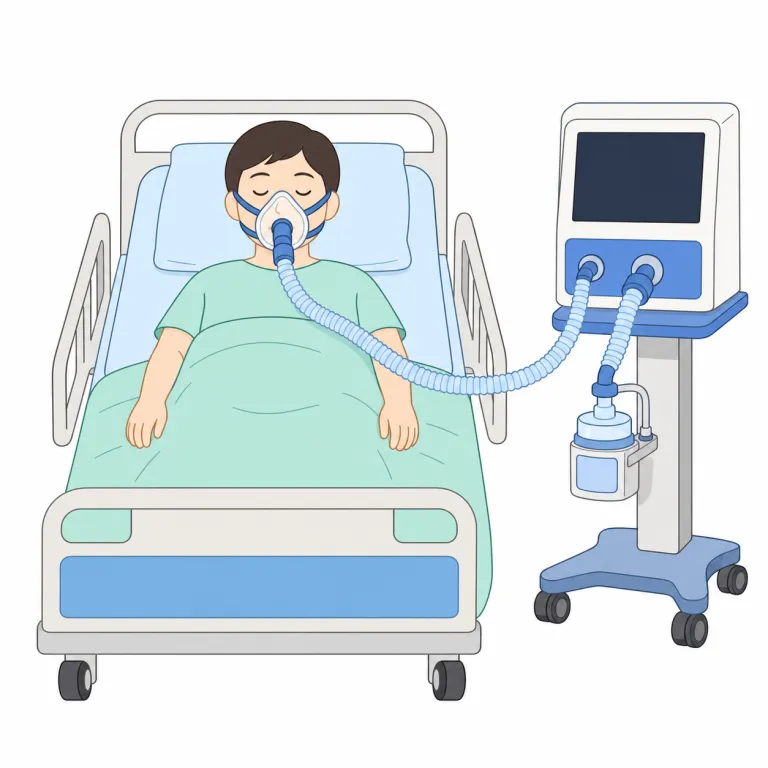
人工呼吸器は医療機器の一種で、自力で呼吸ができない患者に人工的に空気を送り込み呼吸を補助する装置です。重症患者の生命維持や手術中の呼吸管理などに使われます。
A ventilator is a medical machine that helps a person breathe when they cannot breathe well on their own. It is mainly used in hospitals and intensive care, especially in serious illness or emergency situations.
ventilator は vent(空気の出口・抜け道)や ventilation(換気)を知っていると覚えやすい語で、核は一貫して「空気を動かすこと」。そこから医療では「患者の代わりに空気を送り、呼吸を助ける装置」へ意味が具体化したと考えると残りやすい。-ator は「装置・するもの」を表すので、語全体で“空気を送る機械”と見える。病院で be on a ventilator という形が多い点、respirator と近いが ventilator は機械そのものを指すことが多い点も一緒に押さえると混同しにくい。
Break it into `vent` + `-ilator`. `Vent` is about air, and `-ator` often means a machine, so picture a machine that moves air for someone. Common phrases like `on a ventilator` help fix the medical meaning.
The patient was connected to a ventilator in the ICU.
患者はICUで人工呼吸器につながれていました。
The hospital needed more ventilators during the pandemic.
パンデミックの間、病院ではより多くの人工呼吸器が必要でした。
The ventilator helped the patient breathe while recovering from the illness.
病気から回復する間、人工呼吸器が患者の呼吸を助けました。
文脈によって、次の意味でも使われます。
建物や部屋の空気を入れ替えるための装置、送風機、または開口部を指します。医療用の人工呼吸器とは異なり、室内の熱気・湿気・においなどを外へ排出する目的で使われます。
ventilator はラテン語 ventilare「風を送る・あおぐ」に由来し、vent- が「風・空気」を表す。-ator は「〜するもの」なので、文字通り「空気を動かす装置」という語形である。関連語に vent と ventilation があり、息や空気の流れを作る感覚が中心にある。
Ventilator comes from Latin ventilare, meaning "to fan" or "to move air," built from a root linked to wind and air. The ending -ator means "something that does," so the word originally meant a thing that moves air. Related English words include vent and ventilation, which keep the same idea of air flowing or being let out.
この英単語をクイズで覚えよう