重圧、懸念材料
noun 名詞将来の活動や価格などを圧迫しかねない、未解決の負担や大量の供給を指します。debt overhangやsupply overhangの形で経済・金融の記事に多く、物理的な突出部とは異なる比喩的用法です。
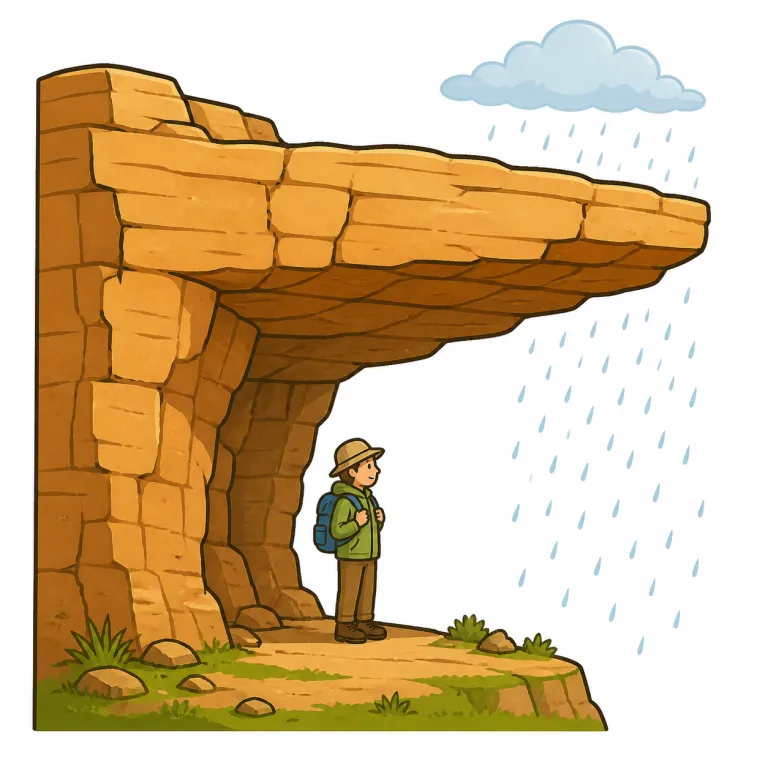
建物や岩などが基部より外に張り出した部分。上部が下部より突き出ていること。
Overhangs are parts of something that stick out beyond the edge or the support below. The word is often used for roofs, rocks, cliffs, balconies, or other structures. It usually describes a shape that extends outward above open space.
over + hang で「上から hang している感じ」とつかむと覚えやすいです。完全にぶら下がるのではなく、土台や壁から外へせり出して“上に覆いかぶさるように突き出る”のが overhang(s)。roof overhang, cliff overhang のように屋根や崖でよく出ます。hang だけだと「掛かる・垂れる」ですが、over が付くことで「端を越えて突き出す」ニュアンスが加わる点が記憶のフックです。
Split it into `over + hang`. That gives the picture of something hanging out over an edge, not straight down. Think of a roof, balcony, or cliff that sticks out and covers the space below. Phrases like `roof overhang` and `cliff overhang` make the image easy to keep.
The rocky overhangs along the cliff provided shelter from the sudden rainstorm.
崖沿いの岩の張り出しが突然の暴風雨からの避難場所となった。
The architect designed dramatic overhangs to shade the building's south-facing windows.
建築家は建物の南向きの窓を日よけするために大胆な張り出しを設計した。
Climbers must be cautious when navigating overhangs, as they require significant upper body strength.
クライマーはオーバーハングを越える際に注意が必要で、かなりの上半身の力が求められる。
文脈によって、次の意味でも使われます。
将来の活動や価格などを圧迫しかねない、未解決の負担や大量の供給を指します。debt overhangやsupply overhangの形で経済・金融の記事に多く、物理的な突出部とは異なる比喩的用法です。
overhangs は over「上へ・越えて」と hang「掛かる」から成る語で、hang は古英語 hon に由来する。文字どおり「上からぶら下がるように突き出す」ことから、屋根や岩の「張り出し・突出部」を表す。関連語は hang, hanger。
Overhangs is formed from over and hang. Hang comes from Old English hon, and the basic image is something hanging out above or beyond an edge. From that literal picture, the word came to be used for parts of a roof, rock, or cliff that stick out.
この英単語をクイズで覚えよう