軒
解説 Definition
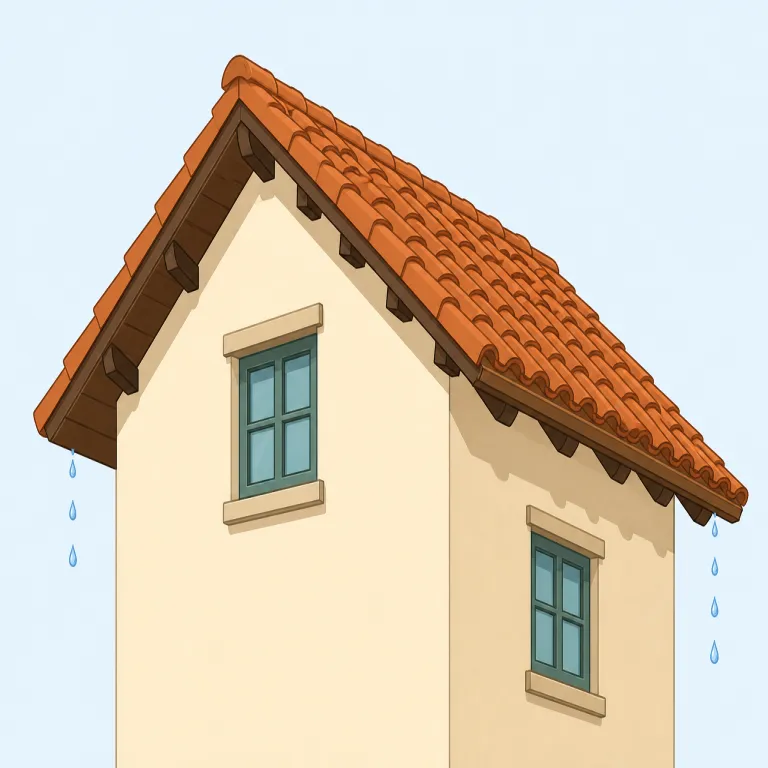
軒は、建物の壁から突き出ている屋根の部分です。雨や日光から壁を保護するとともに、建築的な装飾要素としても機能します。
Eaves are the lower edges of a roof that stick out beyond the walls of a building. They help keep rain away from the walls and windows. This word is mainly used when talking about houses, roofs, and building design.
覚え方のコツ Memory Tip
eaves は、roof の端が壁より前にせり出した部分を頭に固定すると覚えやすい。屋根そのものではなく、雨がぽたぽた落ちる「外側の張り出し」が核心。under the eaves(軒下に)や birds nesting in the eaves のように、軒下の場所表現と結びつけると定着する。ceiling は室内の天井、wall は壁なので別物。形は複数形っぽいが、建物の一部としてまとまって使われる語だと意識すると混乱しにくい。
Picture the edge of a roof that sticks out past the wall. `Eaves` are not the whole roof, but the outside part where rain drips down, as in `under the eaves`. It often looks plural, so remember it as one building feature with that fixed form.
例文
The eaves of the house provided shelter from the rain.
その家の軒は雨よけになりました。
Birds nested under the eaves of the old barn.
鳥たちは古い納屋の軒の下に巣を作りました。
The wide eaves were a distinctive feature of traditional Japanese architecture.
広い軒は伝統的な日本建築の特徴的な要素でした。
eaves の類義語・関連語
eaves の語源・成り立ち Etymology
古英語の「efes(縁・端)」に由来し、接頭辞・接尾辞を持たない基本語です。同じ語源を持つedge(端・縁)と並び、「建物の端が外へ張り出した部分」を指します。元来の「端」というイメージから、屋根が壁から突き出す「軒」の意味が自然に導かれます。
"Eaves" comes from Old English efes, meaning an edge or border. The basic idea was simply the outer edge of something, and in buildings it became the edge of the roof that projects beyond the wall. It is related in origin to "edge," which shows the same older sense of a boundary or rim.
同じレベルの英単語をもっと
外部辞書で調べる
この単語を英単語クイズで覚えよう