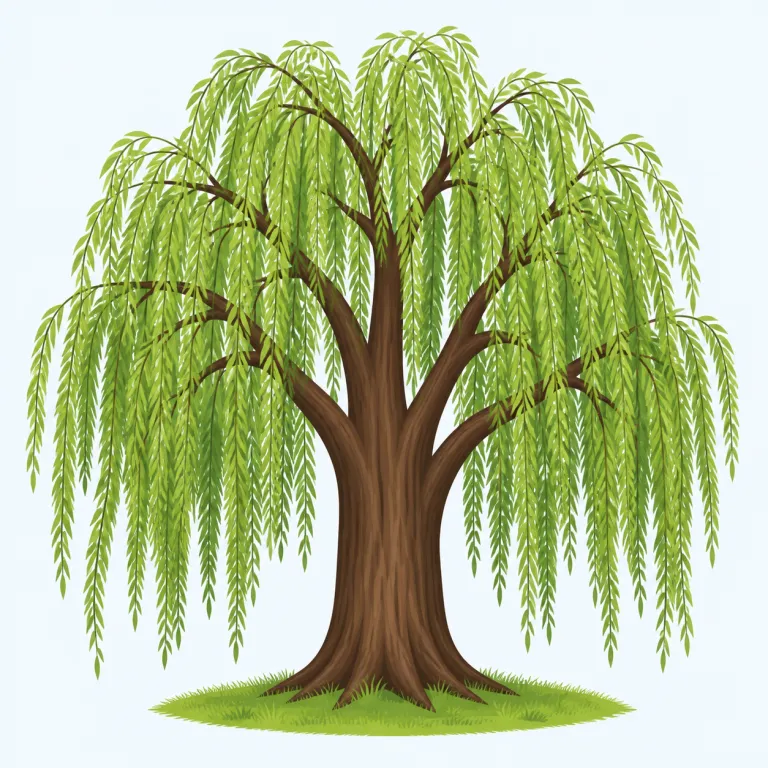
柳
解説 Definition
柳とは、細長い葉としなやかな枝を持つ willow 類の木や低木です。水辺に多く見られ、枝が垂れる weeping willow のような種類が有名ですが、すべての willow が必ずしだれているわけではありません。
A willow is a tree with long, narrow leaves and thin branches that often bend downward. It commonly grows near water such as rivers or lakes. The word usually refers to the tree itself, especially in natural or poetic descriptions.
覚え方のコツ Memory Tip
覚える軸は「細く、しなって、垂れる枝」です。柳は oak や maple のような太く広がる木ではなく、長い枝が風や水辺でやわらかく揺れる姿が典型。形容詞 willowy が「柳のように細くしなやかな」を表すので、willow を見たら thin・flexible・drooping を一緒に連想すると定着しやすいです。写真や物語では weeping willow(しだれ柳)で出ることも多く、水辺の静かな景色と結びつけると意味が安定します。
Think of a willow as the tree with long, thin branches that bend and hang down. Link it with `willowy`, which describes someone tall, slim, and flexible like that tree. `Weeping willow` is also a very common phrase, so that full expression is worth remembering.
例文
The willow hung over the river.
柳が川に覆いかぶさるように垂れていた。
She sat under the willow in the park.
彼女は公園の柳の下に座った。
People often make baskets from willow branches.
柳の枝からかごを作ることがよくあります。
willow の類義語・関連語
派生語
willow の語源・成り立ち Etymology
willow は古英語 welig にさかのぼる古いゲルマン系の語で、柳の枝のしなやかさを思わせる響きを持ちます。withy や willowy を見ると、willow が木の名であるだけでなく『細く柔らかくたわむ感じ』まで帯びた語だとわかります。
Willow comes from Old English welig and goes back to an old Germanic word. It has long been linked with the idea of flexible, bending branches. Related English words like withy and willowy keep that sense of thinness and softness connected with the tree.
同じレベルの英単語をもっと
外部辞書で調べる
この単語を英単語クイズで覚えよう