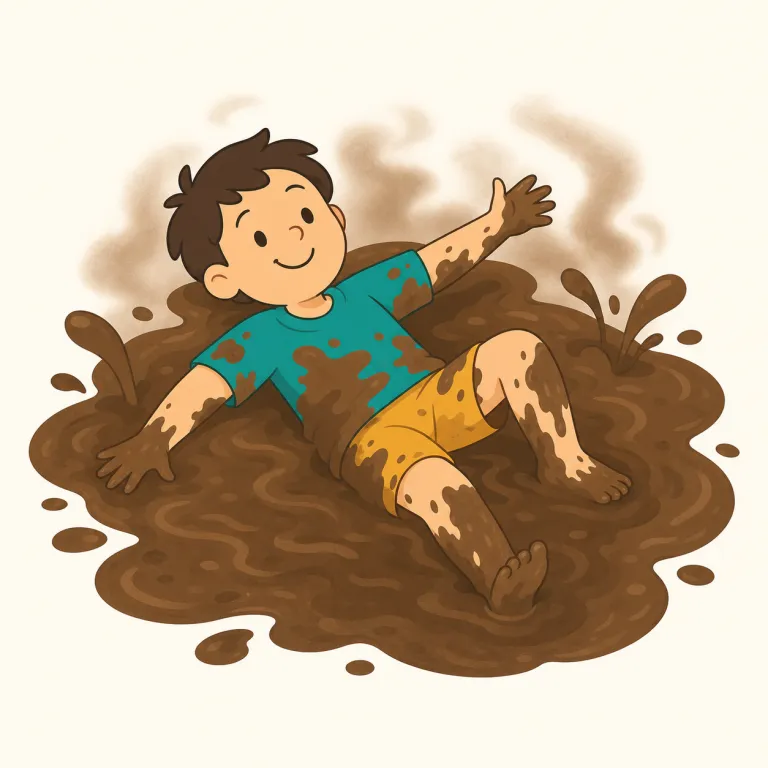
(泥などの中で)転げ回る、(感情などに)ふける
解説 Definition
動物が泥や水の中で体を転がしたり寝そべったりすることを表すほか、悲しみ・自己憐憫・快楽などの感情や状態にどっぷり浸るという比喩でも使われる動詞です。自分からその状態にとどまり続けるような含みがあります。
To wallow means to roll around or lie in mud, water, or something soft. It can also mean to stay in a strong feeling such as sadness, self-pity, or pleasure for too long. It is often used in a negative way when someone does not try to change their situation.
覚え方のコツ Memory Tip
まず concrete な形で覚えると定着しやすい語です。典型は pig wallowing in the mud のように「泥の中でごろごろする」場面。そこから wallow in sorrow / wallow in self-pity のように、感情に“自分からどっぷり浸かる”比喩へ広がります。単なる feel sad より、抜け出さずその状態に居座る感じが強いのがポイント。前置詞は in と結びつくことが多く、受け身で苦しむより、半ば浸り続けるニュアンスで覚えると他語と区別しやすいです。
First picture a pig wallowing in mud. Then extend that image to phrases like "wallow in self-pity" or "wallow in sorrow": someone stays deep in a feeling instead of getting out. It often goes with "in," so remember the pattern "wallow in...".
例文
The pigs wallow in the mud to stay cool.
豚は涼しく過ごすために泥の中で転げ回る。
He wallowed in self-pity after losing the game.
試合に負けたあと、彼は自己憐憫にふけった。
The elephant wallows in the river to clean its skin.
象は皮膚をきれいにするために川の中で体を転がす。
wallow の類義語・関連語
wallow の語源・成り立ち Etymology
wallowは古英語wealwian「転がる・のたうつ」に由来し、さらにゲルマン祖語を通じて「回る・転がす」を表す印欧祖語の語根*wel-にさかのぼります。もともとの「ごろごろ転がる」感覚から、泥や水の中で身をよじって転げ回る動き、さらに感情や快楽に「浸る」の意味も生まれました。関連語はrevolve, evolveです。
From Old English wealwian, meaning "to roll" or "toss oneself about." It goes back to an ancient Indo-European root *wel-, meaning "to turn" or "roll," also seen in English words like revolve and evolve. The idea first was physical rolling, then especially rolling in mud or water, and later it came to mean being deeply absorbed in a feeling or pleasure.
同じレベルの英単語をもっと
外部辞書で調べる
この単語を英単語クイズで覚えよう