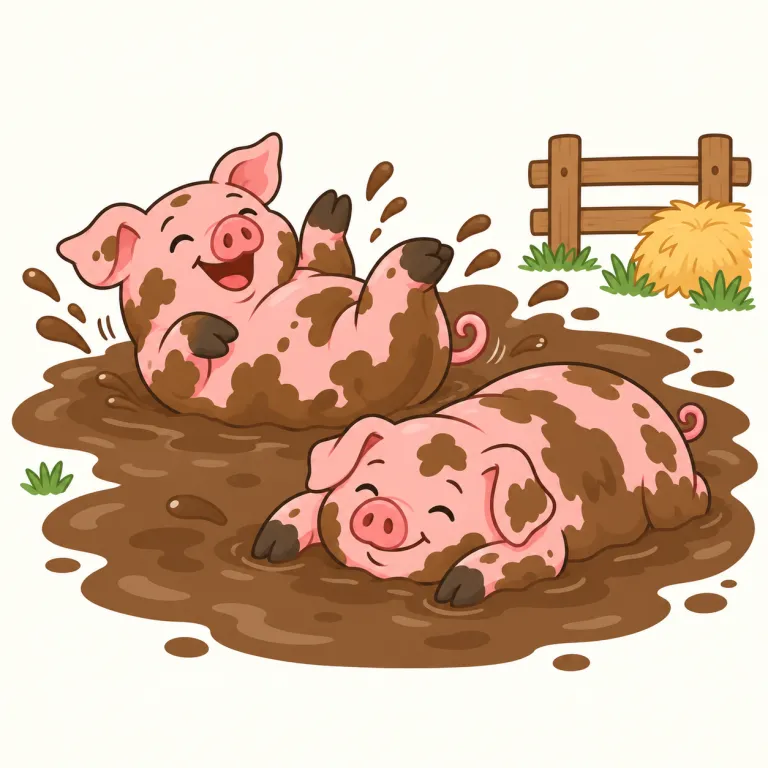
ゴロゴロ
解説 Definition
wallowing は wallow の動名詞で、動物などが泥や浅い水の中で体を転がしたり、横たわって動いたりすることを表します。
Wallowing is the activity of rolling about or lying and moving heavily in mud, shallow water, or a similar substance. It is especially associated with animals that do this to cool themselves, protect their skin, or behave naturally.
使い方 Usage
- wallowing in mud「泥の中でごろごろすること」のように、in で場所や周囲の物質を示します。 Use in to specify the place or surrounding substance, as in wallowing in mud.
- enjoy wallowing のように動詞の目的語にしたり、Wallowing ... keeps ... のように文の主語にしたりできます。 Wallowing can be an object, as in enjoy wallowing, or a subject, as in Wallowing ... keeps ....
使い分け Common distinctions
- wallowing in self-pity は「自己憐憫に浸る」という比喩用法です。ここで扱うのは泥や水の中での実際の行動です。 Wallowing in self-pity is figurative. The sense here describes physical activity in mud or water.
覚え方のコツ Memory Tip
wallow にそのまま -ing を付けて wallowing。豚が泥の中でごろごろして涼む場面を思い浮かべ、行為の名前として覚えましょう。
Add -ing directly to wallow: wallowing. Picture pigs rolling and moving about in cool mud, and remember the word as the name of that activity.
例文
The pigs enjoyed wallowing in the cool mud.
豚たちは冷たい泥の中でごろごろするのを楽しんでいました。
Wallowing in the shallow pond kept the animals cool.
浅い池でごろごろすることで、動物たちは涼しく過ごせました。
wallowing の類義語・関連語
wallowing の語源・成り立ち Etymology
古英語「wealwian(転がる)」→中英語「walwen」が語源。ゲルマン祖語*walwōn-(回転する)に遡り、ラテン語「volvere(巻く・転がる)」と同根。関連語:revolve(回転する)、involve(巻き込む)。動物が泥の中で転がる様子が原義で、転じて「浸る・ふける」の意味にも広がった。
Wallowing is the -ing form of wallow. Wallow comes from Old English wealwian, meaning “to roll,” and continued through related Middle English forms. It belongs to an old Germanic group of words centered on rolling or turning and is related at a deeper Indo-European level to Latin volvere, “to roll.” The literal image of an animal rolling in mud or water later supported figurative uses meaning to remain immersed in an emotion or condition.
同じレベルの語彙をもっと
外部辞書で調べる
この英単語をクイズで覚えよう