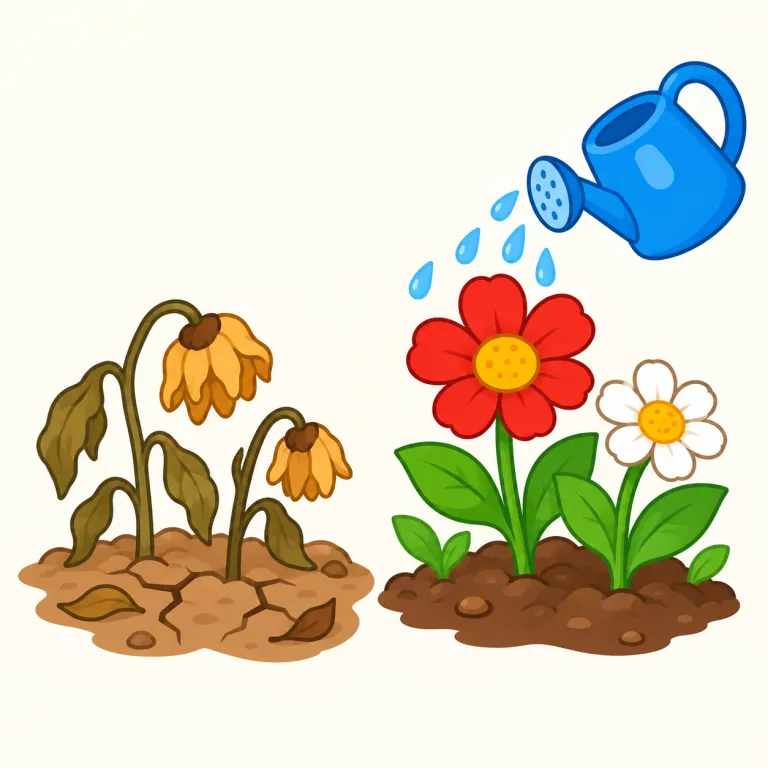
枯れる
解説 Definition
withering は wither(枯れる、しおれる)の現在分詞・動名詞です。植物が水分や生命力を失って弱る様子を表し、ここでは物理的に枯れる意味で使います。
Withering is the present participle or gerund form of wither. In its physical botanical sense, it describes a plant or plant part losing moisture, freshness, and strength, often because of heat, dryness, disease, or insufficient water.
覚え方のコツ Memory Tip
原形 wither に -ing を付ける際、語末の発音しない e を落として withering となります。発音も wither の後に /ɪŋ/ を続けます。flowers are withering や plants withering in the heat の形で、水分を失い、葉や花がしおれて生命力が衰える過程を思い浮かべて覚えます。
Begin with the base verb wither. Before adding -ing, drop the final silent e: wither becomes withering. The pronunciation keeps the sound of wither and adds /ɪŋ/. Picture flowers in dry soil gradually losing moisture, drooping, and becoming weak; that visible process is withering. Useful patterns include flowers are withering, leaves were withering, and plants withering in the heat. Compare wilt, which often emphasizes drooping, while wither suggests a broader loss of freshness and vitality that may progress toward complete drying or death.
例文
The flowers are withering in the dry soil.
花は乾いた土の中で枯れかけています。
Leaves were withering after many days without rain.
何日も雨が降らなかったため、葉がしおれていました。
The farmer noticed the young plants withering in the heat.
農家の人は、若い植物が暑さで枯れていくのに気づきました。
withering の類義語・関連語
withering の語源・成り立ち Etymology
古英語の「wiþerian(反対する)」に由来し、本来は「反対側へ反らす」意味だった。植物が成長方向から離れて水分を奪われしぼむ様子から、自然に「枯れる」へ意味が転じた。古英語の「with-(対して・離れて)」の要素を含み、withstand(耐える)などと語源を共有する。
Withering is the inflected form of wither, created by dropping the final silent e and adding -ing. The history of wither is not completely certain, but it has been connected with older Germanic forms involving opposition, turning away, or decline. In modern English, the verb became established for the loss of freshness, moisture, or vitality in plants. Here, -ing presents that physical process as ongoing or noun-like.
同じレベルの語彙をもっと
外部辞書で調べる
この英単語をクイズで覚えよう