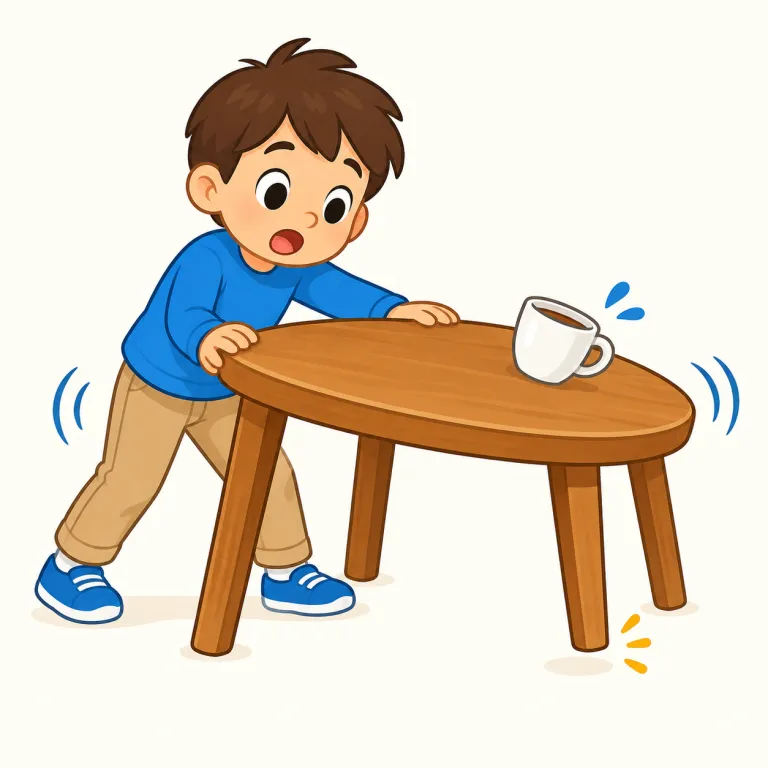
ぐらつく
解説 Definition
wobble「ぐらつく、よろめく」の -ing 形で、物や人が安定せず左右に揺れる動きを表します。バランスを失って倒れそうな動きにも使います。
Wobbling describes moving repeatedly and unsteadily from side to side, as if balance might be lost. It can refer to a person, an object, or a vehicle that is shaking, swaying, or nearly tipping over.
使い方 Usage
使い分け Common distinctions
- shaking は速い震えにも使いますが、wobbling は左右への不安定な揺れやバランスの悪さを示します。 Shaking can describe faster trembling, while wobbling suggests unstable side-to-side movement or poor balance.
覚え方のコツ Memory Tip
wobble の語末の e を落として -ing を付けると wobbling になります。脚が1本短い机や、自転車に乗り始めた子どもの不安定な揺れを思い浮かべましょう。
Drop the final silent e in wobble and add -ing to form wobbling. Picture a table with one short leg or a child learning to ride a bicycle, moving unsteadily from side to side.
例文
The old table is wobbling because one leg is short.
その古いテーブルは脚が1本短いのでぐらついています。
The child rode forward, wobbling on the small bicycle.
その子どもは小さな自転車でぐらつきながら前へ進みました。
Several glasses started wobbling when the train suddenly slowed down.
電車が急に減速すると、いくつかのグラスがぐらつき始めました。
wobbling の類義語・関連語
類義語
紛らわしい語
wobbling の語源・成り立ち Etymology
低地ドイツ語 wabbeln(揺れ動く)に由来し、ゲルマン祖語で「不安定に動く」を意味する語根に遡る。北欧語 vafla(ためらう)とも関連する。関連語: wobble(ぐらつき)、waffle(迷う)。物理的な揺れだけでなく、態度の不安定さにも比喩的に使われる。
Wobbling is the -ing form of wobble, created by dropping the final e before adding -ing. Wobble entered English as an expressive verb for unsteady movement and is associated with Low German forms such as wabbeln, meaning “to move to and fro.” Its sound and repeated consonants suit the idea of irregular swaying. The verb later also developed figurative uses for uncertainty, although this entry focuses on physical instability.
同じレベルの語彙をもっと
外部辞書で調べる
この英単語をクイズで覚えよう