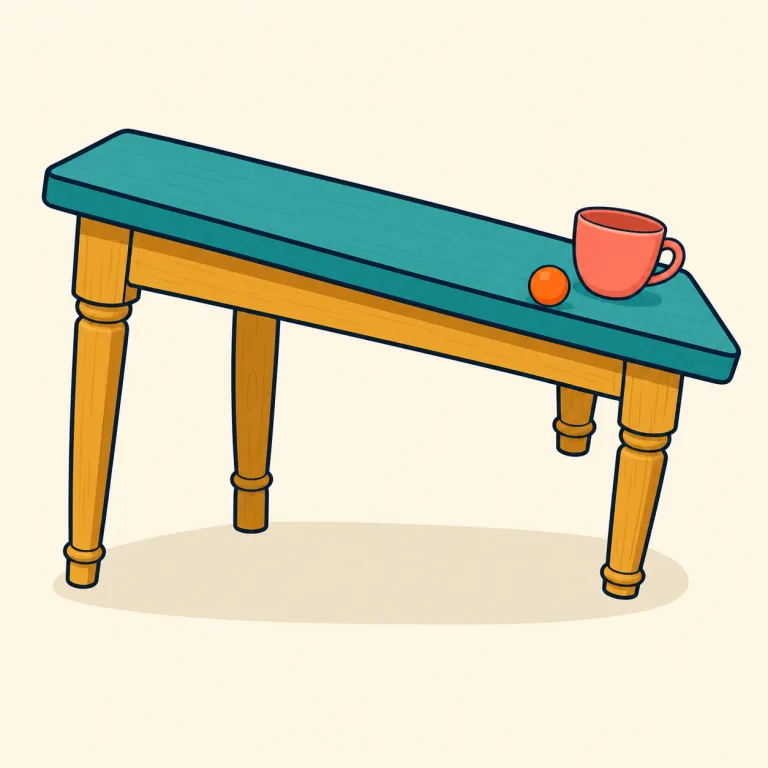
専門的すぎる、細部に凝った
adjective 形容詞政治・経済などの政策や専門分野について、細かな知識や分析に強く傾いたさまを表す、主に米国のくだけた語。a wonky discussion のように内容を修飾し、「不安定な」ではなく専門家向けで細部重視という意味になる。
不安定で、ゆがんでいる、または正しく機能していない状態を表します。堅牢でなく、ぐらぐらしているさまを指します。
Wonky means not straight, not stable, or not working quite properly. It is often used in informal English for things like furniture, machines, systems, or explanations that seem weak or unreliable. The word has a casual tone rather than a technical one.
wonky は、物がまっすぐ立たずにぐらぐらする感じで覚えると残りやすい語です。a wonky chair なら座ると不安定な椅子、a wonky door ならゆがんで閉まりにくいドア。単に broken「壊れた」と言い切るより、傾き・ゆがみ・調子の悪さが見えるのがポイントです。理屈や制度が変だという比喩にも広がりますが、この行ではまず stable の反対、「不安定な」と押さえると使いやすいです。
Think of something not quite straight, stable, or right. A wonky table shakes, a wonky system works badly, and a wonky explanation has something off about it. The word is useful for small but noticeable problems or unevenness.
The chair is wonky and might break.
その椅子はがたがたで、壊れるかもしれません。
The door is wonky and doesn't close properly.
そのドアはゆがんでいて、きちんと閉まりません。
The data looked wonky and unreliable.
そのデータはどこかおかしく、信頼できないように見えました。
文脈によって、次の意味でも使われます。
政治・経済などの政策や専門分野について、細かな知識や分析に強く傾いたさまを表す、主に米国のくだけた語。a wonky discussion のように内容を修飾し、「不安定な」ではなく専門家向けで細部重視という意味になる。
wonky は20世紀ごろから見られる英語で、語源ははっきりしませんが、古英語 wancol「ぐらつく・不安定な」との関連がよく挙げられます。確実な断定は避けるべき語ですが、中心にあるのは「傾いて安定しない」という感覚です。そこから椅子やドアがぐらつく、この行の「不安定な」という意味に自然につながります。
Wonky is a modern English word, first seen in the 20th century, and its exact origin is uncertain. It may be linked to Old English wancol, meaning "unsteady" or "shaky." The core idea is something off-balance, and that later widened to mean something faulty, strange, or unreliable.
この英単語をクイズで覚えよう